
The Henry’s Fork has always been read by careful observers.
Anglers watch the water for rising forms. Scientists track temperature, turbidity, and flow. Field crews study the life beneath the surface.
But today, some of the river’s most important questions are harder to see.
Aquatic insects may be abundant on the river bottom, while the hatches anglers experience tell a more complicated story. Are insects emerging earlier? At night? In different places? More sporadically? Are warming temperatures changing the rhythm of the river?
HFF is working to find out.
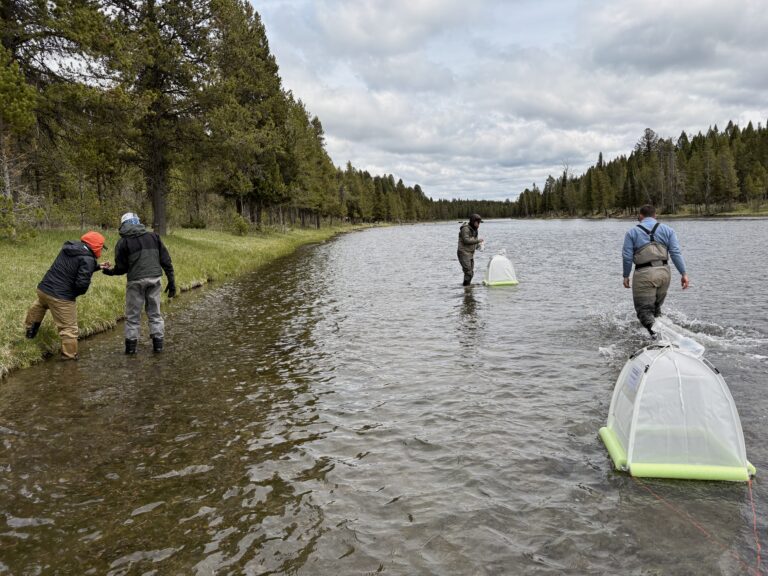
This year, HFF and The Salmonfly Project are pioneering a new application of eDNA on the Henry’s Fork: using environmental DNA alongside traditional insect monitoring and emergence traps to better understand PMD hatch timing.
Environmental DNA, or eDNA, allows scientists to detect tiny traces of genetic material left behind in the water by insects, fish, and other organisms. In a single water sample, the river may carry clues about what is living there, when it is active, and how conditions are changing.
The goal is not simply more data.
The goal is better conservation decisions.
What HFF learns from this work can help guide future hatch monitoring, angler education, DIRTT planning, and larger questions about water temperature, turbidity, oxygen, and habitat across the Henry’s Fork watershed.
Your gift today will help HFF build on this promising science and protect the Henry’s Fork with the care, precision, and leadership this river deserves.