

(Almost) Snow-less Snow Science
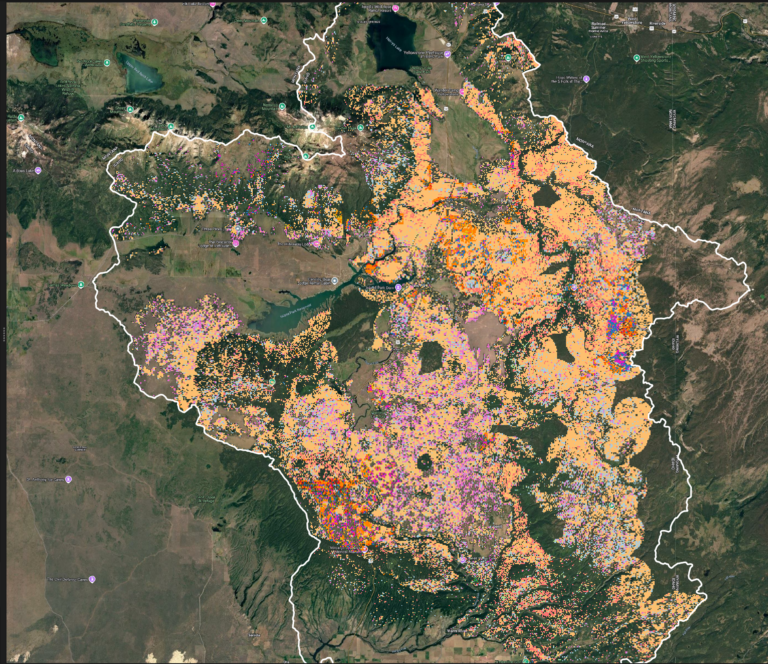
As an MSU undergrad studying snow science, a summer internship might sound unlikely. Fortunately, snow is an invaluable resource year-round out here in the west, providing the majority of our water supply. My original project with the Henry’s Fork Foundation was to install snow monitoring stations across the watershed to better capture the spatial variability of its winter snowpack, however funding and approval has been backlogged. Luckily, my mentor ,Dr. Otto Lang, had another project in mind. Dr. Lang has been working with a model called “iSNOBAL”, which is used to predict and simulate future snowmelt. The model includes many different variables, one of which is the fraction of sunlight that is able to pass through to the ground, known as the “Sky View Factor” or SVF. SVF is heavily influenced by forest canopy, which in turn influences how much longwave radiation is able to reach the snow on the ground during the winter, affecting both accumulation and melt rates. Our project this summer aims to provide a new, more robust dataset that better captures the SVF of different forest types across the Henry’s Fork Watershed. I spent my first week working with QGIS to create different areas of