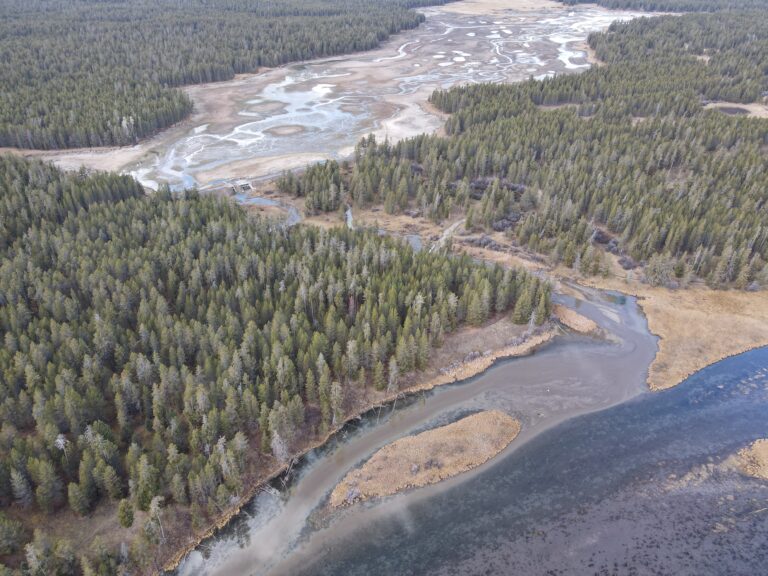

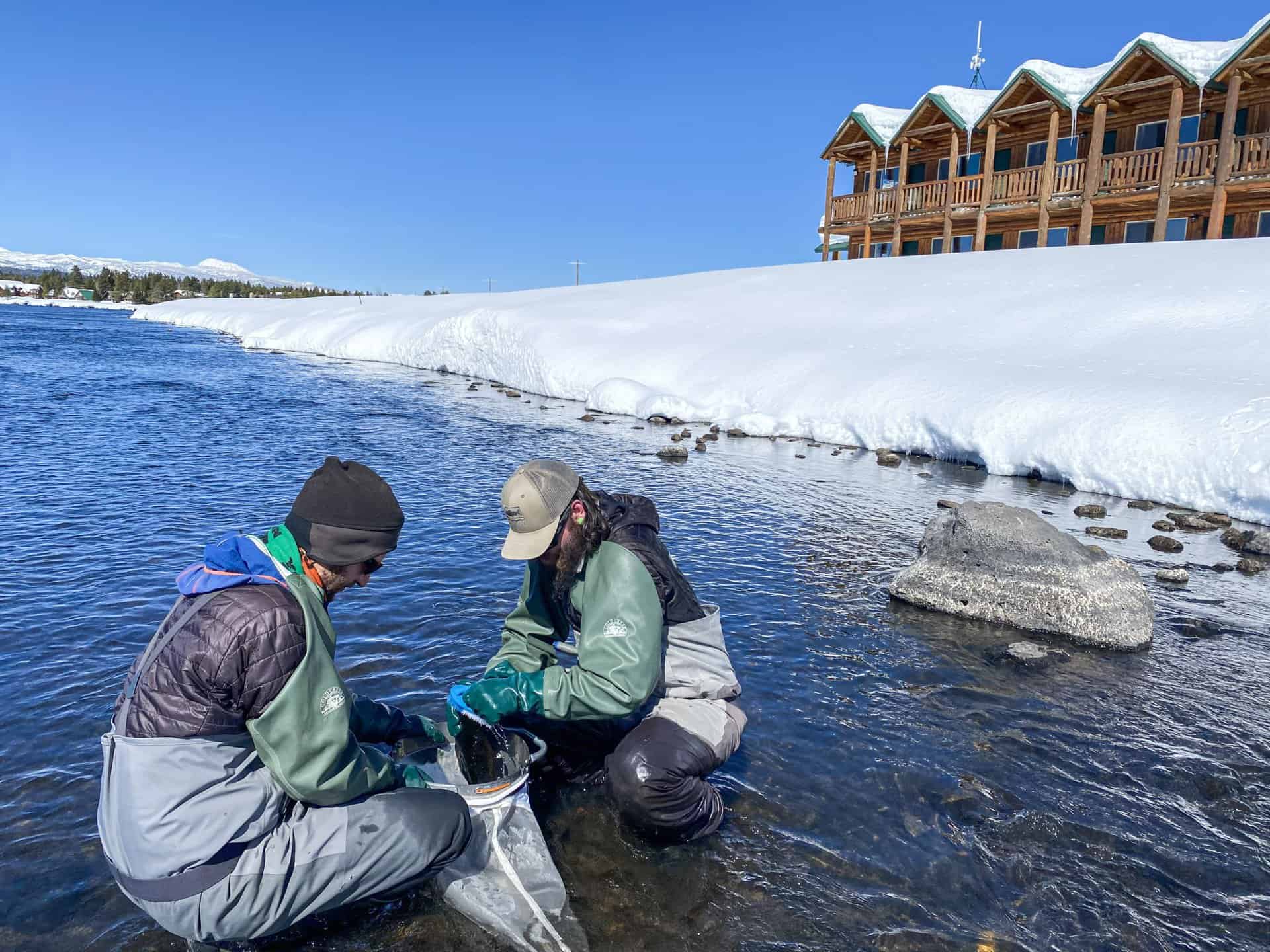
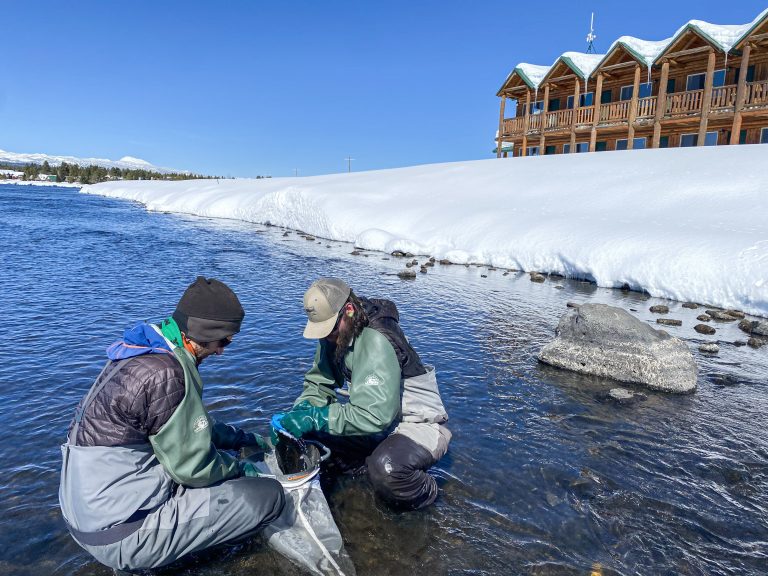

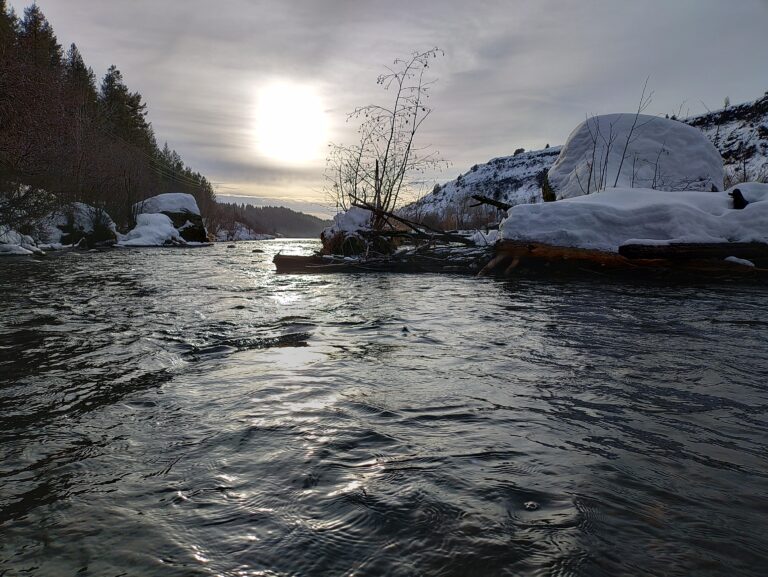
To address angler concerns about decreased hatches, particularly at Last Chance and the upper Ranch, and holistically assess ecological function throughout the mainstem Henry’s Fork, we implemented a statistically rigorous, quantitative study of aquatic invertebrates in 2015. This followed implementation of a watershed-wide water-quality monitoring program in 2014 and prompted subsequent expansion of stream gaging. After our 11th year of sampling in 2025, we had a set of 56 independent observations of macroinvertebrates collected at six different sites on the river over an 11-year period, each accompanied by a full suite of water-quality and streamflow variables. The sites—Flat Rock, Last Chance, Osborne Bridge, Marysville, Ashton Dam, and St. Anthony—represent conditions over the 80 miles of river most popular among anglers.
We analyzed invertebrate abundance, five standard community metrics—Shannon’s diversity, EPT taxa richness (the number of mayfly, stonefly, and caddisfly species), Hilsenhoff Biotic Index (HBI), percent non-insects, and percent EPT—as well as the abundance of Pale Morning Duns (Ephemerella sp.), Drunella mayflies (Flavs + Green Drakes), and Spotted Sedge caddis (Hydropsychidae). For each of these response variables, we tested for dependence on distance downstream from Big Springs as predicted by the River Continuum Concept, difference across sites independent of the river continuum, and dependence on seven streamflow and water-quality variables: annual streamflow, 3-day maximum streamflow, 21-day minimum streamflow, annual flow variability, suspended sediment concentration, conductivity, 7-day maximum water temperature, and total phosphorus.
Through 2025, our primary conclusions are:
- Invertebrate communities in the Henry’s Fork are abundant, diverse, and dominated by mayflies, stoneflies and caddisflies; are as good or better than on other western trout streams; and are as good or better than they were on the Henry’s Fork decades ago. HBI indicates good to excellent water quality from headwaters to St. Anthony, with little evidence of pollutants.
- Abundance and %non-insects showed no variability across location along the river and no dependence on any of the streamflow or water quality variables.
- The other seven responses were best explained by location on the river, with little to no dependence on streamflow or water quality, after accounting for location.
- Total invertebrate abundance and Pale Morning Dun abundance have decreased significantly since 2015, with marginal evidence for decreases in %non-insects and community diversity.
- However, HBI, %EPT, and EPT taxa richness have all improved significantly since 2015, indicating overall improvement in water quality and aquatic habitat and possible replacement of non-insect and other degradation-tolerant species with more sensitive and desirable EPT species.
- There is no evidence that trout populations are limited by invertebrate numbers.
- It is possible that large changes in PMD abundance and community metrics occurred at Last Chance prior to this study, as a result of increasing temperatures relative to previous decades.
- However, decreased dry-fly fishing quality at Last Chance/upper Ranch over the past decade is likely due to a combination of lower trout populations, increased turbidity, and altered mayfly emergence behavior due to warmer temperatures, not to decreased insect numbers.

The full report, including detailed methods, graphs, tables, and interpretations, is available in pdf format at the link below.
Invertebrate Technical Report_ 2025