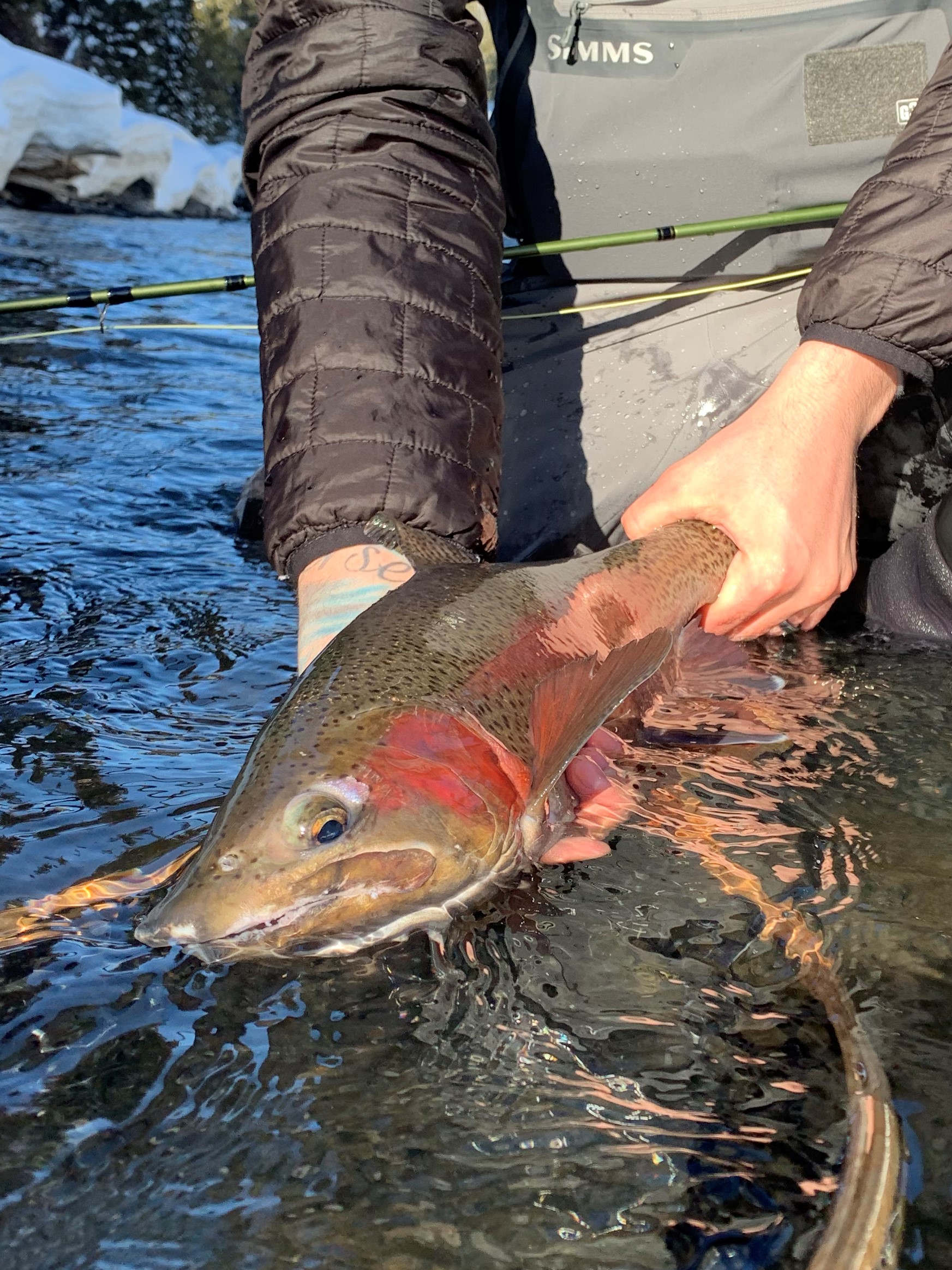
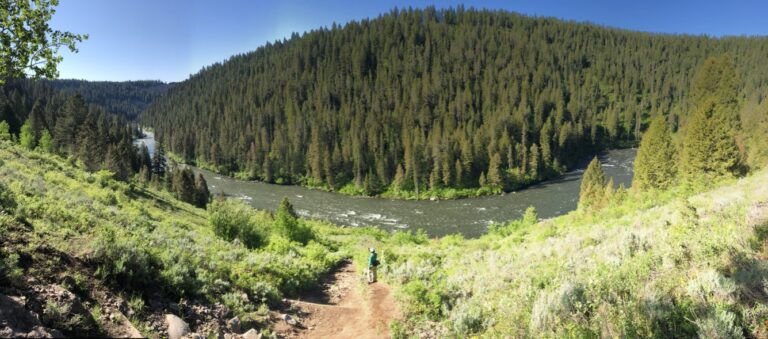
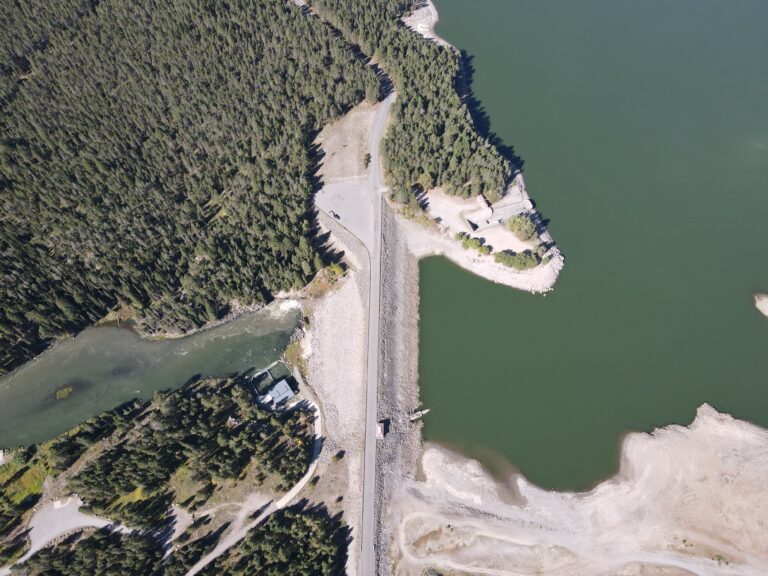
The Henry’s Fork Drought Management Planning Committee (DMPC) met on Monday, November 24 to set this winter’s outflow and reservoir-fill strategy for Island Park Reservoir—an annual decision with implications for winter trout habitat in Box Canyon and the Ranch.
Winter Outflow: What’s Coming on December 1
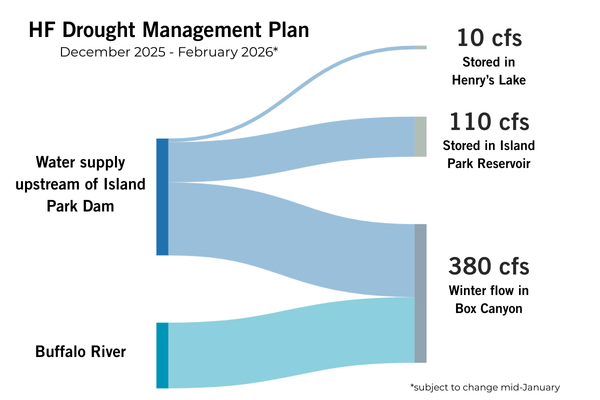
Beginning December 1, outflow from Island Park Dam will increase, bringing winter streamflow through Box Canyon to ~380 cfs from December through February*. That equates to 76% of Box Canyon’s natural winter flow, with the remaining 24% captured for irrigation storage in Henry’s Lake (2%) and Island Park Reservoir (22%).
A flow of 380 cfs may look low on paper, but given the water-supply constraints we are facing, it is a strong outcome. The long-term average natural flow (1978–2025) for Box Canyon is roughly 650 cfs, but recurring multi-year drought has pushed natural winter baseflows 23% below average. In fact, this winter’s natural supply is competing with 2016 for the second-lowest in the last 48 years.
The good news: thanks to continued precision water management and close cooperation among all water-management partners, reservoir savings this year were double what they were in 2016. This coordinated approach makes it possible to provide stronger winter habitat conditions for trout even in challenging water years.
Understanding the Tradeoffs Behind Winter Flow
Releasing higher water during the December–February period involves strategic choices that anglers should understand.
To meet the 380 cfs winter target, outflow will need to be flexible later in the season. Depending on how the 2026 water supply shapes up, outflow from Island Park Dam may need to be decreased on March 1. This reduction would allow Island Park Reservoir to fill more rapidly in March and April ahead of summer irrigation demand.
In practice, this is part of the annual balancing process that water managers use to meet the various needs of our watershed and stakeholders—work that becomes especially important during extended drought cycles.
When Will Conditions Be Re-evaluated?
*Because this plan depends on ongoing water-supply conditions, the DMPC may reconvene in mid-January to reassess both the winter flow and reservoir-fill strategy. If hydrology shifts, the management approach may be adjusted accordingly.
Gratitude for Cooperation
These winter flows are only possible because of broad coordination among water-management partners. We are grateful to:
- Fremont-Madison Irrigation District
- Fall River Rural Electric Cooperative
- U.S. Bureau of Reclamation
- Idaho Water District 1
- Idaho Department of Fish and Game
- North Fork Reservoir Company
Their collaboration ensures the basin can meet the agricultural water-storage needs that sustain our communities while still maximizing winter flow for trout in Box Canyon and the Ranch.