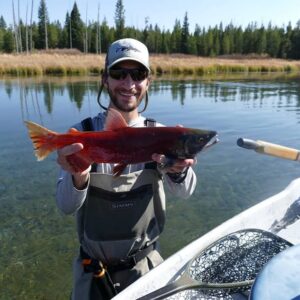
Fish are omnipresent. Whether Claude’s talking about his latest catch, an angler is asking me what fly to use (I don’t know), or I’m taking Utah suckers out of gillnets, I am drowning in fish… but I have never caught one. I have yet to be blessed with a bite on a Parachute Adams, Zebra Midge, or Montreal Whore, but thanks to fishing-adjacent research experiences, I’ve gotten a taste of the thrill.
Back in May, I helped manage the Buffalo Fish Ladder. Each fish was identified, measured, sexed, and carefully released back into the water. The workflow was simple: I netted a lot of fish, placed them in a bucket, struggled to grab one, struggled to hold it still and measure it, and struggled to free it in the water. All the while, Joe sat on a rock, waiting for numbers only I could provide. He spent a lot of time waiting.
Working the fish ladder, I saw dace, whitefish, rainbow, brook, sculpin, and even a redside shiner. At first, I squirmed as I clumsily held flopping fish to the measuring board, but by the end, I bonded with every fish. I cradled them, stared deep into their eyes, wiped the tears from their cheeks, and whispered, “Fear not. All will be well.” Then, after measuring them, I ceremoniously released them into the river; they swam away, and I wooed my next victim.
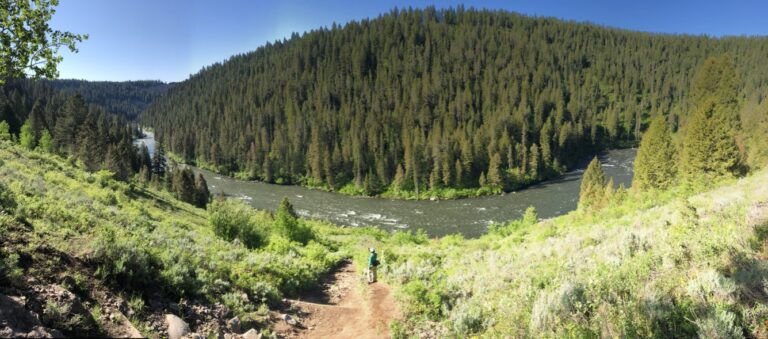
The fish ladder was an excellent introduction to fish handling, but e-fishing was the final boss. On an early July morning, Brady (the Younger) and I jumped into IDFG’s rafts and prepared to haul in some fish. These rafts were not normal. Equipped with steel cables and a generator, our boat flew down the river.
Our project was only meant to evaluate the health and population of Mountain Whitefish. For the whitefish we kept, we measured their size and age and looked for Proliferative Kidney Disease (PKD). Our efforts also helped create population estimates for whitefish. Like stonefly and mayfly nymphs, whitefish are an indicator species: their presence suggests that an ecosystem is healthy, so our work helps to track the success of management and health measures and inform future efforts. To get these informative fish, we used nets.
A mural painting of a spear fisher from the Tomb of Usheret. Me for real.
I was one of the lucky netters. Like an ancient Egyptian, I stood proudly at the bow, scanning the surface. When I saw a fish, I reached into the water, hoping to pull out a whitefish. It wasn’t easy. When a graduate researcher is yelling at you to net the fat whitefish that’s just two inches out of reach, and you’re doing your goshdarn best, the adrenaline spikes, and you start netting at every single moving thing. I got lots of whitefish, but I also got plenty of suckers. I even caught a brown trout, which is very brown and large, and a trout, not white or small or a whitefish. I was tired; he was fine. After several hours on the river, we had gathered around 150 whitefish for IDFG’s research. We ended with a round of handshakes and went back to the office smelling like fish.
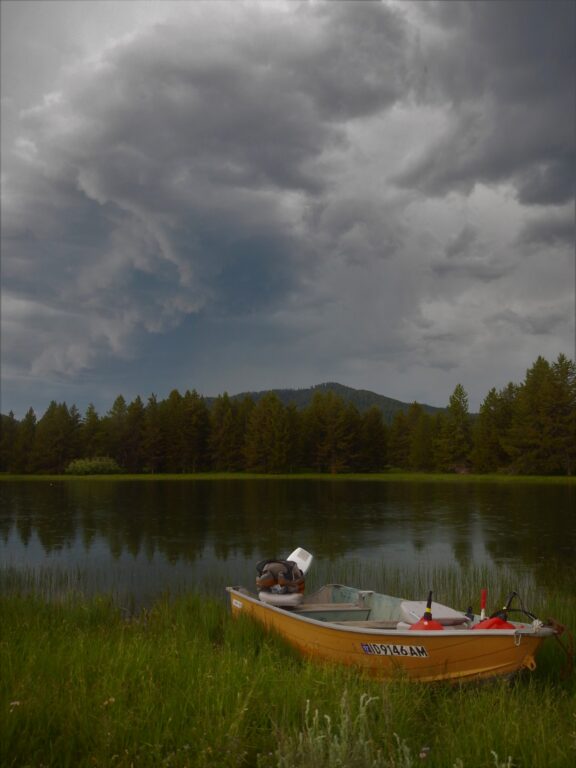
Unfortunately, my next time floating on the river was far less productive. It was my first time fly fishing. I had done some casting at the office, but this was another beast. The clouds were dark, and the air was heavy, a bad omen.
Joe, as a guide/outfitter/rower/provider, floated Kate and me from Ora to Vernon as we flailed our rods and hooked the rocks. Zero bites, constantly tangled line, and lightning don’t exactly add up to a successful experience. We caught nothing but rain and fear of the heavens. At that point, a weaker man would’ve given up, but Joe refused to let me be a weaker man.
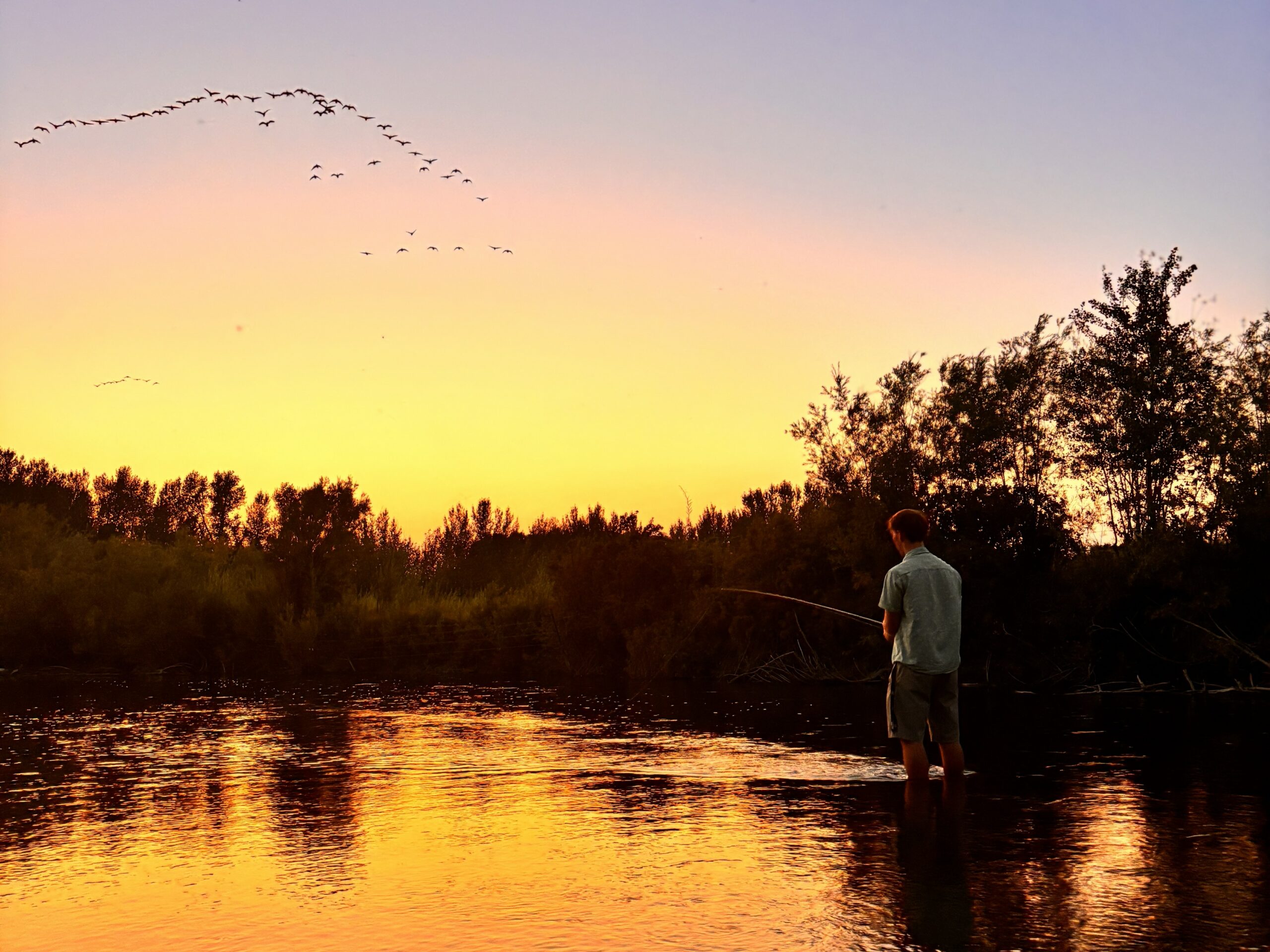
Since then, Joe has been my fishing guru. Along with the opportunities at the fish ladder and with Fish and Game, he has provided me with flies, a rod, a net, and elderly wisdom. Last week, we went to the South Fork and didn’t catch anything. Soon, we will fish again. I don’t expect to catch anything, but I am sure as heck gonna keep trying.
Thanks Joe.
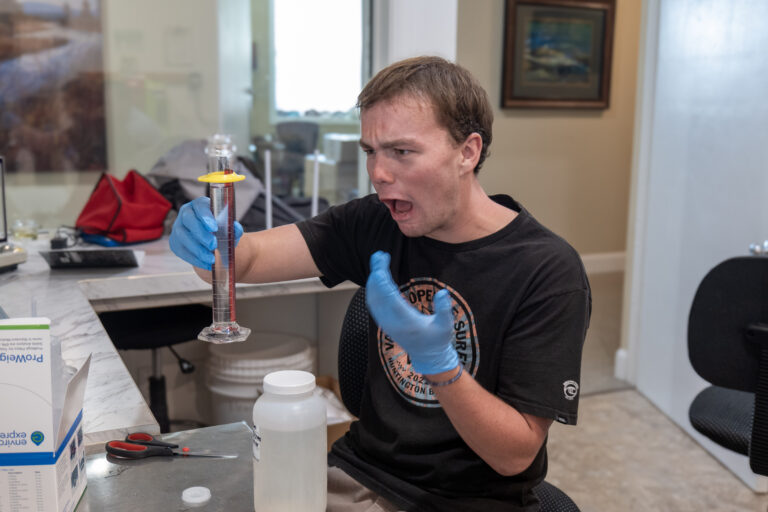
Just a silly pic of me struggling to measure water. Credit: Audrey Hunter
Our Aquatic Ecology Program Manager, Dr. Jack McLaren, joined Idaho Falls city and FIPS-Mouche leadership at the opening ceremony parade along the Snake River Greenbelt to welcome competitors to the watershed and to make sure conservation was front and center.
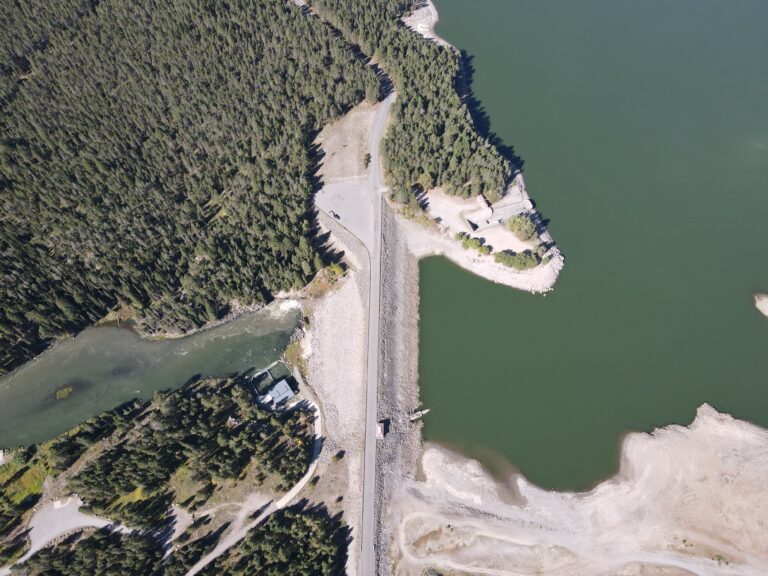
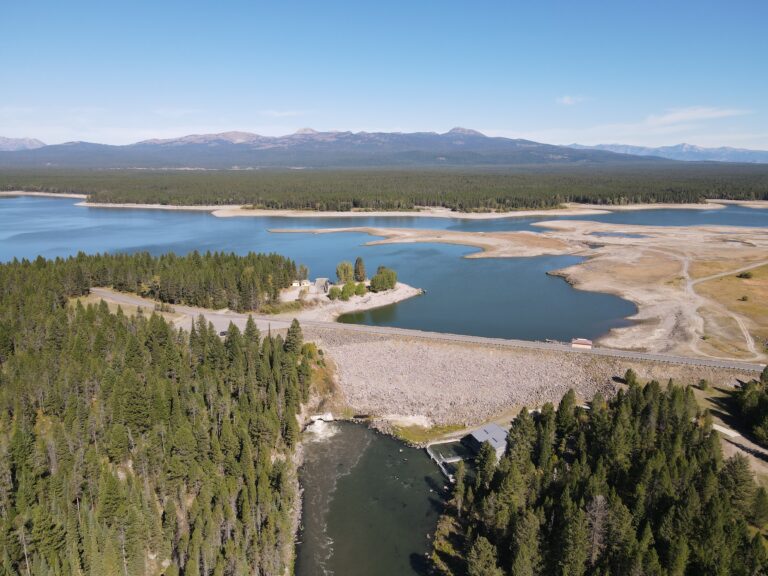
Drone photo of Island Park Dam taken on September 9, 2026 Looking Back on September September brought lows and highs to Island Park. Island Park Reservoir started September at 29% full and quickly fell to a low of 12% full on September 19. The rapid drawdown of the reservoir was the result of managers needing to move water downstream to American Falls (to irrigate farms in the Magic Valley with senior water rights). Such low
This story was written by Audrey Hunter (2026 intern) and was originally published in the Fall 2026 Newsletter. It’s no secret that late summers on Island Park Reservoir haven’t been in perfect conditions in recent years. Warm, turbid, algae-filled water plague reservoir recreationists while diminishing water quality downstream. Cyclical algal blooms decrease water clarity and create less-than-ideal circumstances for the reservoir’s flora and fauna. What’s the solution? HFF’s DIRTT Plan. In-Reservoir Oxygenation Nutrients released from
Drone photo taken on September 9, 2026 The Henry’s Fork Drought Management Planning Committee met on Wednesday, September 16 2026 to develop an updated reservoir management strategy. Downstream of the Henry’s Fork watershed, lower-valley irrigation demand over the rest of the season is anticipated to be slightly lower than projected last week, so Island Park Reservoir and Grassy Lake (in the Fall River drainage) do not need to deliver any more water out of the