
Breathing Easy: Oxygenation in Island Park Reservoir

Home » Blog » Breathing Easy: Oxygenation in Island Park Reservoir

This story was written by Audrey Hunter (2026 intern) and was originally published in the Fall 2026 Newsletter.

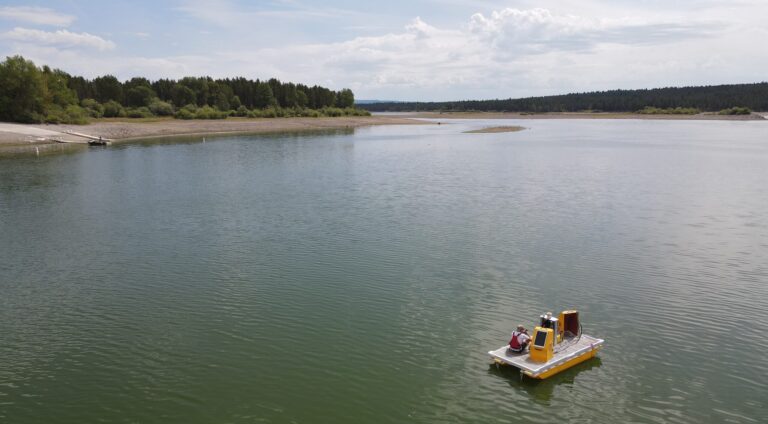
It’s no secret that late summers on Island Park Reservoir haven’t been in perfect conditions in recent years. Warm, turbid, algae-filled water plague reservoir recreationists while diminishing water quality downstream. Cyclical algal blooms decrease water clarity and create less-than-ideal circumstances for the reservoir’s flora and fauna. What’s the solution? HFF’s DIRTT Plan.

In-Reservoir Oxygenation

Nutrients released from reservoir sediment fuel algal blooms. Since sediment releases fewer nutrients in oxygenated water, oxygenation is incredibly effective in reducing algae blooms. Without algae, water clarity improves greatly in the reservoir and the Henry’s Fork downstream. By installing infrastructure at the bottom of the lake, we can bring oxygen bubbles directly to where they’re needed most.

Changing with the Seasons

In summer and fall, oxygen levels in the reservoir frequently get low enough that habitat is diminished—not only for fish, but for zooplankton that feed on algae. In-reservoir oxygenation works year-round to maintain an oxygen-rich bottom layer that supports these algae-eating zooplankton.

A Wide Range of Benefits

Oxygenation increases water clarity in the Henry’s Fork, improving your fishing experience, but it also provides the foundation for a healthier reservoir. Oxygenation could dramatically increase fish habitat—by up to 350%. Fewer algal blooms allow rooted aquatic plants to grow, stabilizing bottom sediments, absorbing nutrients, and creating clearer water.

We’re working with HDR and J-U-B Engineers to understand the cost and feasibility of reservoir oxygenation in Island Park Reservoir. Oxygenation is just one part of our vision. We’re committed to finding the most effective solutions to the reservoir’s biggest problems.

Learn more at https://henrysfork.org/dirtt-plan/.

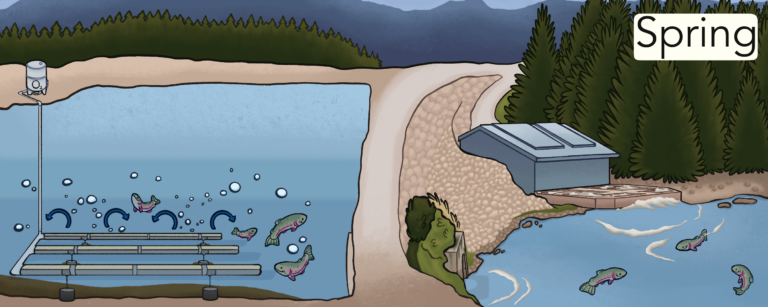
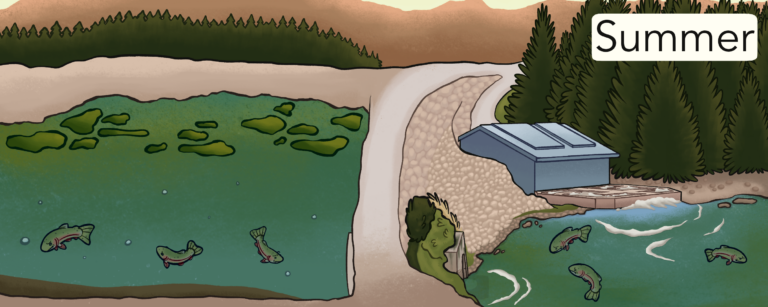
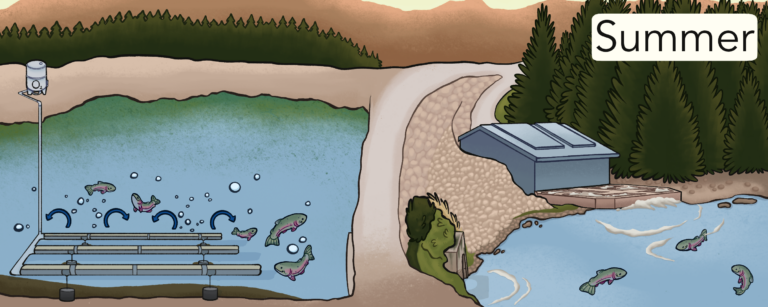
The Oxygenation Vision: As Illustrated by Teddy Montalvo (2025 intern)

Spring: Oxygen is plentiful throughout the reservoir.
Summer: Warm water and algae reduce bottom-water oxygen.
Summer: Oxygenation helps maintain an oxygenated bottom layer.

Funding

Funding for this work was provided by a U.S. Bureau of Reclamation WaterSMART Aquatic Ecosystem Restoration Program grant and The Chrysanta Foundation.

Facebook
LinkedIn
Pinterest

Recent Posts

Water Quality
Christina Morrisett

River Temperatures on the Railroad Ranch

Anglers have expressed a growing concern regarding river temperatures as the Henry’s Fork flows through Harriman State Park, from Last Chance downstream to Pinehaven. Indeed, water temperature plays a pivotal role in the unique angling experience that is characteristic of the Henry’s Fork. Macroinvertebrate diversity, abundance, and size at hatch are influenced by the temperature of the water. Likewise, wild trout have a temperature threshold that can impact growth and activity. With the increasing impacts

Read More »
Fisheries
Christina Morrisett

HFF Monitors Kokanee Spawning Runs for Second Year

Kokanee, the landlocked form of sockeye salmon, have been stocked in Island Park Reservoir since the 1940s. Through a combination of stocking and wild recruitment, kokanee salmon populations have become an important component of the Upper Henry’s Fork ecosystem and social fabric. Historically, kokanee turn the river red during their fall spawning migration out of the reservoir and upstream through Mack’s Inn to tributaries like Moose Creek, Henry’s Lake Outlet, and others. Here, kokanee offer

Read More »
Water Quality
Jamie Powell

A New View Beneath the Surface

New monitoring technology brings a clearer picture of Island Park Reservoir—and new possibilities for the Henry’s Fork. It started with a massive crate in the Henry’s Fork Foundation parking lot. After a summer of troubleshooting, learning new technology, testing equipment, and plenty of problem-solving, HFF’s newest water-quality monitoring buoy made its way onto Island Park Reservoir in September. What may look like a simple piece of equipment floating on the water represents an exciting step

Read More »
General
Sam Pruitt

From River Bottoms to Mountaintops

For the first half of my internship, it was unclear if we would get to install the snow monitoring stations. With only three weeks left in my internship, the parts arrived, the permitting was approved, and I am happy to say that we have three stations in the ground! Dr. Lang, Joe, and I were like three kids on Christmas opening up all the boxes, only a little more careful due to the fragility of

Read More »