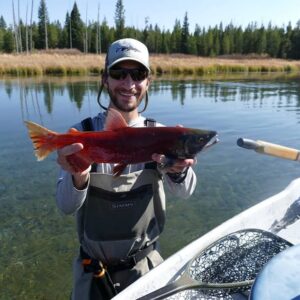
Kokanee, the landlocked form of sockeye salmon, have been stocked in Island Park Reservoir since the 1940s. Through a combination of stocking and wild recruitment, kokanee salmon populations have become an important component of the Upper Henry’s Fork ecosystem and social fabric. Historically, kokanee turn the river red during their fall spawning migration out of the reservoir and upstream through Mack’s Inn to tributaries like Moose Creek, Henry’s Lake Outlet, and others. Here, kokanee offer a change-of-pace fishing experience for anglers, feed furred and feathered predators alike, and their decomposing bodies deliver much-needed nutrients to small, headwater streams.
Why is HFF monitoring kokanee salmon in Henry’s Lake Outlet?
Kokanee are not only an important and beloved sportfish to anglers who fish around Mack’s Inn, but these fish also tell scientists a great deal about the ecological health of Island Park Reservoir and the Upper Henry’s Fork watershed. In fact, kokanee salmon were a major component of Dr. Jack McLaren’s PhD research studying the relationships between fisheries and water management in Island Park Reservoir! For a blog series about Island Park Reservoir, start here. To get into the real geeky stuff, you can find a peer-reviewed scientific publication on this research here*.
Did you know? Kokanee salmon depend on Island Park Reservoir staying full for at least 2+ years in a row.
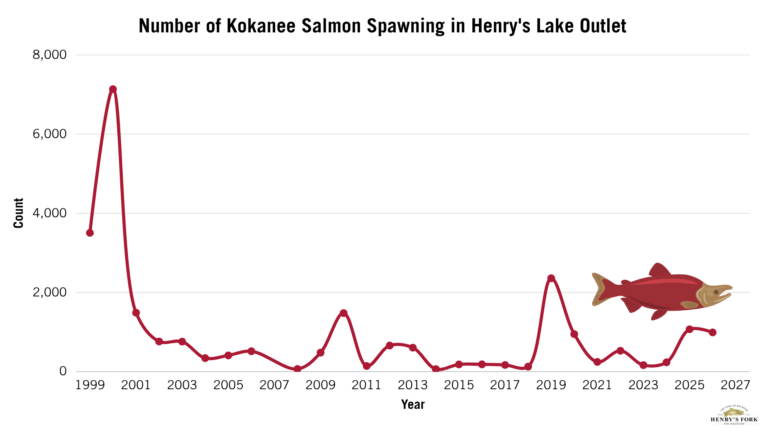
From 1999–2024, the U.S. Geological Survey Interagency Grizzy Bear Study team counted annual kokanee spawner abundance in Henry’s Lake Outlet and surrounding tributaries. In 2025, the Henry’s Fork Foundation took responsibility for maintaining this important, long-term dataset to ensure its continuity for future management and restoration efforts.
* Peer reviewed, restricted access. If you do not have access via a subscription or library, you can request a copy from rob@henrysfork.org.
What does a kokanee spawner survey look like?
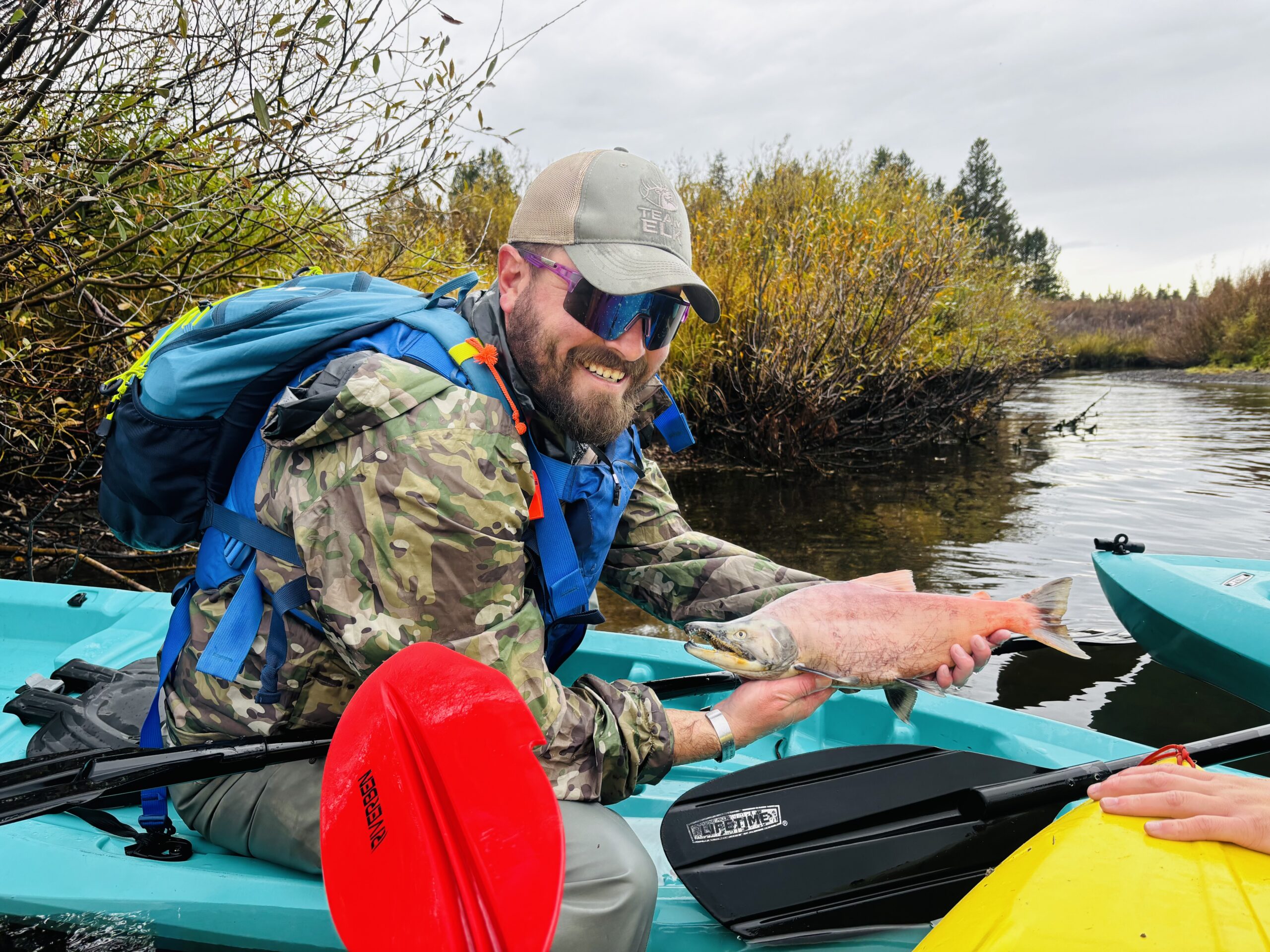
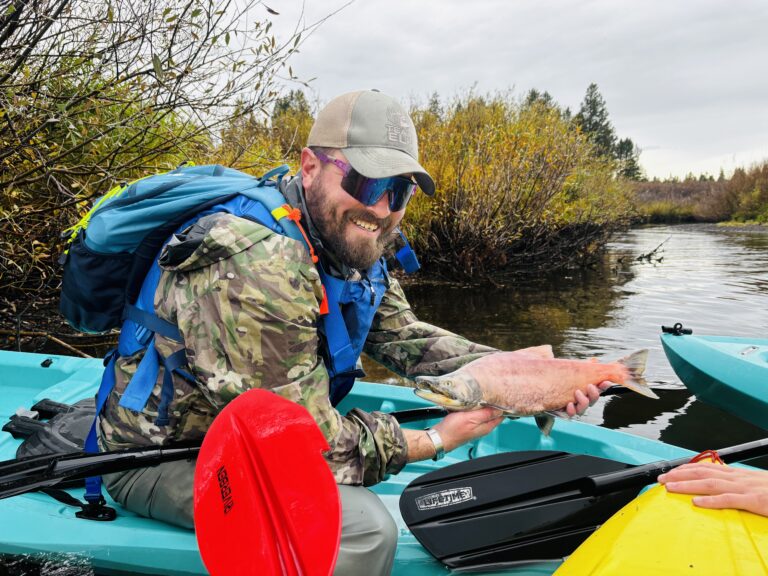
First, we assemble a team: a team lead and 2–3 other field crew made up of HFF staff and volunteers. Donning waders and polarized sunglasses, each person sits atop a kayak armed with a clicker and bear spray. The field lead carries a GPS unit (or smartphone).
The crew floats the Henry’s Fork Outlet from the North Big Springs Loop Bridge to the confluence with the Henry’s Fork. Each person is assigned a lane (right bank, left bank, etc.) and counts fish swimming below. One person might be assigned to paddle at the rear and count dead fish observed along the way.
The team is in constant communication, yelling back and forth at each other, both to ward off bears (it’s spooky in there!) and, more importantly, to ensure that each fish is accounted for and to reduce double counting.
“I got five over here! Oh, they just swam to your side. Don’t count ‘em. I already got ‘em.”
“Jack, there are three dead ones coming up.”
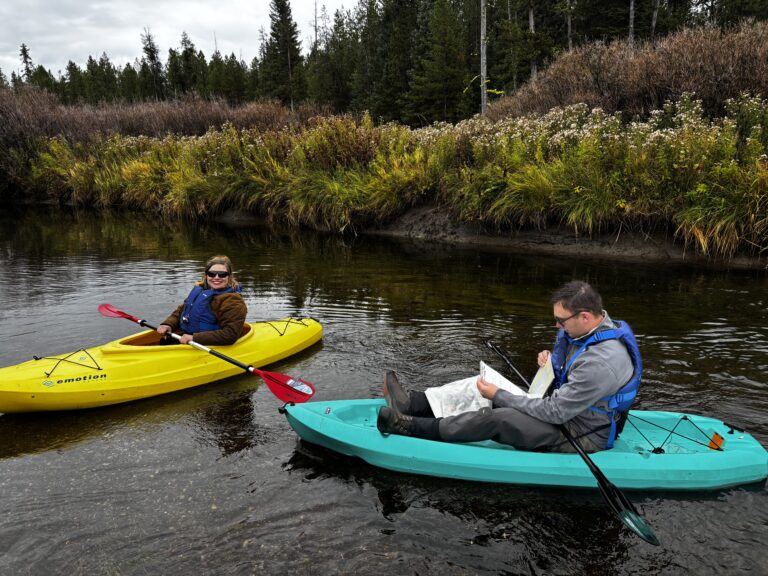
The reach is split into three sampling units and at the bottom of each unit, the team pauses to add their totals to the datasheet and turn their clickers back to zero before beginning again. We also take notes on any anglers, predators, and beaver sign we see along the way.
We’re out there once a week for the month of September and it is always a fun, adventuresome time. Would you like to join the volunteer squad? Reach out to Jasper Davis (jasper@henrysfork.org) to join our volunteer list, where you’ll be the first to learn about opportunities to get on the river with HFF!
Enough with the science stuff, show me the data!
This year, we counted fish weekly from September 3–October 2. Our biggest weekly count was 991 fish on September 25, on par with what we observed in 2025. Our 2026 count also ranks as #7th highest in the 27 years of monitoring. Not too shabby!
When it comes to kokanee, is HFF doing anything else besides counting fish?
Yes! We do a lot of work to keep Island Park Reservoir full(er) through our precision management, done in collaboration with water managers at Fremont-Madison Irrigation District and the U.S. Bureau of Reclamation, as well as our Farms & Fish program (led by HFF’s Daniel Wilcox). Since 2017, these efforts have successfully kept Island Park Reservoir 15% more full than would have occurred otherwise. That has resulted in a 20%** increase in kokanee salmon!
**provisional number subject to change
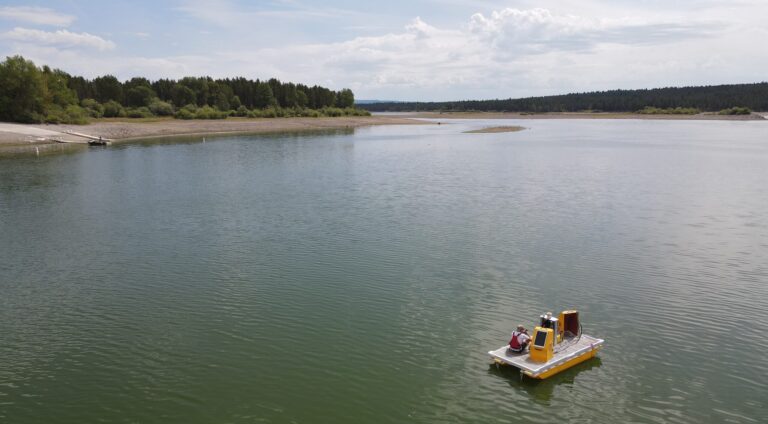
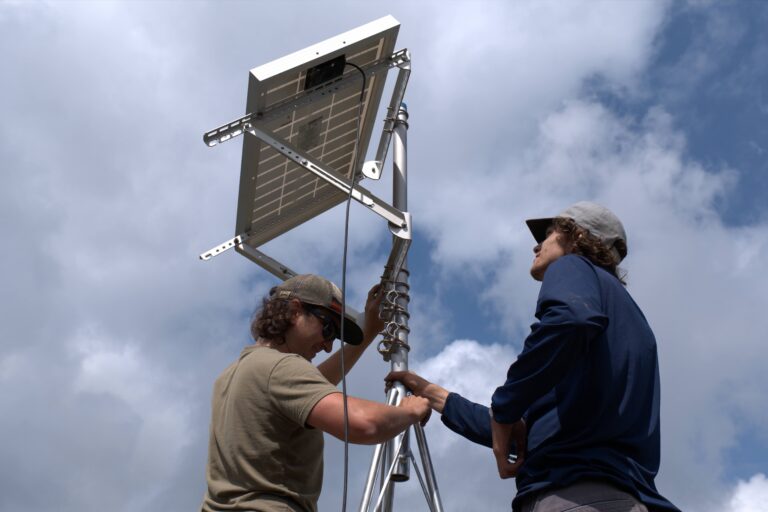
The Henry’s Fork Foundation is also actively working to improve the quality of water we’re helping save in Island Park Reservoir. Through our DIRTT plan, we are researching reservoir oxygenation and variable-elevation outflow at the dam—engineering approaches that could ensure there’s always some cool, well-oxygenated refuge for salmon and trout in the deep water of Island Park Reservoir. Read this blog post for more information about oxygenation.
Stay tuned to learn more and don’t hesitate to be in touch with questions.