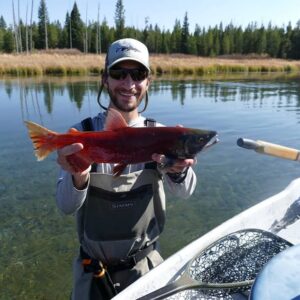
From September 12-19, the Henry’s Fork watershed hosted the 45th FIPS-Mouche World Fly Fishing Championship, bringing more than 100 anglers from 21 nations to fish the Henry’s Fork (Bear Gulch section), Teton River, Sheridan Lake, Hebgen Lake, and the Greys River. It’s the first time the Men’s Elite Championship has been held in Idaho Falls—the city hosted the FIPS-Mouche Ladies and Youth championships here last year—and Team USA made history in front of a home crowd.
HFF talks conservation at the Opening Ceremonies
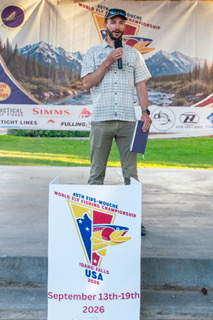
Our Aquatic Ecology Program Manager, Dr. Jack McLaren, joined Idaho Falls city and FIPS-Mouche leadership at the opening ceremony parade along the Snake River Greenbelt to welcome competitors to the watershed and to help make sure conservation was front and center. This has been one of the toughest water years on record here: one of the warmest, driest winters on record created a snow drought. This snow drought combined with two decades of a warming and drying has left reservoirs and natural flows across the entire Snake River system–and especially the Henry’s Fork–at all-time lows.
In brief remarks to the anglers, Jack welcomed the international field and turned to the need to conserve the Henry’s Fork’s unique and important fishery. His message, “the conditions that sustain trout fishing here are changing fast”, and “we must start to think bigger when it comes to collaboration and conservation.” It’s tempting, he said, to “just hope for a big winter to fix things”, but emphasized that it’s time to stop hoping Mother Nature will save us, and instead start working together to save Mother Nature.
“…we must start to think bigger when it comes to collaboration and conservation”
Dr. Jack McLaren, Henry’s Fork Foundation
He closed with a nod to legendary conservationist Aldo Leopold, who argued that people abuse land only when they see it as property rather than as a community they belong to — and that seeing it that way is the first step toward using our lands and waters with care.
That evening, Dr. McLaren returned to the podium at the event’s conservation symposium, alongside partners from Idaho Fish and Game and the Salmonfly Project. There, he introduced HFF’s “SRC” approach: Science-based, River-specific, Collaborative. This framework was built to meet the challenges of a warming, drying watershed on its own terms rather than with a one-size-fits-all model, presented to an international audience of anglers and conservationists.
How the Competition Works
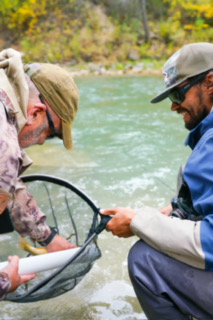
Competitive fly fishing assigns each angler a “beat” (stretch of river or lake) for a fixed three-hour session. On rivers, anglers are wading. On lakes, anglers compete from a boat. An independent “controller” (referee) watches each angler to score fish by number and size and penalize the angler for any that are mishandled or injured. The angler with the most “points” at the end of a session wins. After five days and five sessions, each anglers’ “placings” are added up–for example, an angler that placed 1st in each session would end up with 5 total “placings”. The team and individual with the lowest “placings” wins.
The competitive format rewards both size and number caught, thereby prioritizing extremely efficient angling and an aggressive catch-and-release ethic that requires barbless hooks, special nets, and minimization of fish exposure to air. This combination of angling excellence with conservation lines up naturally with the catch-and-release ethic already at home on the Henry’s Fork.
A First for Team USA
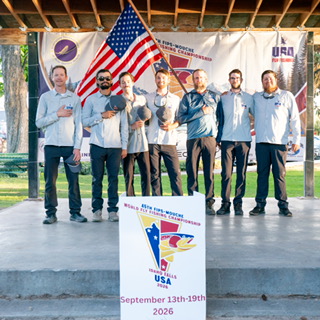
Across six sessions, Team USA finished with 159 placing points and 472 fish landed to win the team title. This is Team USA’s first-ever team gold at the World Fly Fishing Championship. North Carolina’s Michael Bradley won the individual title as well, ahead of Spain’s David Arcay and France’s Gregoire Juglaret. Team USA veteran Olsen, competing in his 16th world championship, called it “a goal I’ve worked toward for 20 years.”
Why this Matters for the Henry’s Fork
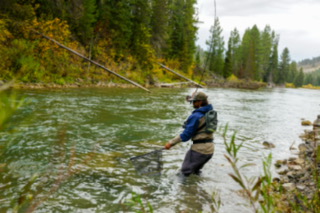
Events like this are a reminder of something we say often: the Henry’s Fork is internationally recognized as one of the finest trout fisheries on Earth. That reputation is an asset for the local economy, for the sport, and for conservation. But it’s also a responsibility. A watershed that draws competitors from 21 countries is a watershed worth fighting for, especially in a year when reservoirs and natural flows across the Snake River system are at all-time lows.
HFF’s mission is to conserve world-class wild trout fisheries in the Henry’s Fork and its connected watersheds through science-based collaboration. Our work exists to make sure this watershed is still fishing this well the next time the world comes calling.
Watch and Read More
If you want to go deeper on how competitive fly fishing actually works, or how Team USA’s week unfolded, here are a few good starting points:
- How competitive fly fishing works — a primer from local shops Fly Fish Food and TroutHunter: youtu.be/dmkDOYZhNa4
- Team USA’s week, day by day — coverage of each day of competition is available on Fly Fish Food’s youtube channel : https://www.youtube.com/@FlyFishFood
- A competitor’s-eye view of fishing the Henry’s Fork and Hebgen Lake under tournament pressure, from Fly Fisherman magazine: flyfisherman.com
- Team USA angler Mike Komara, interviewed on what it takes to compete at this level: youtube.com/watch?v=WXtmz5iGDeA
Congratulations to Team USA, and thank you to every angler who traveled to fish these waters, especially those from the other side of the world. We hope you’ll come back, and we hope the rivers are made even better by HFF’s work before you do.
Read Dr. McLaren’s Full Remarks to the Competitors Below:
Hello everyone! My name is Dr. Jack McLaren, and on behalf of the Henry’s Fork Foundation, I’d like to extend a heartfelt welcome to the Snake River watershed. What an opening ceremony! It’s inspiring to see anglers from all over the world gathered here in the Greater Yellowstone ecosystem.
The Henry’s Fork Foundation’s mission is to conserve world-class wild trout fisheries in the Henry’s Fork of the Snake River and its connected watersheds, through science-based collaboration. As I welcome you here, I want to highlight three parts of that mission.
First, “world-class fisheries.” Many places claim that title, but this event confirms it. When you’re on the water, I hope you feel what makes these fisheries special. I hope the Henry’s Fork in particular lives up to its reputation for big, challenging trout!
Second, “conservation.” World-class fisheries face real challenges. As you travel this watershed, you’ll notice these rivers aren’t hidden in remote wilderness. They irrigate farms, power homes, and support many other anglers and visitors alongside you. You may also notice the effects of a historic snow drought: one of the warmest, driest winters on record, following two decades of a steadily warming and drying climate, has left reservoirs and river flows across the entire Snake River system at all-time lows for the date.
Finally, “collaboration.” Anglers—especially competitive anglers like you—are central to this story. As leaders in this sport, your voices carry real weight. The conditions that sustain trout fishing here are changing fast, and we have to think bigger. A generation ago, we adopted barbless hooks and catch-and-release, and overharvest is no longer an issue. Now we face record heat, drought, and vanishing snowpack. It’s tempting to simply hope for a big winter to fix things. Here on the Henry’s Fork, we’ve been hoping for twenty years, and it hasn’t come. It’s time to stop hoping Mother Nature will save us, and instead start working together to save Mother Nature.
Aldo Leopold put it best: “We abuse land because we regard it as a commodity belonging to us. When we see land as a community to which we belong, we may begin to use it with love and respect.”
That’s the shift we need in how we see these rivers, and in what we’re willing to invest to protect them. It will take rearranged priorities, real money, bigger thinking, and true collaboration among farmers, anglers, and everyone else who relies on these beautiful resources.
Thank you, welcome, and good luck fishing!