Anglers have expressed a growing concern regarding river temperatures as the Henry’s Fork flows through Harriman State Park, from Last Chance downstream to Pinehaven. Indeed, water temperature plays a pivotal role in the unique angling experience that is characteristic of the Henry’s Fork. Macroinvertebrate diversity, abundance, and size at hatch are influenced by the temperature of the water. Likewise, wild trout have a temperature threshold that can impact growth and activity. With the increasing impacts of climate change on weather and hydrology, there are growing risks to the fishing experience we have come to expect on the Ranch.
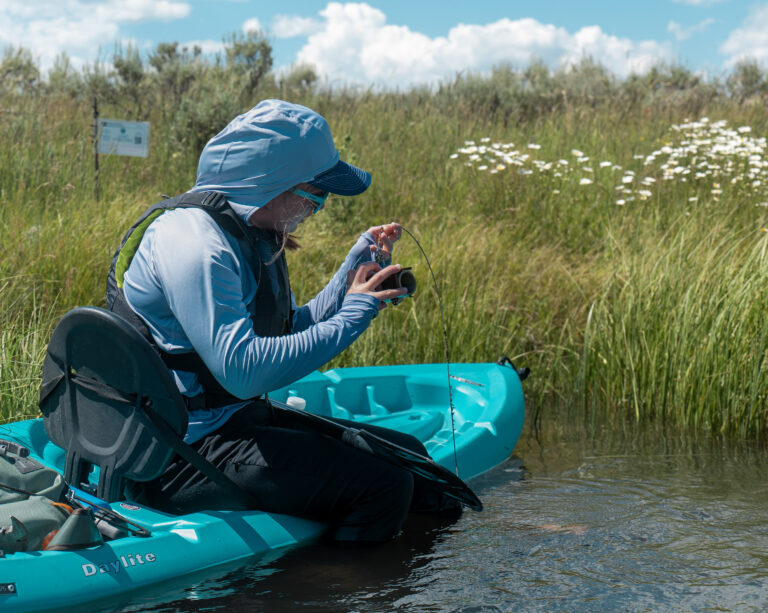
In 2023, the Henry’s Fork Foundation (HFF) started a comprehensive monitoring project to investigate river temperature patterns through Harriman State Park. With the help of the local angling community, we selected sixteen locations that were of concern for elevated water temperatures. These sixteen locations are a mix of mainstem and tributary sites to represent the full picture of water temperature throughout the Ranch. At each monitoring site, we installed HOBOloggers (with appropriate permits from Harriman State Park) that record water temperature every fifteen minutes. During the summer months (June-August), HFF staff and interns download data every week for upload to a public data website.
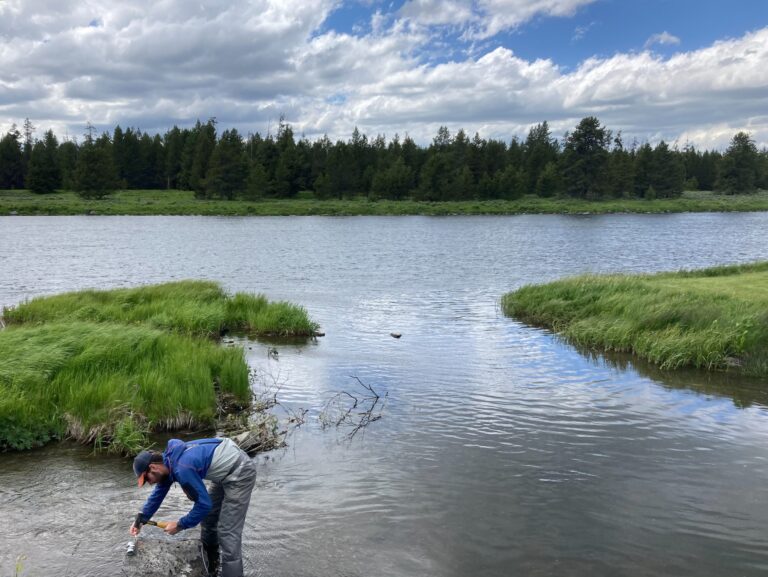
Kate Shiffler (2026 intern) downloading data from a temperature logger
What We Learned: The State of Water Temperature on the Ranch
Daily average temperatures on the Ranch are controlled by the temperature of the outflow from Island Park Reservoir, not flow amount.
Daily maximum temperatures are affected by flow. High outflow from Island Park Reservoir = lower daily maximum temperatures, even if average temperatures are high.
Groundwater plays a major role. Springs and aquifer input from snowmelt help cool and stabilize temperatures everywhere on the Ranch, not just at Osborne Springs.
Tributaries have lower daily average temperatures than the Henry’s Fork, but often experience higher maximum temperatures by the afternoon.
We found water temperatures remain ideal for angling only when outflows from Island Park Reservoir are both high and cool simultaneously. The situation is even better if a full groundwater aquifer supports strong spring and tributary inflow to the river. Only unusually wet, cold conditions and multiple years of strong snowpack make this possible.
Unfortunately, the new normal is the opposite. Poor snowpack and the early onset of spring result in early reservoir ice-off, record-low natural flow, a reduced local aquifer, and early irrigation water needs 60 miles downstream. Because outflows from Island Park Reservoir are warm and oftentimes low, groundwater is reduced, resulting in the high daily average and maximum temperatures we see in the modern era.
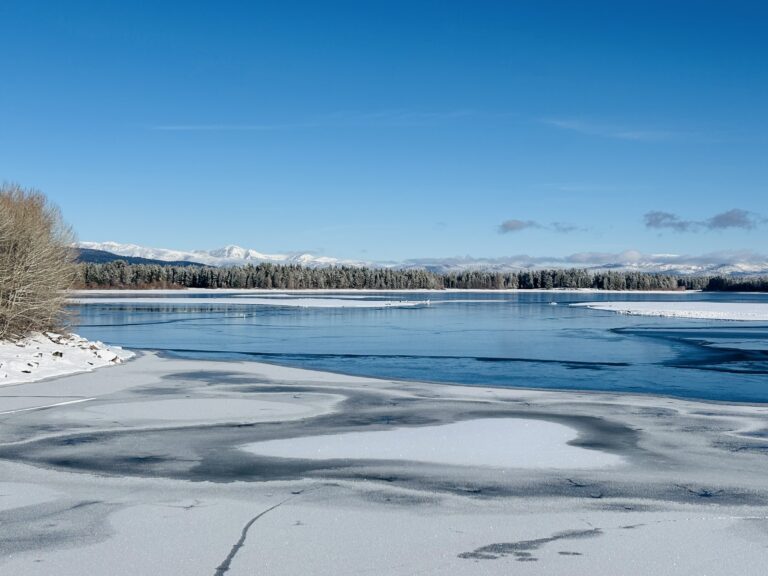
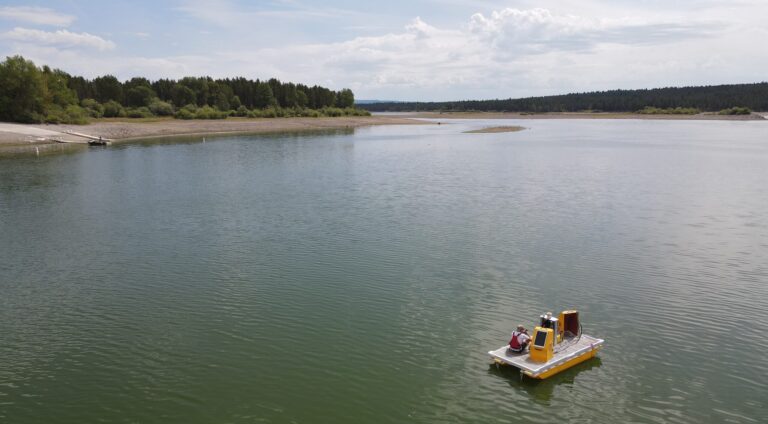
Photo of Island Park Reservoir taken December 3, 2025
Future Conservation Efforts: What Can We Do?
In Island Park Reservoir
To reduce water temperatures, the Henry’s Fork Foundation is focused on keeping Island Park Reservoir full. Why? Because Dr. Jack McLaren’s research indicates that a fuller reservoir helps keep outflow—and thereby water temperatures on the Ranch—cooler. Keeping water in Island Park Reservoir by reducing outflow may result in occasional high daily maximum river temperatures, but keeping daily averages lower is likely more impactful for long-term trout and macroinvertebrate health.
A Decade of Work: Since 2017, the Henry’s Fork Foundation’s Farms & Fish Program, along with Precision Management conducted in partnership with the U.S. Bureau of Reclamation and Fremont-Madison Irrigation District, have helped keep Island Park Reservoir 15% fuller than expected.
Our Vision for the Future: Any further improvements will need to come via major, expensive infrastructure updates to Island Park Reservoir. Infrastructure like a variable-elevation outflow retrofit would allow for direct management of water temperature in Island Park Reservoir, potentially cooling annual maximum average temperatures by 1-2 Celsius. Need a visual? Head to Page 7 of our 2025 Winter Newsletter to learn more. Want good news? In 2027, HFF will hire a consulting firm to investigate the possibility and impact of a variable-elevation outflow retrofit. Stay tuned!
On the Railroad Ranch
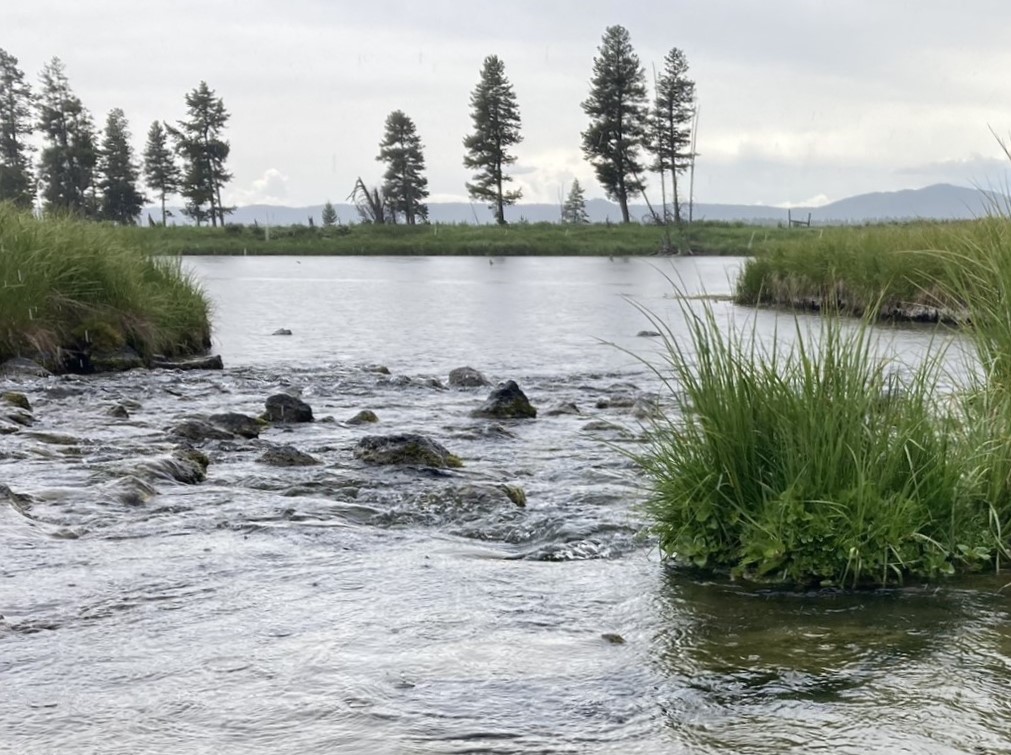
On the Ranch itself: weather, tributaries, groundwater input, and flow drive thermal patterns in the river. The impact of groundwater springs flowing into certain reaches can be seen for miles downstream, given poor mixing with water in the full river channel. This poor mixing provides areas of localized refuge that can be suitable habitat for juvenile and adult trout when the water temperature increases. Restoration and enhancement of tributaries to the Ranch can reduce temperature and provide refuge for trout. This restoration can be done through habitat work—such as fencing and shading—or through local groundwater recharge.
Taking a Closer Look: As of November 2026, the Henry’s Fork Foundation is hiring a consulting firm to investigate tributary restoration and enhancement opportunities through the Railroad Ranch. Funds from our $1.1 million U.S. Bureau of Reclamation WaterSMART grant for HFF’s DIRTT Plan make this work possible. More details to come.
Thank You
The Harriman State Park Temperature Monitoring project has been made possible thanks to financial contributions by Jon and Karyn Hodge, past Harriman Ranch River Guardians, and current Harriman Ranch River Guardians (Jeff and Amy Roberts, Kevin and Jennifer Peterson, The Fort Hamm Society, George Borkow and Marilyn Volpe, Cotton Family, David Dieter, Greg Stephens); fieldwork conducted by interns Mike Hensley (2023; University of Wisconsin), Lily Greenwald (2024; Washington and Lee University), Dela Anderson (2025; University of Wisconsin), Kathryn Shiffler (2026; University of Idaho), and Tate Sargeant (2026; Byers Intern); permitting from Harriman State Park.
This text was originally written as a project report by Kathryn Shiffler and Dr. Jack McLaren in September 2026. It has been minorly edited in this blog post for storytelling purposes. Read the full report here.
Anglers have expressed a growing concern regarding river temperatures as the Henry’s Fork flows through Harriman State Park, from Last Chance downstream to Pinehaven. Indeed, water temperature plays a pivotal role in the unique angling experience that is characteristic of the Henry’s Fork. Macroinvertebrate diversity, abundance, and size at hatch are influenced by the temperature of the water. Likewise, wild trout have a temperature threshold that can impact growth and activity. With the increasing impacts
Kokanee, the landlocked form of sockeye salmon, have been stocked in Island Park Reservoir since the 1940s. Through a combination of stocking and wild recruitment, kokanee salmon populations have become an important component of the Upper Henry’s Fork ecosystem and social fabric. Historically, kokanee turn the river red during their fall spawning migration out of the reservoir and upstream through Mack’s Inn to tributaries like Moose Creek, Henry’s Lake Outlet, and others. Here, kokanee offer
New monitoring technology brings a clearer picture of Island Park Reservoir—and new possibilities for the Henry’s Fork. It started with a massive crate in the Henry’s Fork Foundation parking lot. After a summer of troubleshooting, learning new technology, testing equipment, and plenty of problem-solving, HFF’s newest water-quality monitoring buoy made its way onto Island Park Reservoir in September. What may look like a simple piece of equipment floating on the water represents an exciting step
For the first half of my internship, it was unclear if we would get to install the snow monitoring stations. With only three weeks left in my internship, the parts arrived, the permitting was approved, and I am happy to say that we have three stations in the ground! Dr. Lang, Joe, and I were like three kids on Christmas opening up all the boxes, only a little more careful due to the fragility of