This is the 1st blog in a series about research and conservation activity in the Upper Henry’s Fork, focusing on Island Park Reservoir. Click here for blog post 2 and here for blog post 3.
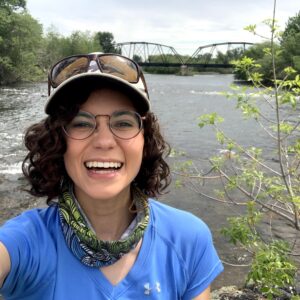
Dr. Jack McLaren – HFF’s Aquatic Ecology Program Manager
First, let’s go back in time 7 years…..
I needed to get out of the office, away from my computer, and out on the water.
This is not an uncommon thought for me—I love to float and fish our local rivers and lakes—but this time my thoughts were directed towards work and the problem of Island Park Reservoir. It was 2017, only my second summer as a graduate intern with the Henry’s Fork Foundation. All of us were trying to chart a course forward after a particularly bad fishing season in 2016. High turbidity in the outflow from the reservoir into the Henry’s Fork made fishing tough. This generated a significant amount of anger and frustration amongst the angling community, and answers were tough to come by.
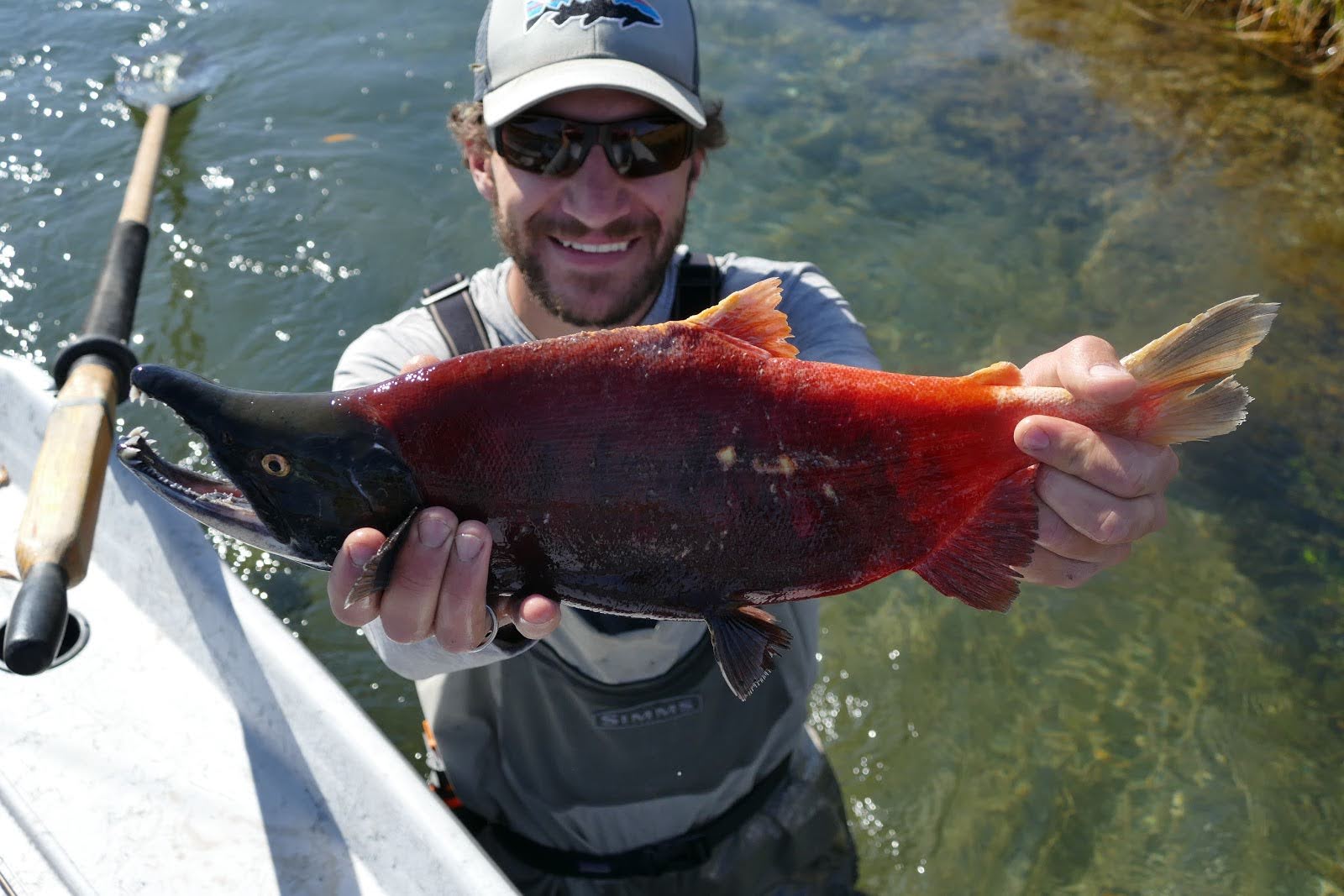
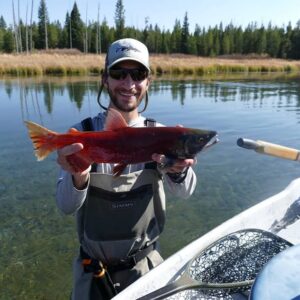
Dr. Jack McLaren with a Kokanee
I was eager to contribute in some way to the health of the Henry’s Fork watershed. To begin, I thought it was important to gain a deeper understanding of how the Reservoir functioned. Back then, my knowledge of Island Park Reservoir was limited to what most people knew—it served as storage for irrigation water and offered valuable real estate opportunities for developers. Oh, and its water quality was bad. But why was that? We needed to know more! Of course, studying an 8,000 acre reservoir is no easy feat. It was time to get on the water.
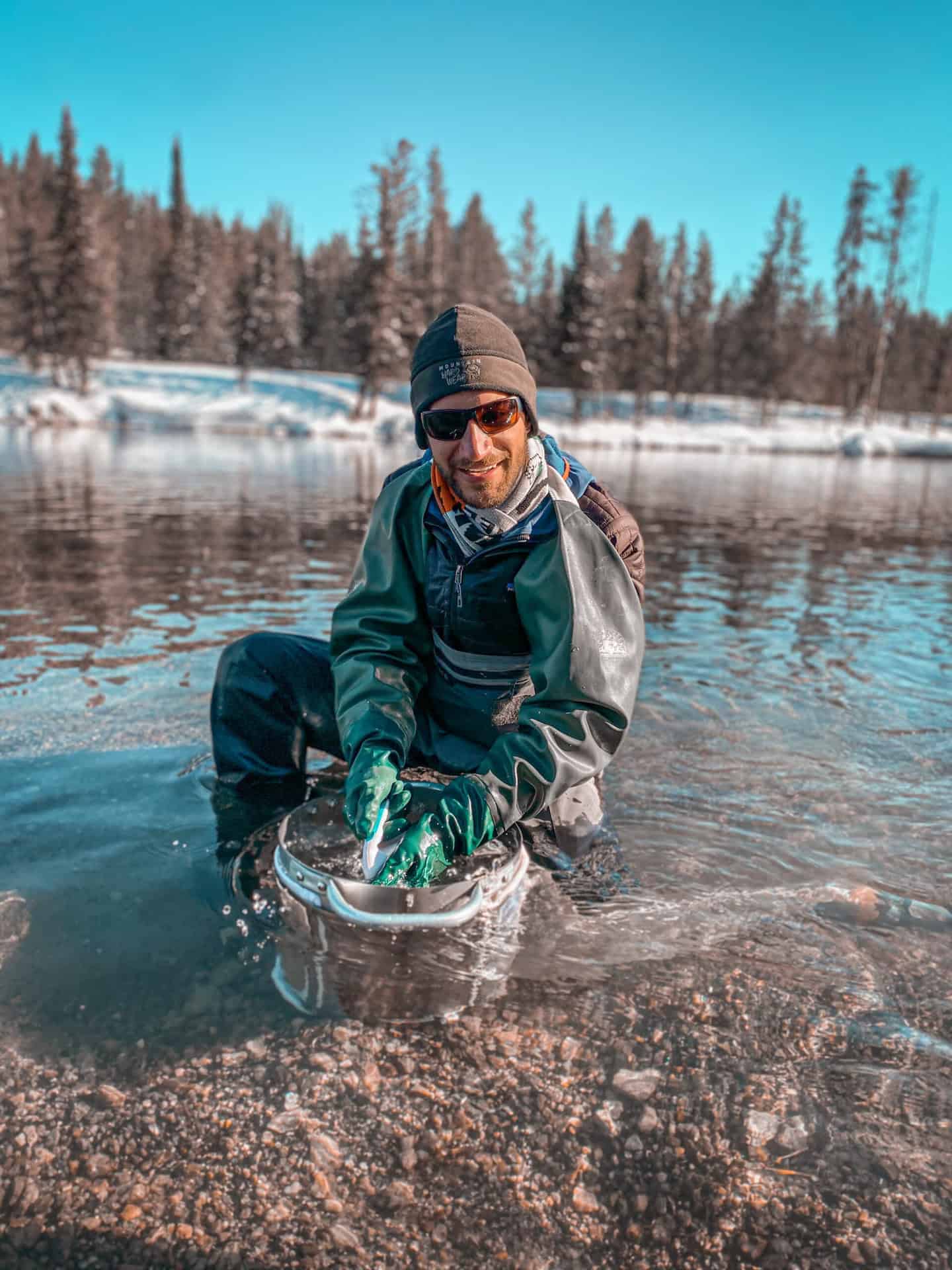
I decided to start by mapping the reservoir. That’s step #1 to getting a good understanding of how a reservoir works and what its problems are. To really get to know my new study subject, I decided it would be best to spend a week or so camped out on the shoreline. That way, I could start my days mapping at dawn and end at sunset. I had no idea at the time that this time spent on the Reservoir would be a life-changing experience.
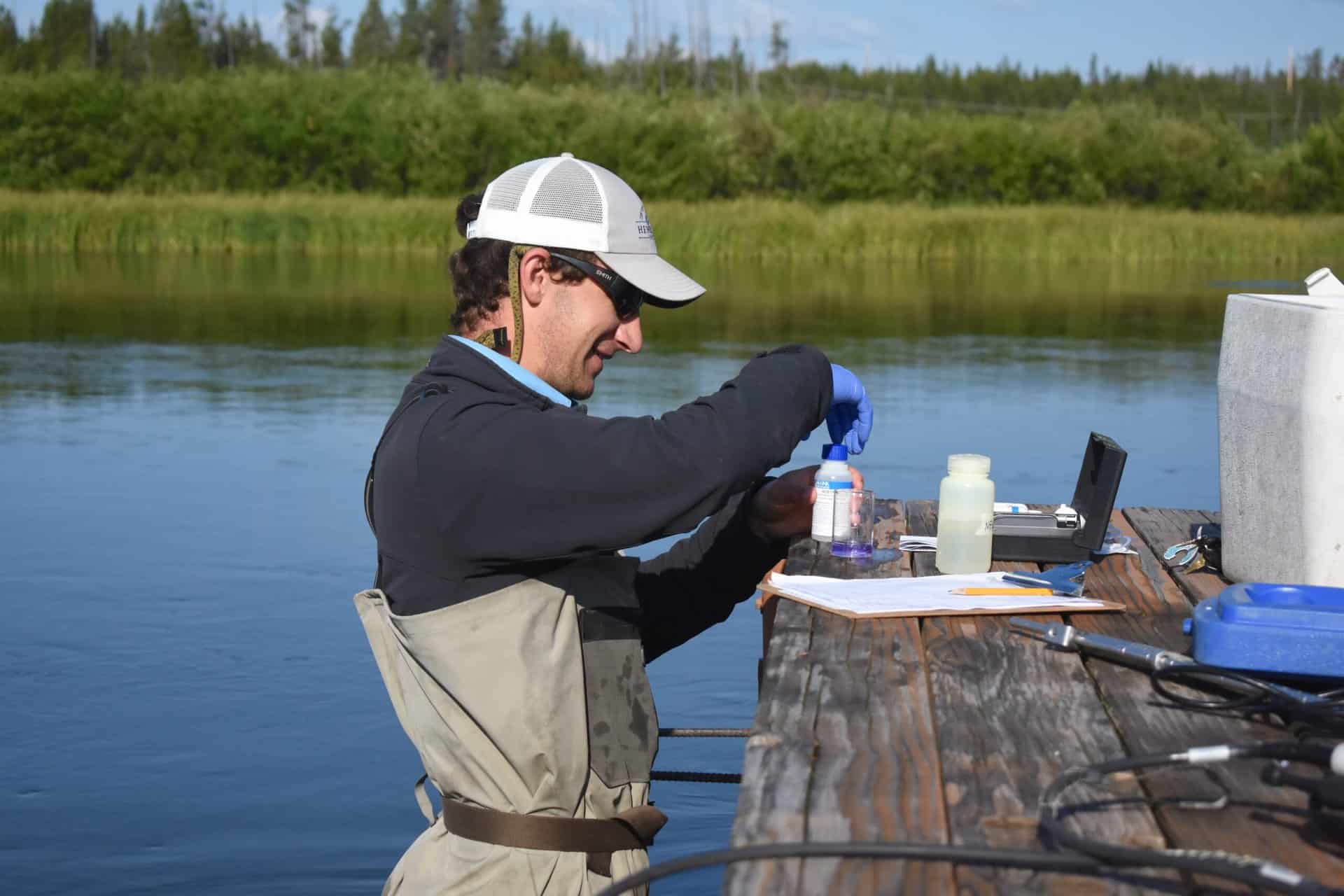
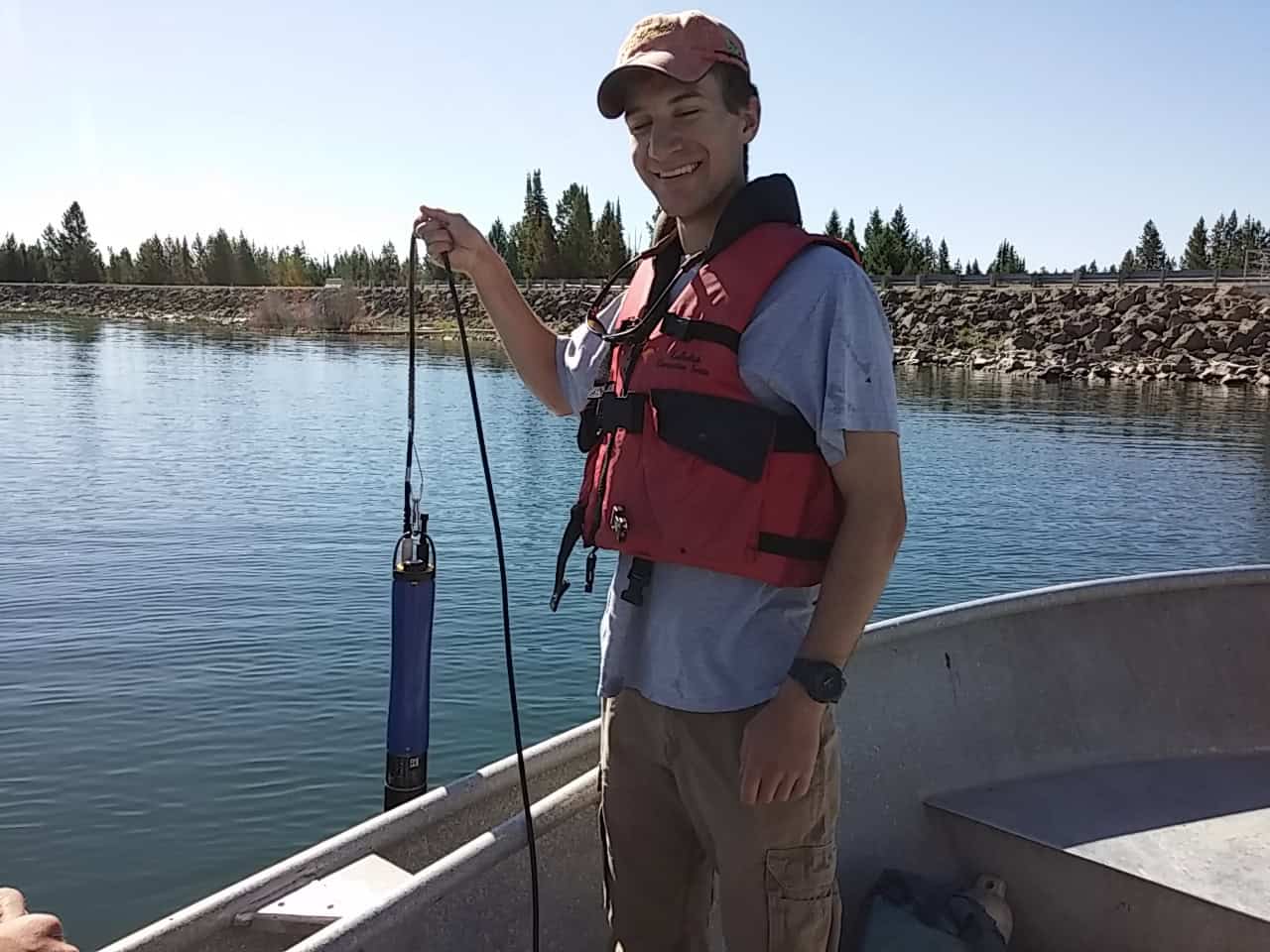
Dr. Jack McLaren holding a sonde – a device he used to map Island Park Reservoir
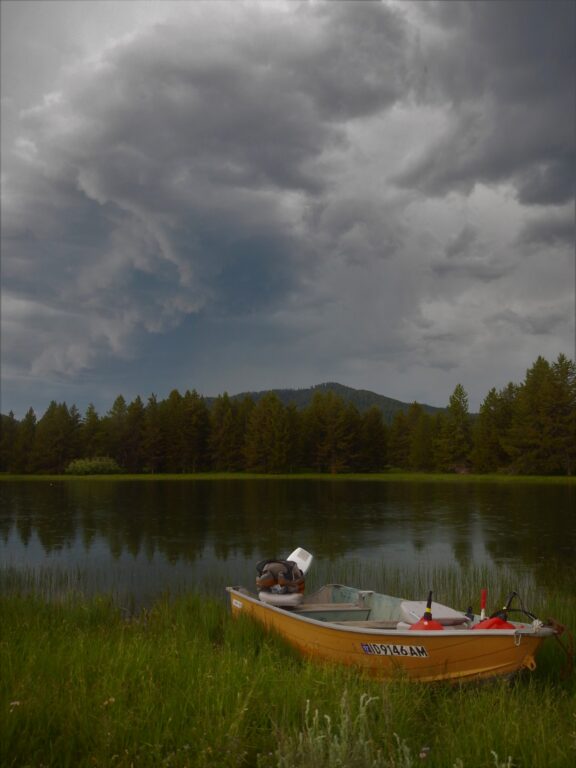
My long days collecting data and camping under the stars in June of 2017 taught me that there was so much more to Island Park Reservoir than its reputation. The sunrises and sunsets were glorious. I watched squalls race across the water, leaving a uniquely clean and quiet, mirror-like stillness in their wake. I woke to a morning reverie of loons, grebes, and songbirds. I caught chrome-wild rainbow trout in the remote inlets and springs. And I pretty much had the lake all to myself. Island Park Reservoir, I learned, is a functioning ecosystem worthy of our care and concern.
Summer solstice sunset on the west end of the Reservoir. Reas Peak, Taylor Mountain, and Baldy Mountain are visible from right to left.
Unfortunately, the last 20+ years have witnessed struggles with temperature, algae, turbidity, and dissolved oxygen that render Island Park Reservoir unusable at times for people, pets, and the fish and wildlife that drive the ecosystem and our local economy. Fortunately, it doesn’t take camping out alone on the reservoir, weeks of fieldwork, or years of academic study to recognize the potential in Island Park Reservoir. Island Park citizens have long enjoyed the Reservoir. Over 20 years ago there was more fishing and boating on Island Park Reservoir than world-famous Henry’s Lake! Talk to any long-time Island Park resident and they’ll gladly tell you stories of swimming and fishing in the Reservoir and watching the red kokanee salmon swim up Moose Creek in the fall.
So, what went wrong and how do we fix it?
The water quality issues that Island Park Reservoir experiences—poor dissolved oxygen, low clarity, harmful algal blooms, and the like—are just the symptoms of underlying issues. Just like with illness and disease in humans, it is important to understand the underlying problems before recommending solutions. That’s why we at the Henry’s Fork Foundation spend so much time and effort on monitoring.
After 8 years of study on the reservoir, I’m going to do my best to describe how Island Park Reservoir works, link the reservoir to the Henry’s Fork downstream, and chart a possible course forward to better water quality, fisheries, and recreation in the context of a rapidly changing watershed. There may be some good nuggets in this blog series that can help your fishing, too!
Our Aquatic Ecology Program Manager, Dr. Jack McLaren, joined Idaho Falls city and FIPS-Mouche leadership at the opening ceremony parade along the Snake River Greenbelt to welcome competitors to the watershed and to make sure conservation was front and center.
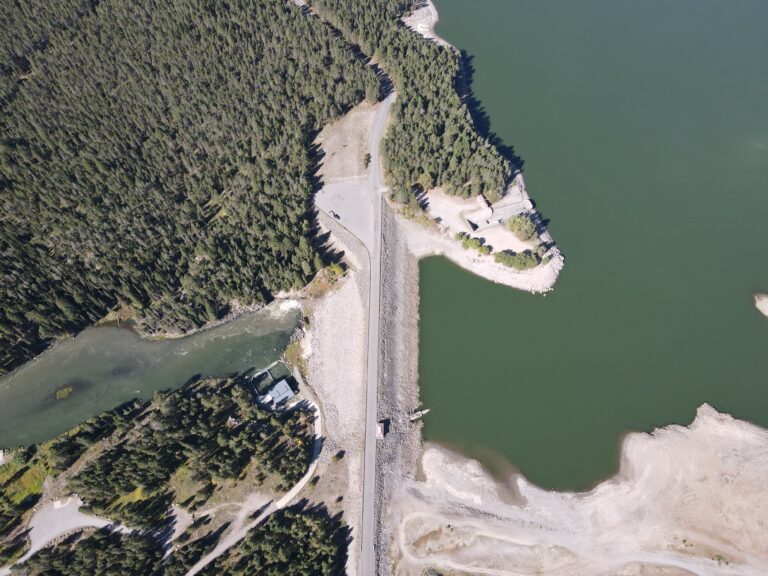
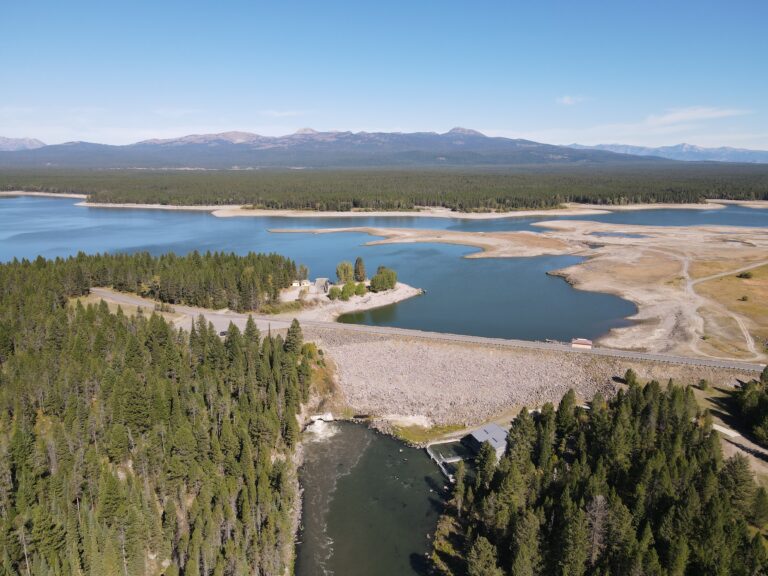
Drone photo of Island Park Dam taken on September 9, 2026 Looking Back on September September brought lows and highs to Island Park. Island Park Reservoir started September at 29% full and quickly fell to a low of 12% full on September 19. The rapid drawdown of the reservoir was the result of managers needing to move water downstream to American Falls (to irrigate farms in the Magic Valley with senior water rights). Such low
This story was written by Audrey Hunter (2026 intern) and was originally published in the Fall 2026 Newsletter. It’s no secret that late summers on Island Park Reservoir haven’t been in perfect conditions in recent years. Warm, turbid, algae-filled water plague reservoir recreationists while diminishing water quality downstream. Cyclical algal blooms decrease water clarity and create less-than-ideal circumstances for the reservoir’s flora and fauna. What’s the solution? HFF’s DIRTT Plan. In-Reservoir Oxygenation Nutrients released from
Drone photo taken on September 9, 2026 The Henry’s Fork Drought Management Planning Committee met on Wednesday, September 16 2026 to develop an updated reservoir management strategy. Downstream of the Henry’s Fork watershed, lower-valley irrigation demand over the rest of the season is anticipated to be slightly lower than projected last week, so Island Park Reservoir and Grassy Lake (in the Fall River drainage) do not need to deliver any more water out of the