I grew up fishing on the North Carolina coast. From flounder and speckled trout (not actually in the trout family) deep in the creeks to Spanish mackerel and bull redfish right off the beach, all the way out to what feels like the middle of the ocean trolling for king mackerel and cobia, I loved
the wide variety of fish.
One sunny July morning a few summers back, my dad and I headed offshore in hopes of finding some king mackerel. It didn’t take long to realize it was going to be a slow day of fishing. The morning came and went; the sun climbed higher in the sky, its rays growing more intense every minute. It was quiet, and then it wasn’t. One of the reels began to scream. As we looked toward the stern of the boat, we saw a sailfish dancing on top of the water. Catching a sailfish during July in 80 feet of water is extremely rare and is the exact reason why I love saltwater fishing: you never know what is at the end of your line until you see it.
I had a few fly-fishing experiences before my time in Idaho, but I never really considered it “my game.” To me, and many other saltwater fishermen, fly anglers seemed to be more interested in looking at trees and flowers than actually fishing.
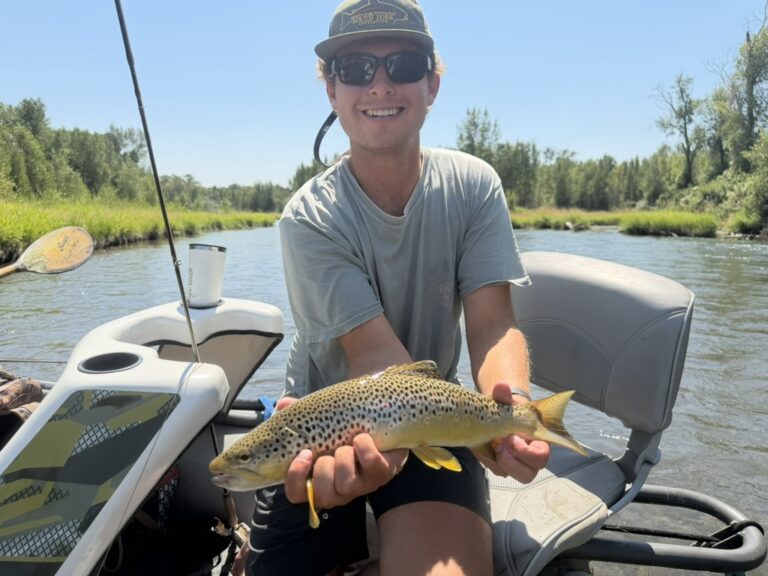
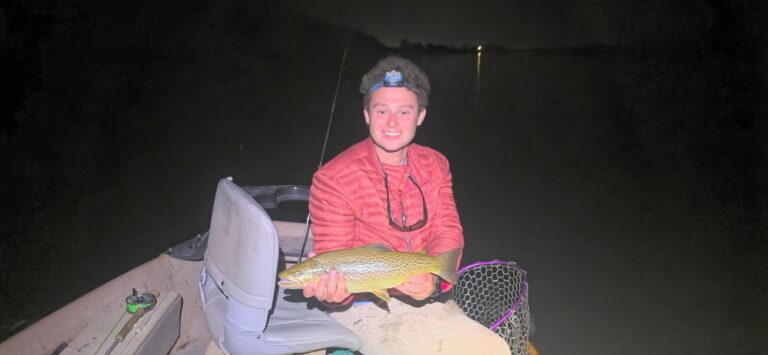
A nice brown that was tricked by a streamer on the South Fork
Upon my arrival in Ashton and during my first few days at the Foundation, it became apparent that the draw of fly fishing was not the harvest of fish, but the chase itself. While that is most definitely a part of the saltwater fishing I do back home, anglers out West are more inclined to wait and try to trick a fish of their choosing—not just any old fish.
One of my first fishing endeavors out here was just below the Ranch Section of the Henry’s Fork. I made the trek north to meet with a gentleman who helps support the W&L interns. When we got to the river, we put our rods together, tied on some flies, and then stood on the bank for what must have been an hour as daylight began to fade. He explained that we were studying the brown drake hatch and waiting for the right fish to rise. While he intently watched the river, I was going crazy. Fish were rising, bugs were hatching, and this guy wanted to sit on land and wait for the “right” fish to rise. I believe that, after what felt like an eternity, he sensed my growing impatience and gave me the green light to hop in the river. I caught zero fish.
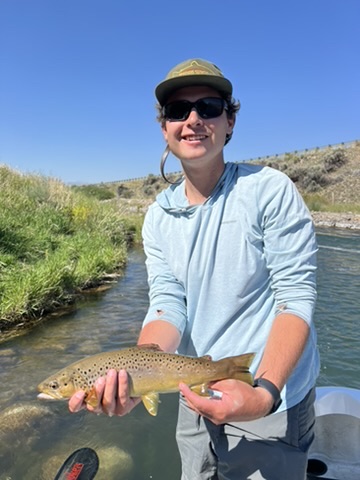
This brown trout was found in some fast water on the Beaverhead
To my surprise, the lessons he taught me that evening became ever more important as I became a better fly angler. Now, I find myself standing by the river’s edge waiting for the “right” fish to rise. Heck, I even hop in the water without a rod occasionally and pick up bugs floating downstream!
When I first moved to Ashton, I was doubtful that any of the tips and tricks I learned while fly fishing would be applicable in the saltwater of North Carolina. But taking an extra beat to survey the water, even if it’s just a few minutes, is a tactic that I will take home with me. There is no doubt that fly anglers spend more time observing their surroundings without a line in the water, and perhaps that is exactly what makes them successful.
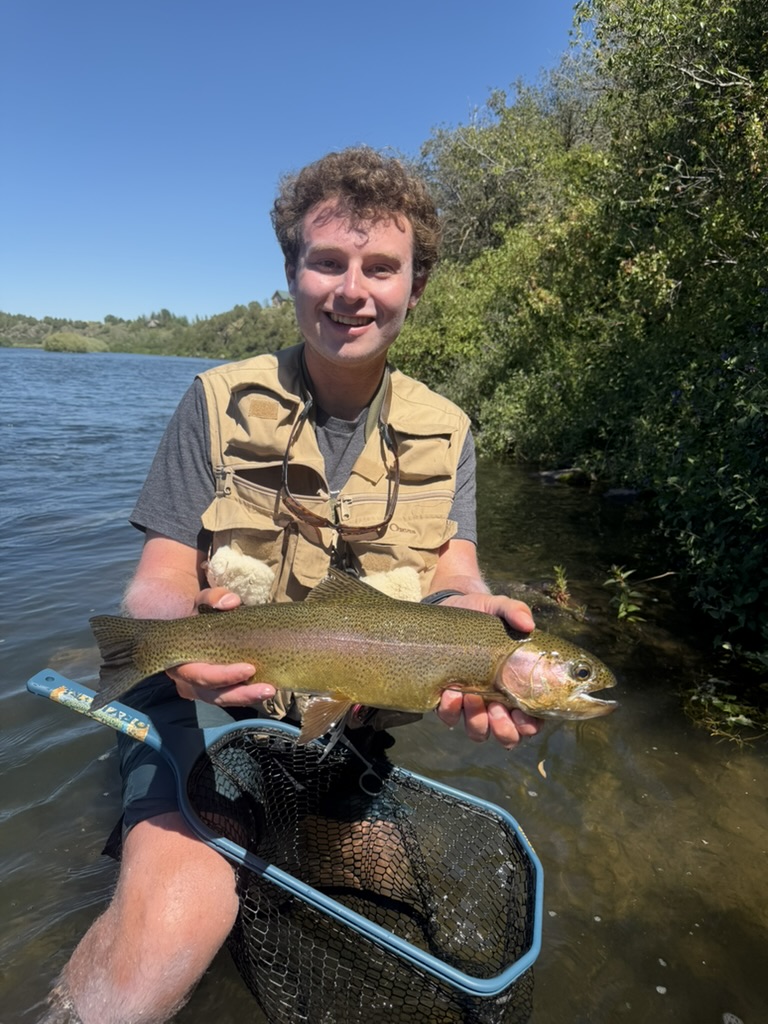
I even got the opportunity to try mousing. We got lucky when this fish exploded on top of the water, devouring my fly
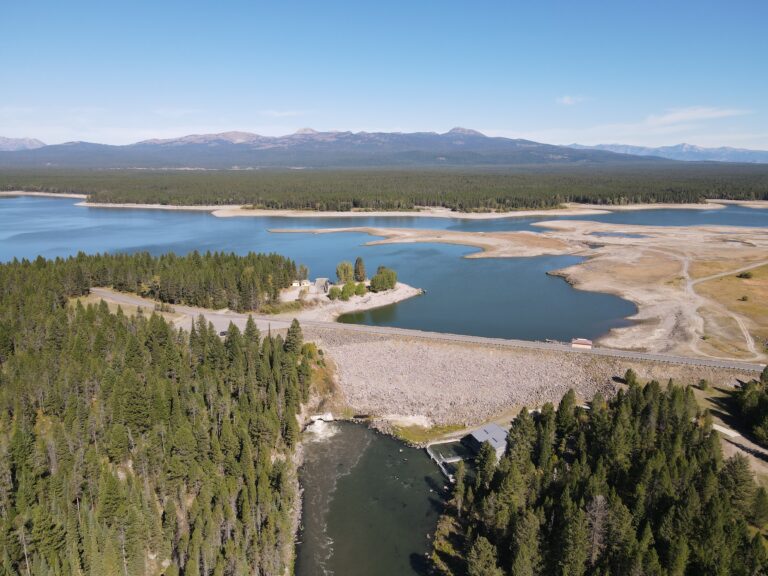
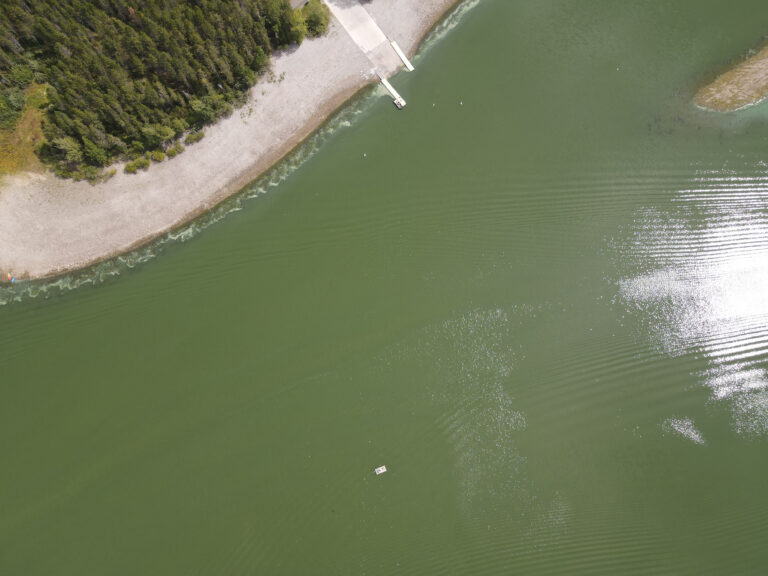
Drone photo taken on September 9, 2026 The Henry’s Fork Drought Management Planning Committee met on Wednesday, September 16 2026 to develop an updated reservoir management strategy. Downstream of the Henry’s Fork watershed, lower-valley irrigation demand over the rest of the season is anticipated to be slightly lower than projected last week, so Island Park Reservoir and Grassy Lake (in the Fall River drainage) do not need to deliver any more water out of the
This year has brought the Henry’s Fork watershed an extraordinary water-supply challenge. Natural flow is exceptionally low, and Island Park Reservoir is ending the summer at a near-record low level. But there is another important part of this story: we knew these conditions were coming, we planned for them, and water managers are managing the water we have as carefully as possible. HFF is one of the 6 official signatories to the Henry’s Fork Drought
Why is Island Park Reservoir getting so low? Simply put, this has been an exceptionally low-water year. There isn’t enough natural flow to meet all of the basin’s needs without drawing down reservoirs. Water managers are working together to deliver water that is legally owed downstream while preserving as much as possible for next year. What should anglers expect below Island Park Dam? As Island Park Reservoir drops too low for the hydropower plant to
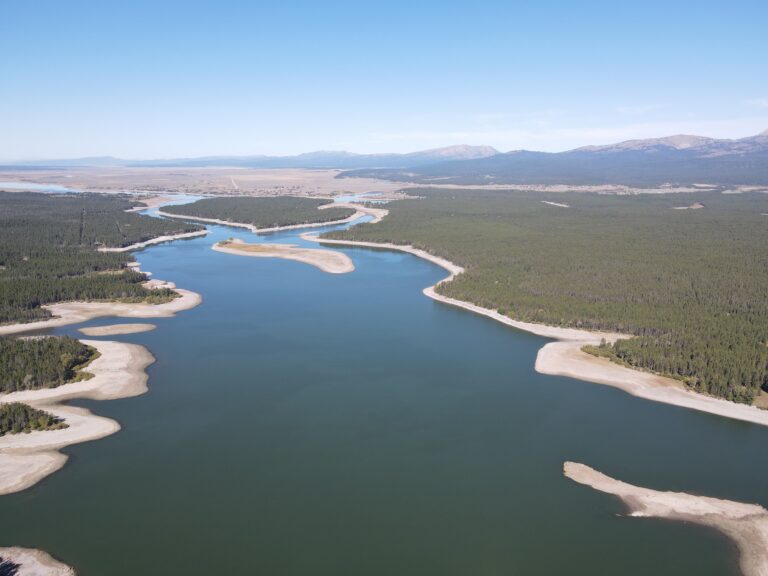
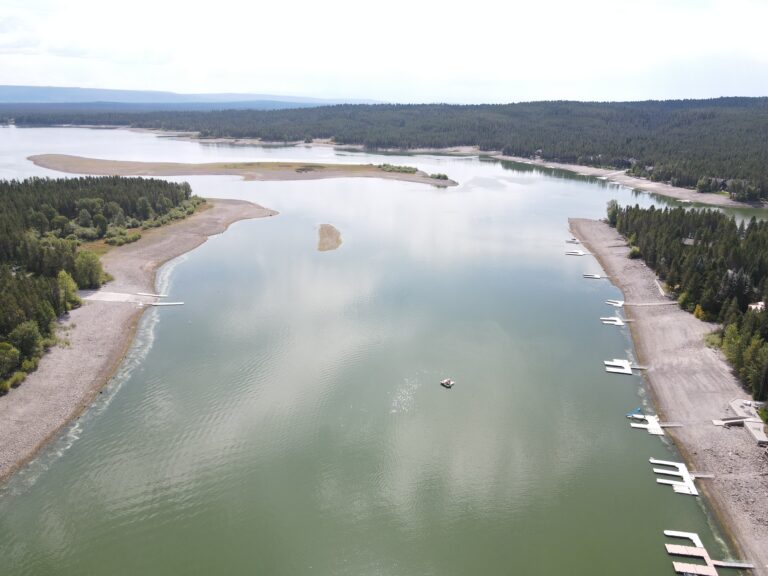
Photo of Island Park Reservoir taken Friday, August 28, 2026 The ingredients for green algae blooms, the primary culprit for turbid water in Island Park, stacked up one after the other earlier this spring. Warm air temperatures. Low streamflow. Long, sunny days. And an ice-free reservoir 30 days earlier than normal. At the Henry’s Fork Foundation, where we swim in water data daily, we braced ourselves for the water quality worst-case scenario: another summer with