The Story Behind the Data

Home » Blog » The Story Behind the Data

As an undergraduate studying economics and environmental studies, I have done my fair share of data analysis and modeling. I applied to work at the Henry’s Fork Foundation this summer to experience the other side of research; the groundwork and data collection. My econometrics professor would always reiterate to our class that when we are modeling data, we are taking numbers (data) and eliciting their story. If modeling data is telling a story with numbers, then data collection must be like raising the numbers from the dead and giving them the possibility to be a story. While this nerdy and possibly romanticized idea of data had me excited to join the foundation, it has not been the most rewarding part of my job. What I have found to be the most meaningful part of collecting data has been an unexpected connection to the Last Chance boat ramp. 

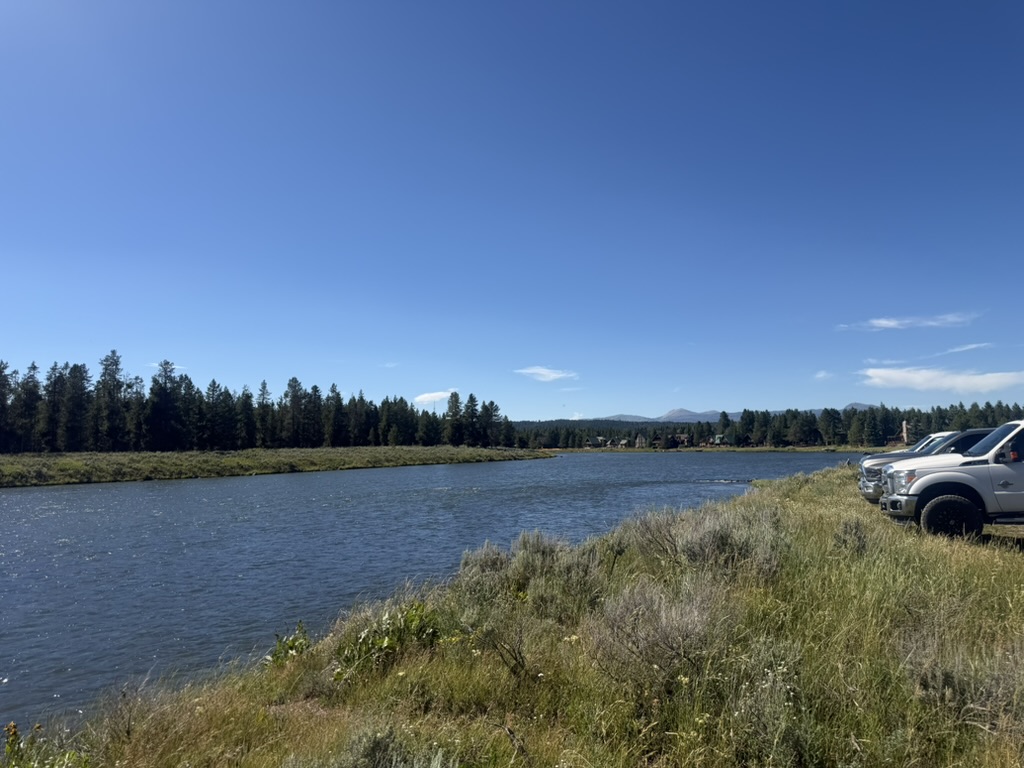
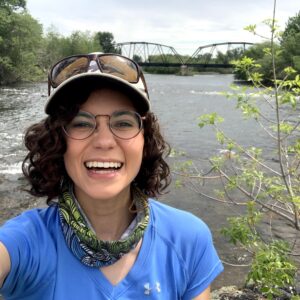
My work this summer is focused on the Foundation’s Floater Use Survey. The Foundation conducts this survey every few years to better understand how many people and on what vessel types are going down the river. To gather this data, we set up two trail cameras to track floaters and conduct randomized two-hour observation periods where I sit by the river at Last Chance and manually count the floaters passing by.  

During these hours spent at the boat ramp, I have become well connected to this stretch of river. I know what times to expect mule deer emerging from the trees, what parts of the river to scan to see fish rise, and what bugs to expect hovering on the water. There are certain blocks of observation where I know the river will be full of floaters and other times where I do not expect to see anyone. I know when the guided fishing trips will be passing by and when I am more likely to see kids floating down on tubes. I have learned when the porta-potty is going to be cleaned. The Last Chance boat ramp has a rhythm that I have learned through countless hours of observation. 

My time at the foundation served as a reminder that data only tells one, though important, facet of the story. While I will attempt to tell a part of the story through my work, my time spent counting floaters has given me a more complete understanding of Last Chance boat ramp through its rhythm of its bugs, deer, fish, and even the porta-potty. 

Preparing for IPR sampling at Island Park Reservoir
Facebook
LinkedIn
Pinterest

Recent Posts

General
Patrick Nardi

SUMMER ON THE SOUTH FORK

It’s no secret that the Henry’s Fork is a river of grandeur. To those that fish it, it is like a church – a sanctuary that breathes fly-fishing legend. However, the South Fork quietly rumbles in the distance, with striking beauty, and equally legendary status. The South Fork’s deep, ripping currents, and plugging canyon walls hold many anglers fish of a lifetime. However, beyond trout fishing, it is the community deeply rooted in the waters

Read More »
Water Supply
Sam Pruitt

(Almost) Snow-less Snow Science

As an MSU undergrad studying snow science, a summer internship might sound unlikely. Fortunately, snow is an invaluable resource year-round out here in the west, providing the majority of our water supply. My original project with the Henry’s Fork Foundation was to install snow monitoring stations across the watershed to better capture the spatial variability of its winter snowpack, however funding and approval has been backlogged. Luckily, my mentor ,Dr. Otto Lang, had another project

Read More »
Intern
Audrey Hunter

My First Time Fly Fishing

Claude’s secret but likely identifiable fishing spot My first Sunday in Ashton, Claude, the Washington and Lee Intern, did me the great kindness of taking me fly fishing for the first time in my entire life. I am not in any way an experienced angler. I’ve caught one fish in my entire life. I can’t identify it, and I only caught it with the help of my vastly more experienced little brother. Upon arriving here,

Read More »
Intern
Kate Shiffler

Balancing Analysis and Adventure: A Week with the Field Work Intern

My name is Kathryn (Kate) Shiffler and I am the field work intern here at the foundation this summer! I am a rising sophomore at the University of Idaho, with a dual major in Conservation Biology and Wildlife Science. Although, from my work here so far, fisheries and aquatic science is starting to call my name. Crazy how one (or half of one) internship can change your mind so quickly! So, what does the Field

Read More »