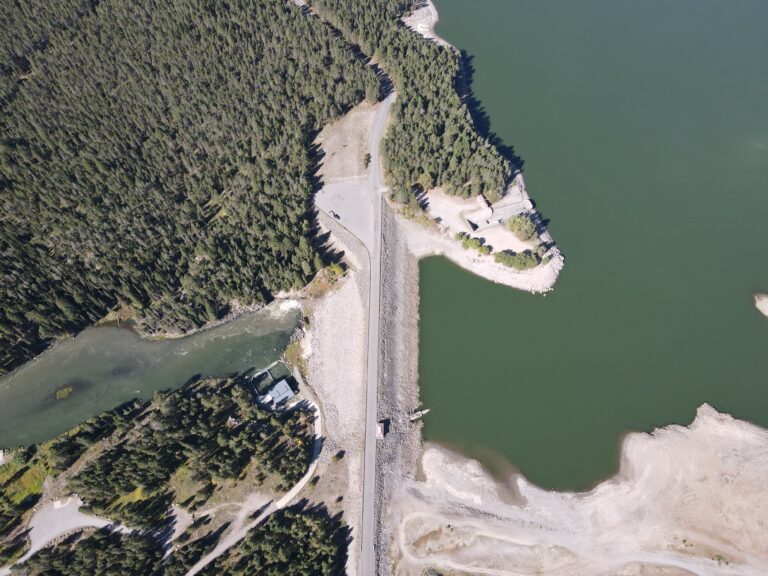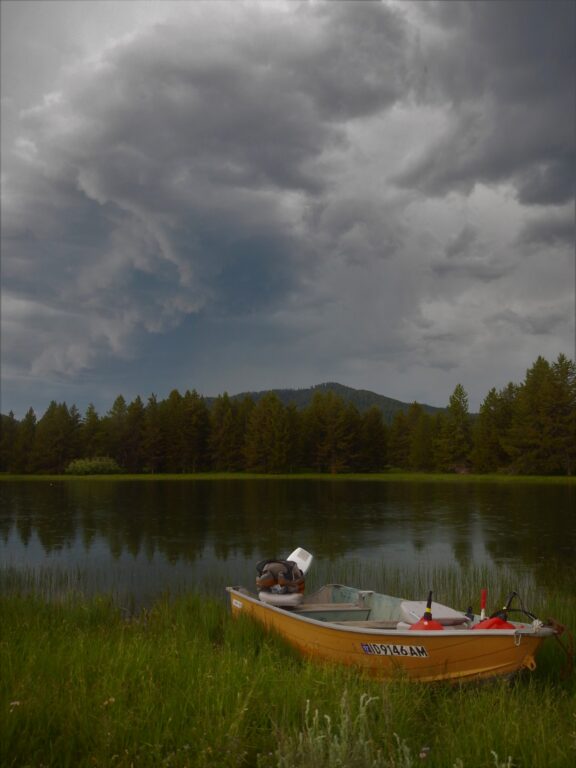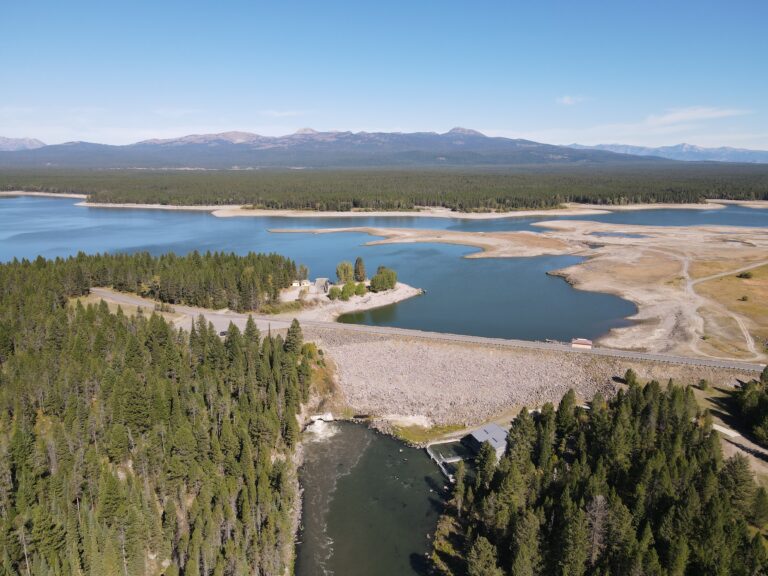
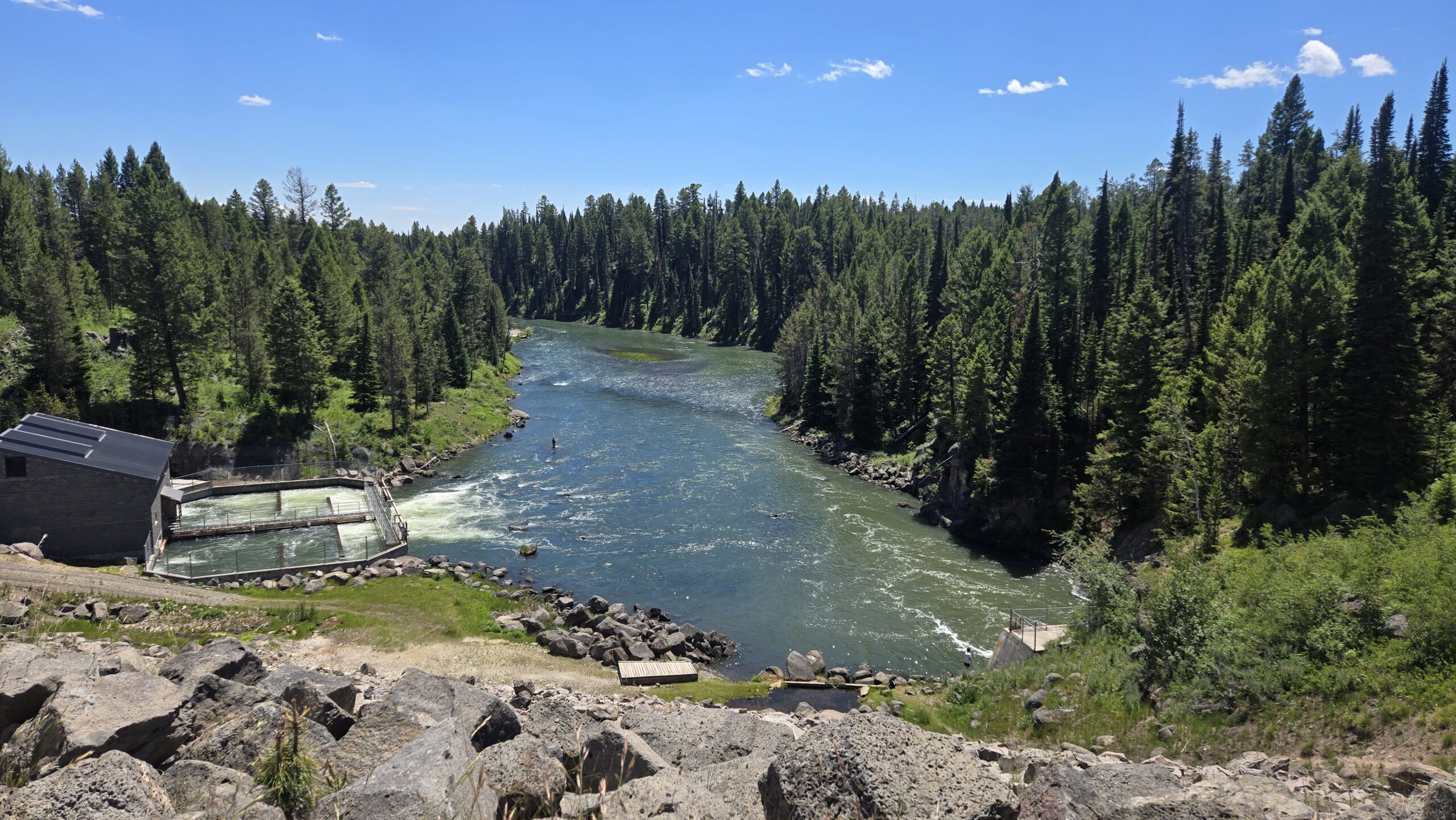
In early April, when ice melted off Island Park Reservoir one month earlier than usual, scientists at the Henry’s Fork Foundation (HFF) predicted an early onset of poor water quality conditions in Island Park Reservoir and the Henry’s Fork downstream. Warm air temperatures, low streamflow into the reservoir, and longer days with more sunlight are a recipe for algae blooms, the primary culprit of turbid water in Island Park.
But we arrived at the end of June pleasantly surprised. The algae blooms and low water clarity that seemed imminent just one month ago have been delayed by weekly cycles of cooler, wetter weather that regularly disrupt algae growth. When asked about the water quality forecast for July, HFF scientist Dr. Jack McLaren said, “We’ve gotten lucky. It is going to get bad, but how bad things get depends on the weather at this point.”
Water Quality Forecast
Jack and his field team have been going out on Island Park Reservoir every Wednesday since the ice melted to monitor water quality conditions from the reservoir surface to its depths. Data from these efforts show that algae growth in the reservoir is creeping up and water clarity at Island Park Dam is sinking down. The small, deep pool of cool water near the dam has been wholly exhausted. And unless summer monsoons make it this far north to offer persistent reprieve, reservoir recreationists and river users can expect algae blooms, low water clarity, and warm water—possibly by the 4th of July.
Beyond water quality, Island Park Reservoir is dropping…fast. Water levels in the reservoir are the lowest they have ever been for this time of year. Why? Low streamflow into the reservoir. Island Park Reservoir is fed by snowmelt and groundwater springs like Big Springs, which are also ultimately fed by snowmelt. But with a meager snowpack that melted early and less snowmelt replenishing Big Springs year after year, streamflow into Island Park Reservoir is currently 40% below average. As a result, reservoir recreationists should expect low reservoir levels, more boating hazards, and fewer accessible boat ramps by Pioneer Day.
If you’re looking for something to wish for, wish for breaks in our warm, dry weather. Island Park Reservoir thankfully doesn’t need much. A few days of clouds and wind can cool things off and slow algae growth. Rain on the caldera and in agricultural valleys can add water to the reservoir and reduce irrigation demand, keeping reservoir levels a tad higher.
Resources
Dr. Jack McLaren noted that the water quality conditions so far this season have been achieved by accident, “But we don’t have to rely on luck or rain.” With federal funding, HFF is working with engineering consultants to investigate ways to mitigate algae cycles and preserve cool water in Island Park Reservoir. Visit henrysfork.org/dirtt-plan to learn more.
For HAB recreation advisories, please visit the Idaho Dept. of Environmental Quality website. For water quality resources for the river and reservoir, please visit henrysfork.org/river-conditions and send questions to hff@henrysfork.org.