
Summer 2026 Water Quality Forecast for Island Park

Home » Blog » Summer 2026 Water Quality Forecast for Island Park
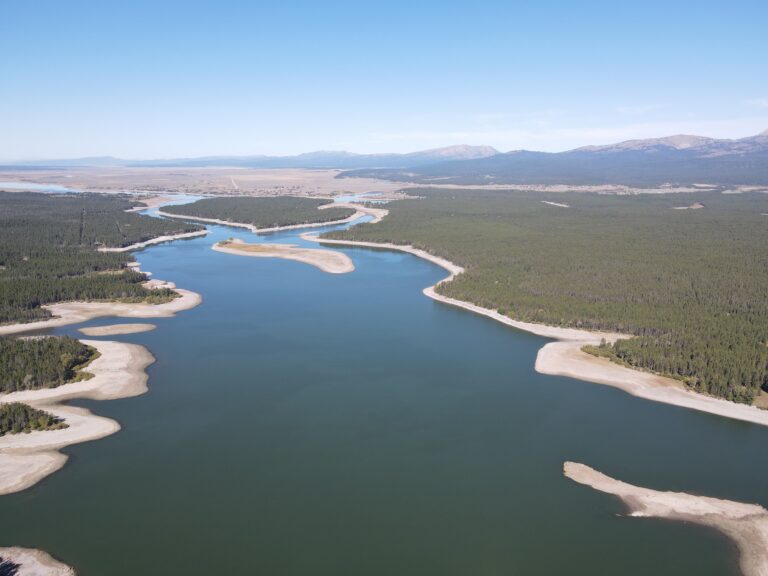
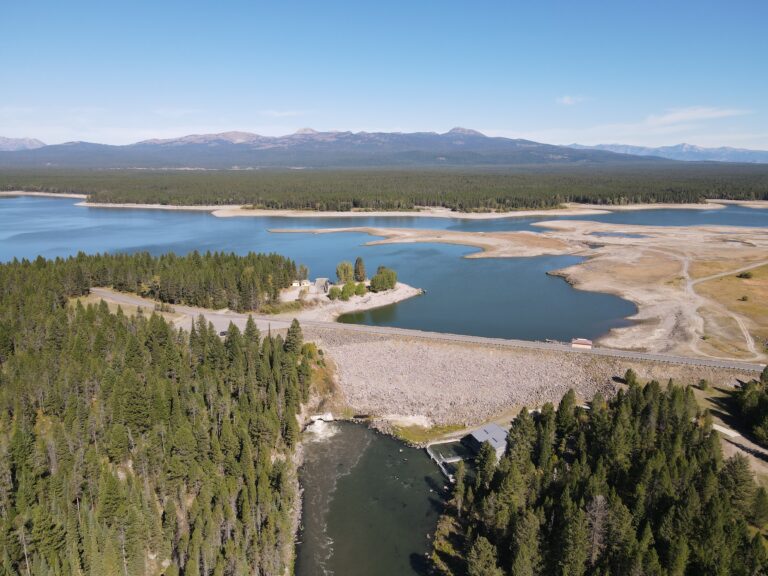
An aerial view of Island Park Dam. The reservoir sits behind it and the river flows below it.

This article was originally published in Island Park News on May 29, 2026

Ice melted on Island Park Reservoir on March 31, 2026—four weeks earlier than normal and the earliest the Henry’s Fork Foundation (HFF) has observed in 12 years of monitoring. Such an early ice melt was not unexpected given the region’s near-record warm and dry winter. But ice melting a month early has implications for water quality in Island Park Reservoir and the Henry’s Fork downstream. Reservoir recreationists and river users can expect algae blooms, low water clarity, and warm water earlier in the season.

Water Quality Forecast

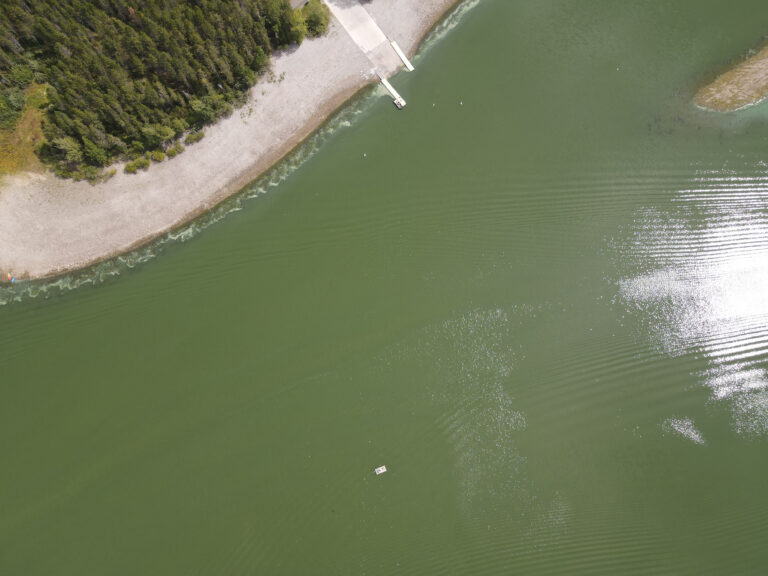
Algae and cyanobacteria create a green-brown growth-death cycle in Island Park Reservoir every year, typically in late July and early August. But an early melt brings an extra month of sunshine and growth. As these organisms grow, die, and sink, brown-tinged water is exported out of Island Park Dam to the Henry’s Fork downstream. Early ice off, low flow into the reservoir from sources like Big Springs, and warm air temperatures will extend the growth-death cycle earlier, and for longer. An extended cycle will likely increase the risk of harmful algal blooms (HABs) on Island Park Reservoir and result in lower water clarity at Island Park Dam—possibly as early as mid-June.

The small, deep pool of cool water near the dam is already warming up and will be rapidly depleted as outflow at Island Park Dam increases. As a result, HFF expects warmer water temperatures—and potentially record-high water temperatures—coming out of Island Park Dam this summer. Anglers on the Henry’s Fork downstream may want to monitor river temperatures and dissolved oxygen levels to minimize impact on fish.

Overall: April looked like May, so July will likely look like August.

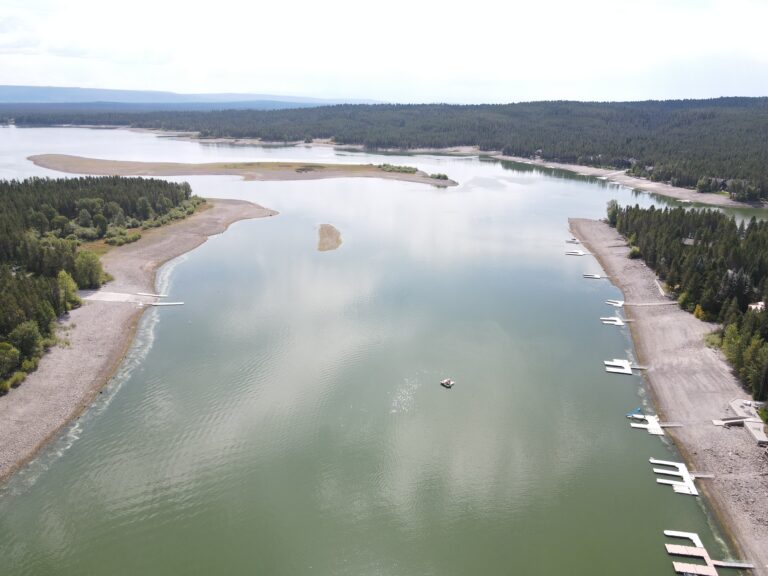
In addition, Island Park Reservoir is fed by snowmelt and groundwater springs like Big Springs, which are also ultimately fed by snowmelt. But with a meager snowpack that melted early and less snowmelt replenishing Big Springs year after year, streamflow into Island Park Reservoir is currently 70% below average and the lowest observed in almost 95 years. As a result, reservoir recreationists should expect low reservoir levels, more boating hazards, and an early onset of harmful algal blooms.

Resources

With federal funding, HFF is working with engineering consultants to investigate ways to mitigate algae cycles and preserve cool water in Island Park Reservoir. Visit henrysfork.org/dirtt-plan to learn more.

For HAB recreation advisories, please visit the Idaho Dept. of Environmental Quality website. For water quality resources for the river and reservoir, please visit henrysfork.org/river-conditions and send questions to hff@henrysfork.org.

Facebook
LinkedIn
Pinterest

Recent Posts

An aerial view of Island Park Dam. The reservoir sits behind it and the river flows below it.
Water Quality
Christina Morrisett

Summer 2026 Water Quality Forecast for Island Park

This article was originally published in Island Park News on May 29, 2026 Ice melted on Island Park Reservoir on March 31, 2026—four weeks earlier than normal and the earliest the Henry’s Fork Foundation (HFF) has observed in 12 years of monitoring. Such an early ice melt was not unexpected given the region’s near-record warm and dry winter. But ice melting a month early has implications for water quality in Island Park Reservoir and the

Read More »
Aerial photo of Island Park Reservoir. The dam is in the bottom left corner. The Centennial Mountain Range is in the top.
Water Quality
Christina Morrisett

History of Water Quality in Island Park Reservoir

Warmer and drier conditions have slowly degraded water quality in Island Park Reservoir over the last 50 years.  In the 1970s and 1980s, federal reports and university research indicate that the reservoir had relatively good water quality. Island Park Reservoir was mesotrophic—with mostly clear water and occasionally low dissolved oxygen at the reservoir’s deepest depths during the summertime. But, as time went on, water quality began to decline. Historical satellite imagery analyzed by the U.S.

Read More »
A photo taken of Island Park Reservoir while standing on the dam and looking north. The sky is cloudy, Mt Sawtelle sits with little snow in the background, and the reservoir is open water (save for a few small sheets of ice in the distance).
Water Quality
Christina Morrisett

Reservoir Ices Off, Growing Season Turns On

Photo of an ice-free Island Park Reservoir taken on March 31, 2026 On March 31, 2026, with no accompanying commentary, HFF scientist Christina Morrisett stood on top of Island Park Dam and texted colleagues Rob Van Kirk and Jack McLaren photos of open water on Island Park Reservoir. Rob, eager to see that the reservoir reality matched what he was seeing in the real-time river data downstream, texted back, “Yep! That’s close enough to ice

Read More »
Photo of confluence of Warm River and Henry's Fork
Water Quality
Rob Van Kirk

Water Supply and Water Quality Predictions for Summer 2026

The photo above captures the unprecedented situation we face at the beginning of April. The photo, of the confluence of Warm River and the Henry’s Fork, was taken on February 7 and shows the shocking lack of snow we experienced in the watershed all winter as a result of record-breaking warm temperatures. How will the warm winter and lack of snow affect water supply, water quantity, and fisheries? The highlights are below. If you want

Read More »