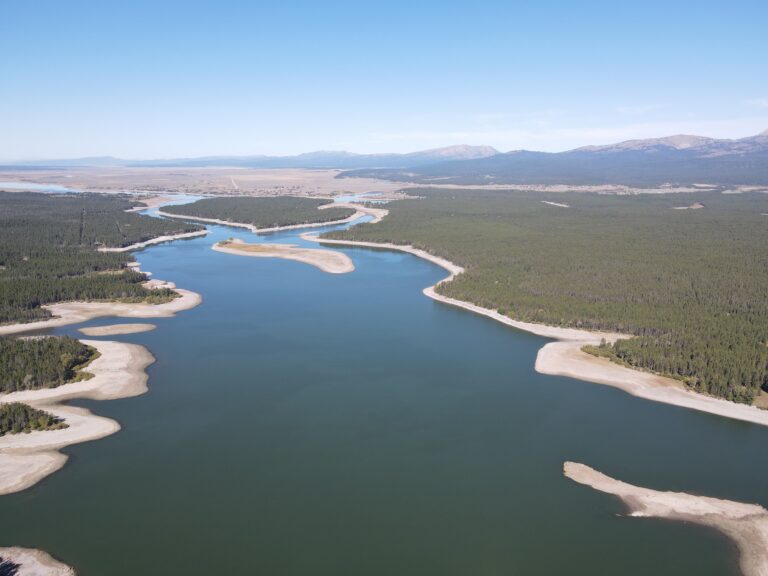
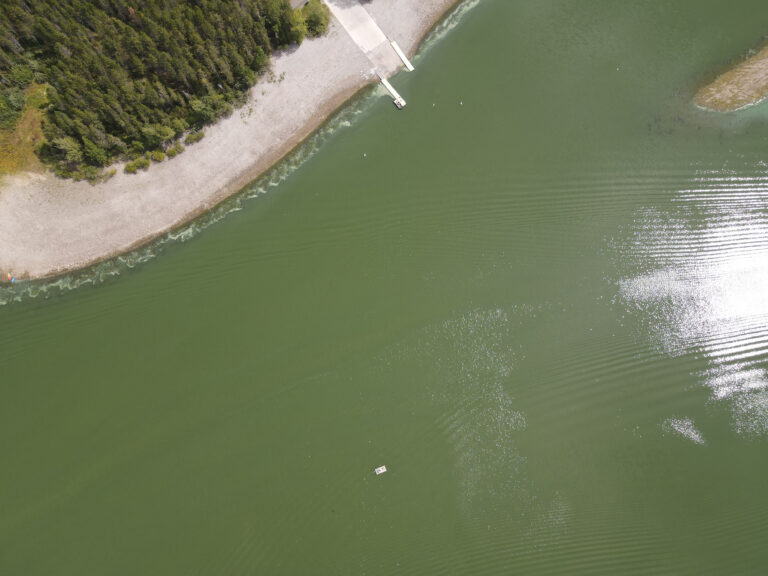
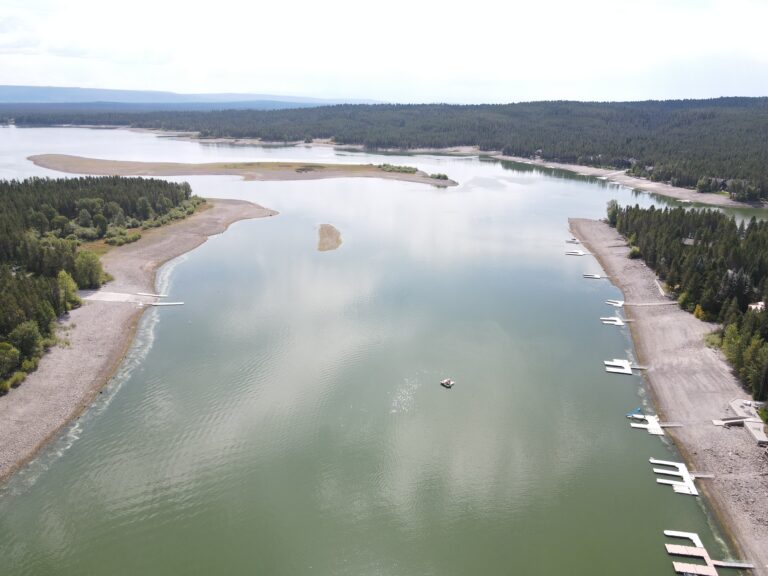
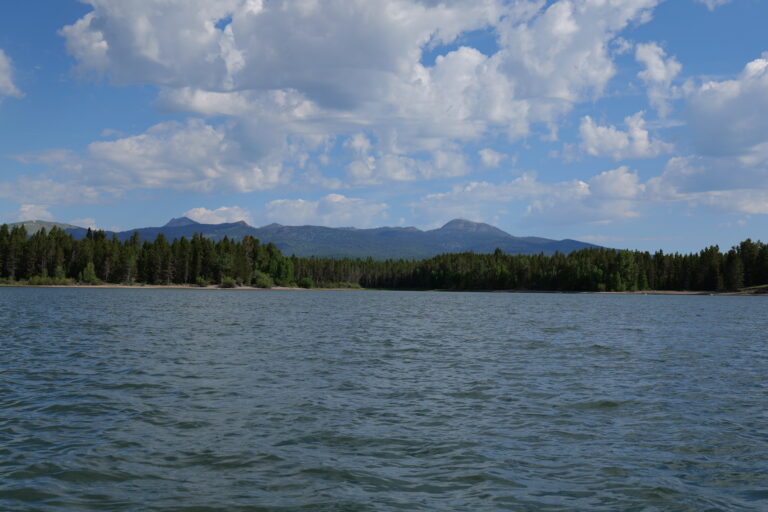
Whether you’re casting to a rising trout as the sun sets behind Thurmon Ridge, enjoying the serenity of an morning float, leaning into the thrill of an afternoon water ski, or just sitting alongside the river to soak it in and enjoy the view, it can be easy to forget that the Henry’s Fork is a working river—temporarily captured in reservoirs and released downstream to irrigate crops like potatoes, barley, and grain. But the Henry’s Fork is a working river—and a hard one at that. That’s why the Henry’s Fork Foundation works just as hard to ensure the river remains healthy and the needs of its secondary water users (like anglers) are considered. To best achieve these goals, we work within the water management system. The system manages streamflow and reservoir storage year-round, day in and day out. Not only is HFF an active participant, but a trusted consultant and valued collaborator. Read on to learn more about how streamflow is managed, who the key players are, and how water management interacts with your river and reservoir recreation experience.
How is streamflow managed?
Three reservoirs—Henry’s Lake, Island Park Reservoir, and Grassy Lake (on Fall River)—were specifically built in the 1920s and 1930s to store water for agricultural irrigation. Water is stored during the off season (November–March) and released during irrigation season (April–October) for farming and ranching downstream of Ashton. Thus, due to Idaho water law, streamflow is primarily managed in the Henry’s Fork watershed to store and deliver water for irrigated agriculture. This may surprise some folks, but Henry’s Fork water managers have no legal obligation to manage water for fisheries, recreation, flood control, or hydroelectric power production. That’s why HFF collaborates with water managers and brings data to the table to identify and propose mutually beneficial water management solutions for farms, fish, and the fishing experience.
Who manages streamflow?
The short answer: individual organizations/agencies and a multi-stakeholder collaborative committee.
The long(er) answer: Henry’s Lake is not a U.S. Bureau of Reclamation facility. It is owned and operated by a local irrigation entity, called the North Fork Reservoir Company (NFRC). NFRC decides dam outflow for Henry’s Lake. Fremont-Madison Irrigation District—a different, and much larger irrigation entity—decides dam outflow for both Island Park Reservoir and Grassy Lake. The U.S. Bureau of Reclamation oversees the decisions at Island Park and Grassy Lake to ensure operators adhere to infrastructure constraints and downstream needs, such as flood control, managed aquifer recharge, and other Upper Snake River operations. Water District 1 is a state government entity that uses water rights accounting to distribute water from rivers to water users (largely agricultural producers). Additionally, the Henry’s Fork Drought Management Planning Committee is a multi-stakeholder group that makes recommendations to water managers to guide reservoir management within the watershed.
What is the Drought Management Planning Committee?
The Drought Management Planning Committee (DMPC) was established in 2003 by an act of the U.S. Congress. The six official signatories include Fremont-Madison Irrigation District, the North Fork Reservoir Company, the U.S. Bureau of Reclamation, the Henry’s Fork Foundation (us!), Trout Unlimited, and The Nature Conservancy. However, other stakeholders are invited and welcome to attend meetings and participate. Fall River Rural Electric Cooperative, the Idaho Department of Fish and Game, and Water District 1 are the most frequent participants among non-signatories. The DMPC is legally required to meet seasonally to discuss reservoir operations. The DMPC has no legal authority, but DMPC discussions almost always result in a strategy to guide reservoir management. Strategies are based on physical water supply, water rights, infrastructure constraints, ecosystem processes, and weather forecasts. DMPC meetings are the only standing, formal avenue for Henry’s Fork fisheries and other non-agricultural stakeholders to work with managers toward mutually beneficial management solutions. Thus, the DMPC is a long-established avenue for collaborative management.
Why is streamflow so high?
Streamflow might be high due to runoff from snowmelt in the spring and early summer. On the mainstem Henry’s Fork, streamflow may also peak in the summer (typically mid-July) when irrigation demand peaks and more water is released from reservoirs. In the spring, dam operators may approve a large increase in dam outflow to create space in reservoirs for incoming snowmelt. Sometimes, these outflow increases are conducted as managed freshets to move sediment out of the channel and improve aquatic habitat. A managed freshet is not guaranteed every year. The last managed freshet occurred in April 2023.
Why is streamflow so low?
Well, that depends on where you are in the watershed and during what time of year. If you’re fishing Box Canyon, streamflow might be low in the fall to store water in Island Park Reservoir so that winter outflow for juvenile trout can be a little higher, while still filling the reservoir for irrigation next summer. Streamflow might also be low April–October if irrigation demand is low. If you’re fishing downstream of St. Anthony in the summer, streamflow is low to maintain a specific irrigation-season flow target that balances meeting irrigation demand with maintaining fish habitat. All these reasons are part of the DMPC’s precision management strategy to keep water in Island Park Reservoir.
Elsewhere in the watershed, streamflow may be low for other reasons. Streamflow may be low in tributaries like Big Springs or the Buffalo River due to prolonged drought effects, where baseflow from groundwater springs have a three-year lag. So dry years take three years to be realized in springs, and multiple dry years in a row compound. Streamflow may be temporarily low downstream of Ora Bridge due to short-term reductions in outflow from equipment malfunction at Ashton Dam. Streamflow may be low in the Teton River once snowmelt has finished and streamflow is only supported by groundwater springs.
If the Henry’s Fork is a working river, how can I best plan my recreational experience?
We have an entire suite of web apps to help you plan your day on the water!
If you’re interested in real-time streamflow for locations around the watershed, visit https://henrysforkdata.shinyapps.io/WaterQuantity/.
If you’re interested in things like real-time water temperature and clarity, visit https://henrysforkdata.shinyapps.io/scientific_website/.
For hatch forecasts, visit https://henrysforkdata.shinyapps.io/HatchTiming/ (active April–October).
And for daily updates and projections on everything from streamflow to snowpack to weather, visit https://henrysforkdata.shinyapps.io/DailyWaterReport/.
How does HFF interact with water management?
As an organization that believes in a science-based, collaborative approach to river conservation, we find ways to achieve our goals by working within Idaho water law rather than against it. By collecting and analyzing data and building relationships with managers, we have developed a track record of consistently finding water management solutions that benefit farms, fish, and the fishing experience—no small feat in a system where physical water supply (what Mother Nature gives us) has diminished 15% since 2000!