Macrophyte FAQ

Home » Blog » Macrophyte FAQ
aquatic plants

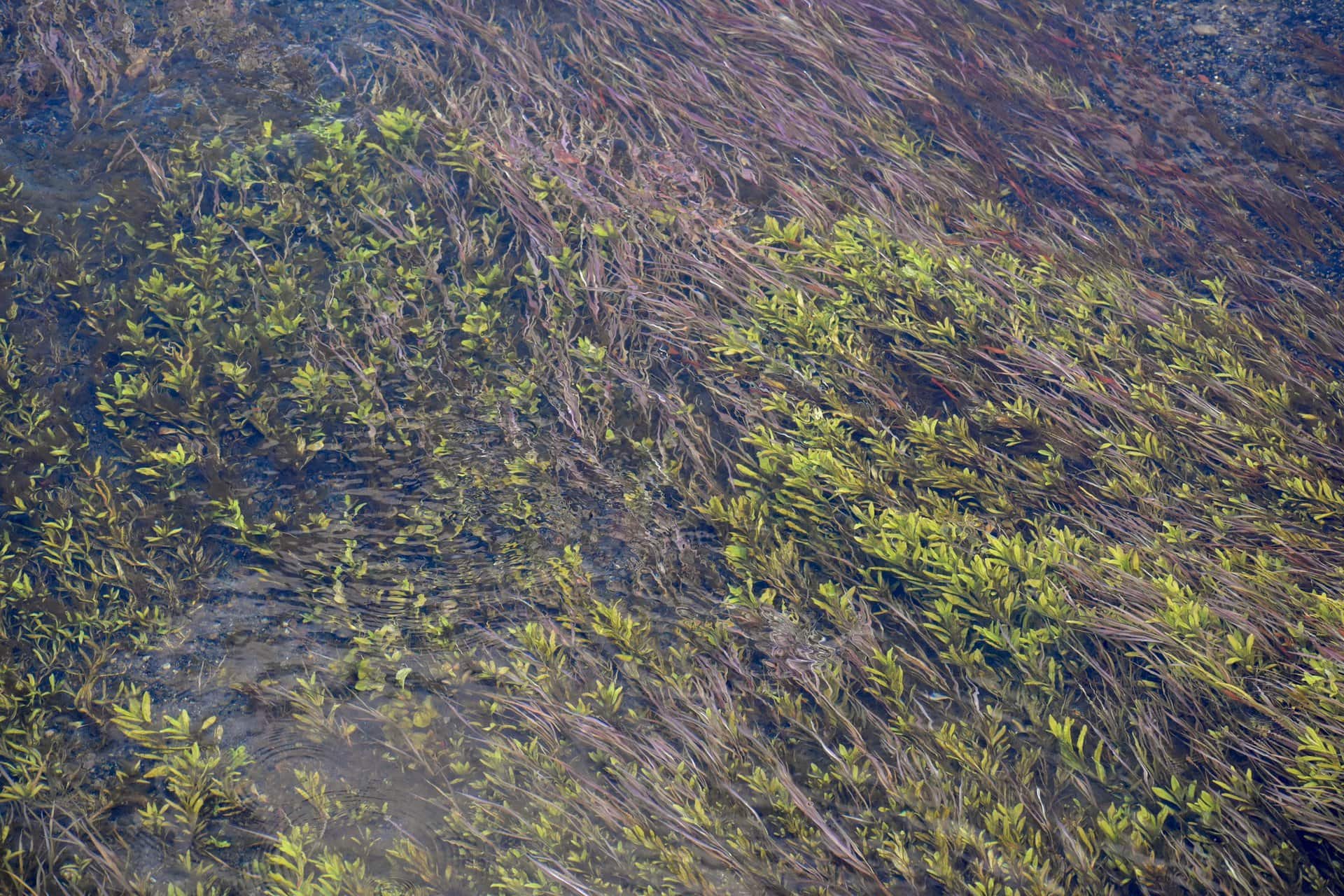
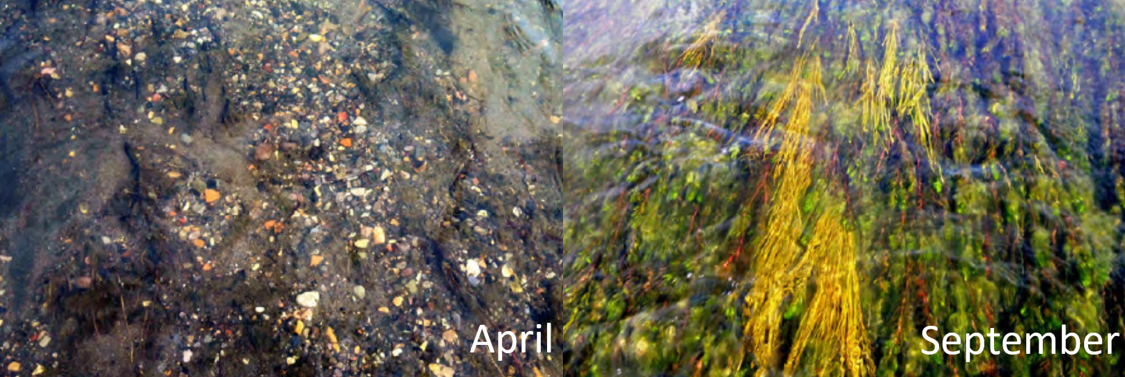
Throughout August-September, there tends to be a lot of rooted aquatic plant (macrophyte) growth. These plants grow rapidly as they photosynthesize due to warmer water temperatures. Dense mats of aquatic plants displace water, making it appear like the depth is greater.

Why does it seem like streamflow can be so high in the late summer/early fall?

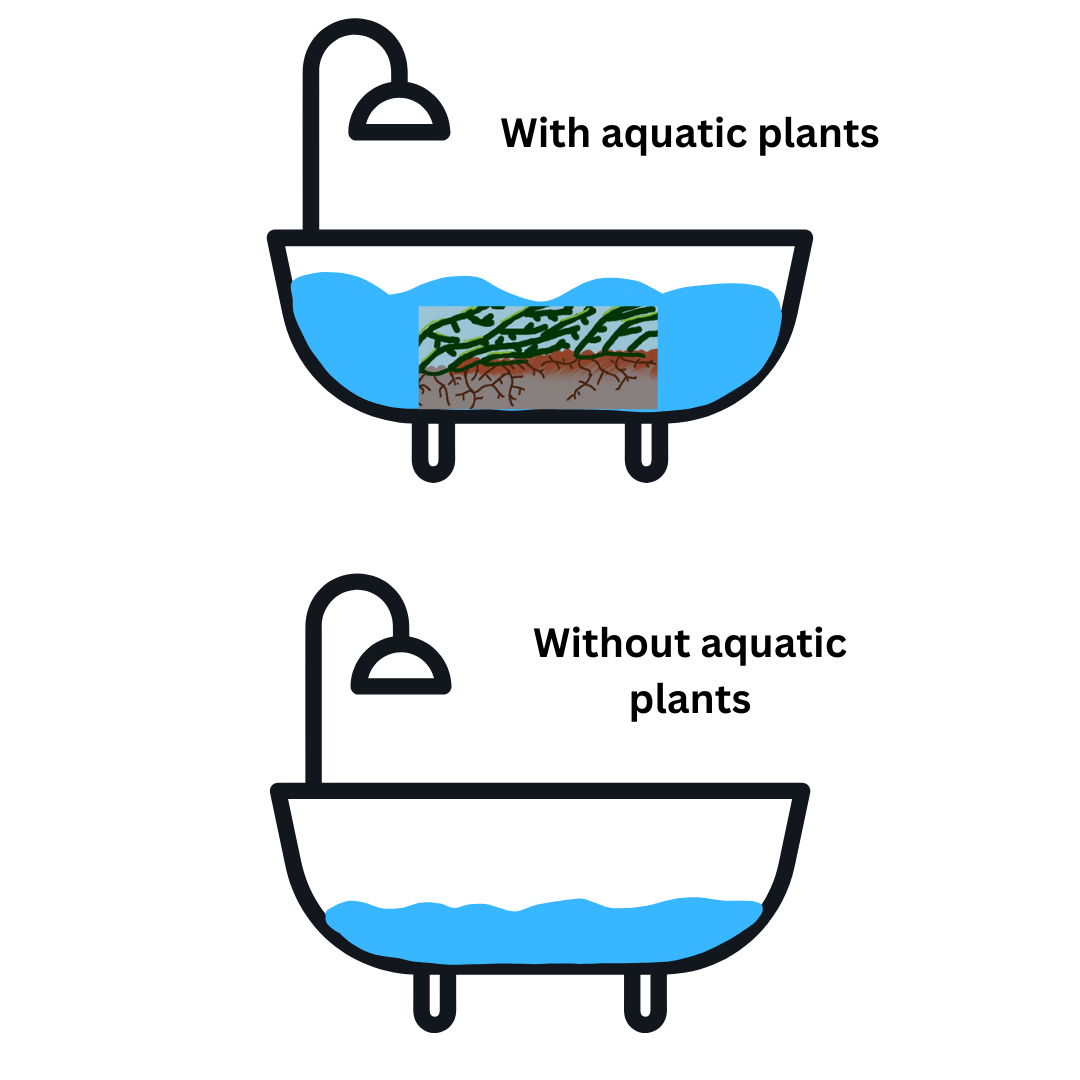
Think of the river as a bathtub. With a bathtub, the water level seems to increase when you step inside, as your weight displaces the water. It is the same with the river. The plants displace river water, making the river appear to be more full than it really is.

How long does macrophyte growth continue?

On average, macrophytes will continue to grow through early-to mid-September, but this is dependent on the weather. Once growth has peaked in the fall, macrophytes begin to decay and deteriorate, causing bits and pieces of old plant growth to float down the river. This is a normal process, and some of the species on the Henry’s Fork actually propagate in this way.

What are the implications of macrophyte growth?

  • Macrophyte growth is an indicator of increased aquatic ecosystem productivity.
  • Fish utilize macrophytes for shade and as a refuge from predators.
  • The photosynthesis of plants helps to create more dissolved oxygen in the river, which is good for fish.
  • Macrophytes act like a big filter, trapping fine sediment during the growing season. This sediment cannot be scoured or exported while the plants are still there (which is typically July- February).

Why does the USGS stream gage sometimes read slightly higher/lower than the “actual” flow of the river?

Aquatic vegetation at the Island Park stream gage reaches its peak for the season during the later summer/early fall. During this time, the vegetation begins to die and move out of the channel. That means that for the remainder of the fall, the gage will read slightly lower than the “actual” flow in between rating adjustments. Flow adjustments take place approximately every 6 weeks.

What can HFF do to remove sediment that gets trapped by macrophytes?

Once the macrophytes are gone, there is a limited window of time when the river can be scoured of fine sediment (March, April, May, June). The solution is to run a spring freshet (rush of fresh water at ~2,000 cfs) to help export this sediment.

For more information regarding the April 2023 spring freshet, check out HFF’s water quality website: https://henrysforkdata.shinyapps.io/Freshet2023/

Facebook
LinkedIn
Pinterest

Recent Posts

Water Quality
Christina Morrisett

FAQ: Island Park Reservoir Water Quality

Island Park Reservoir on June 24, 2026 Questions answered in this article: Why are Island Park Reservoir levels so low this year? Is Island Park Reservoir hyper-eutrophic? Are silt and sediment building up behind the dam?   Island Park Reservoir is the center of the Henry’s Fork universe. Reservoir water quality and quantity shape our fisheries, and your fishing experience. But after a warm winter and lower-than-average snowfall, we’ve received a lot of questions about

Read More »
A river surrounded by snow. There are rocks in the foreground pillowy with snow. The river flows from right to left in the middle. On the other side sits needled trees and a snow covered bank. The photo almost appears to be black and white.
Water Supply
Christina Morrisett

Following the Snowmelt: From Mountains to Rivers

Eastern Idaho just had its warmest winter on record—and a changing climate may mean more warm winters to come. Warm winters have big implications for our snowpack, and consequently, the water that supports our fisheries. How? Snowstorms build mountain snowpacks. When a snowpack melts, some of the water is absorbed by soil, recharging groundwater and giving thirsty plants a drink. The rest of the water runs into rivers and reservoirs. In the winter, our mountain

Read More »
Lake surrounded by trees
Aquatic Insects
Rob Van Kirk

HFF Seeks Proposals for Restoration Design

The Henry’s Fork Foundation (HFF), in partnership with the U.S. Bureau of Reclamation (Reclamation), Idaho Department of Fish and Game (IDFG), and Idaho Department of Environmental Quality (IDEQ), seeks qualified consultants or consultant teams (hereby referred to as “the consultant”) to develop an adaptation plan for the natural, engineered, and social resources of the Henry’s Fork watershed upstream of Mesa Falls. Anticipated additional partners in this effort include the U.S. Forest Service (USFS), Idaho Department

Read More »
Intern
Audrey Hunter

My Last (?) Time Fly Fishing

  I know my last blog post left you on the edge of your seat. Today I’m going to answer the question that has doubtlessly been on everyone’s minds: did I catch a fish?   Let me tell you, it was getting down to the wire. I’d been out many times with the incredibly patient Claude, to no avail. Not even a bite. Claude’s patience was really commendable as I stubbornly, astoundingly refused to improve.

Read More »