This year has brought the Henry’s Fork watershed an extraordinary water-supply challenge. Natural flow is exceptionally low, and Island Park Reservoir is ending the summer at a near-record low level.
But there is another important part of this story: we knew these conditions were coming, we planned for them, and water managers are managing the water we have as carefully as possible.
HFF is one of the 6 official signatories to the Henry’s Fork Drought Management Planning Committee (DMPC), and this year’s collaboration has led to coordinated, highly precise water management decisions about how water moves through the watershed.
The DMPC is meeting weekly in September to decide on a reservoir strategy—when and how low each reservoir in the Henry’s Fork watershed will get in order to meet water rights downstream. As of September 9, 2026, the current reservoir targets are:
Henry’s Lake: 65,000 acre-feet, or 72.2% full (achieved September 9)
Island Park Reservoir: 11,000 acre-feet, or 8.1% full (by September 20)
Grassy Lake: 6,620 acre-feet, or 43.5% full (by September 17)
Here’s what you need to know.
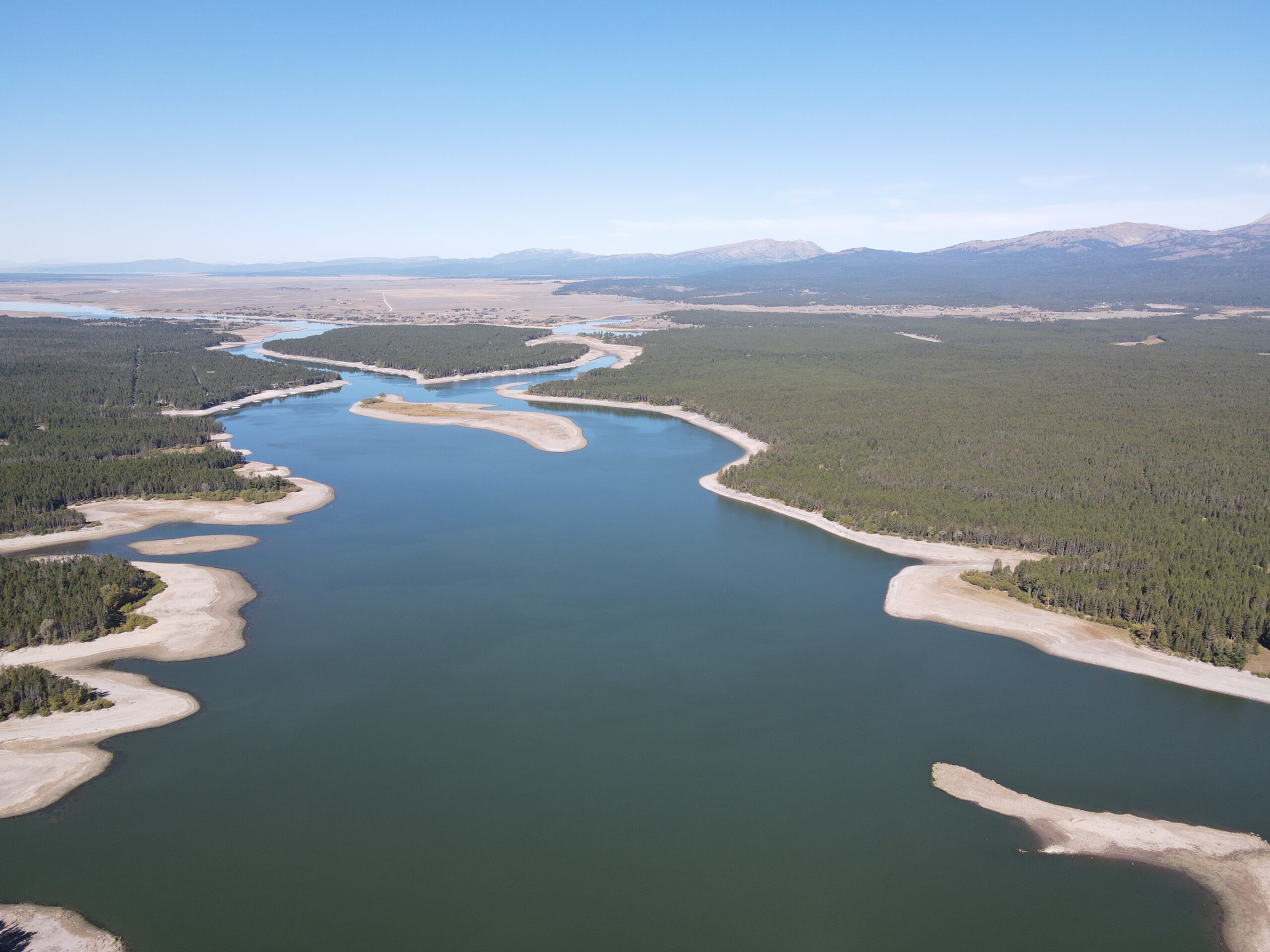
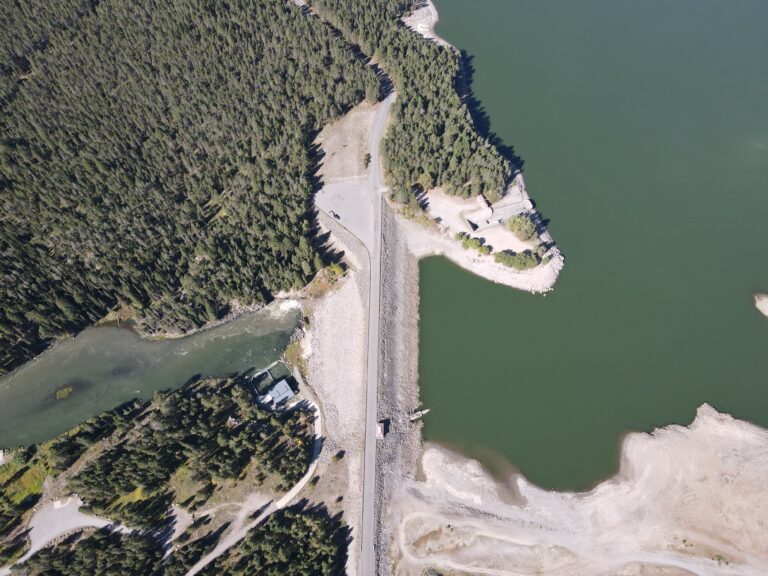
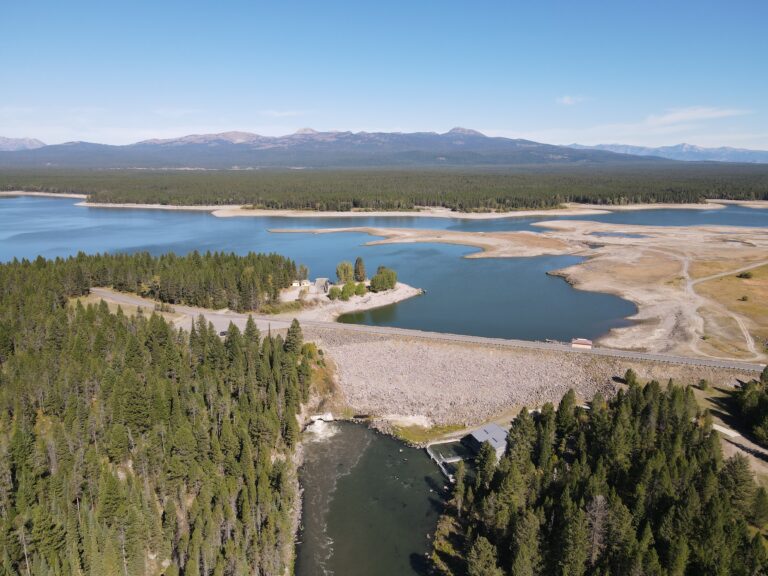
Photo of Island Park Reservoir taken 9/9/2026
1. Okay, managers are sending water from the Henry’s Fork downstream. Where is that water currently going?
Most of that water is being sent downstream to American Falls Reservoir to irrigate farms in the Magic Valley.
This year, approximately 69,000 acre-feet of the physical water stored in Henry’s Fork watershed reservoirs belongs to the senior storage right in American Falls Reservoir.
Since July 13, 46,000 acre-feet has been sent out of the watershed to meet our obligation to American Falls. Over the next two weeks, the remaining 23,000 acre-feet will be sent downstream.
2. Why is Island Park Reservoir getting so low?
Simply put, 2026 has been an exceptionally low-water year.
Natural flow (the water we get from Mother Nature via snow, groundwater, and rain) remains at its lowest level in the modern record* at 28% below average for the water year to date and 40% below average since April 1.
Since April 1, natural inflow between Henry’s Lake and Island Park Reservoir has been 42% below the 1934–2025 average, ranking second lowest in that 94-year record, behind 1934.
Given that Island Park Reservoir first stored water in the fall of 1938, it has never experienced fall and winter inflow as low as it will face this year.
There simply is not enough natural flow to meet all of the basin’s needs without drawing down reservoirs.
We cannot make more water. What we can do is collaborate with water managers as precisely and strategically as possible.
*The modern record is defined as 1989–present.
3. Why not keep more water in Island Park Reservoir?
Water management decisions have to account for water rights throughout the system. Remember: Henry’s Lake, Island Park Reservoir, and Grassy Lake are a few of the many reservoirs in the Upper Snake River basin originally built to store water for agriculture irrigation.
Storing water high in the system is important because it means water can always be moved downstream when it is needed.
4. What is the most important thing to understand about this year?
2026 is an extraordinary water year—but it is also a year that demonstrates why preparation, science, precision water management, and collaboration matter.
We saw these conditions coming.
We have been able to plan ahead.
We are working with partners across the watershed.
And despite the lowest water supply since Island Park Reservoir was built 88 years ago, Island Park Reservoir is not ending the summer at zero.
We cannot make more water. But through science-based collaboration, more water is staying in the Henry’s Fork watershed.
5. Is coordinated water management actually making a difference?
Yes, a significant one.
In a water year this poor, Island Park Reservoir would historically be expected to finish essentially empty.
Instead, years of precision water management and collaboration through the DMPC are allowing the Henry’s Fork reservoirs to retain substantially more water than the Upper Snake system overall—about 33% full compared with around 5%.
We cannot change how much water Mother Nature gave us this year. But, coordinated efforts have made a real impact.
HFF brings data, modeling, and expertise to the table and works alongside the other signatories to help make decisions and to advocate for the watershed.
The DMPC met on September 2 and again on September 9, 2026 to establish this fall’s reservoir strategy for Henry’s Lake, Island Park Reservoir, and Grassy Lake. The committee will continue meeting weekly through September to reassess conditions and adjust the plan as new information becomes available.
This level of coordinated decision-making has been a major success this year.
7. How is HFF prepared for water supply challenges?
In the past, when the watershed experienced a water supply related challenge, HFF would react in the moment: as conditions happened.
Today, HFF has tools that we have developed over the last ten years that allow us to model conditions, make predictions, and plan ahead.
Our models and predictions are accurate enough to identify challenging water supply conditions before they happen. That gives us time to advocate for the river, work with water managers, and develop strategies before conditions become critical.
This year, everyone involved in the DMPC—including HFF—worked through the water management possibilities with extraordinary precision, calculating decisions down to the 100th acre-foot.
We are not going into this winter unarmed.
Our preparedness is a significant change in how we can prepare for challenging water conditions.
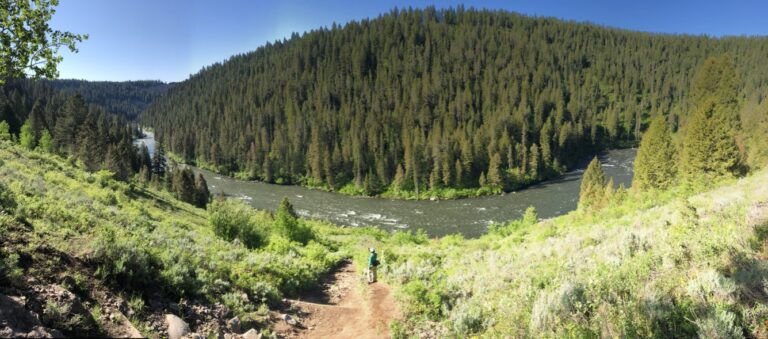
Photo taken 9/9/2026
8. What should anglers expect below Island Park Dam this fall?
As Island Park Reservoir drops too low for the hydropower plant to operate, all outflow will shift to the dam gates.
During that period, the river below the dam is expected to become more turbid and off-color. Anglers may see plant material, algae mats, suspended sediment, and even some fish moving out of the reservoir.
We know, turbid water triggers negative memories of Summer 2025. But the important difference from last year is duration.
These off-color water conditions are expected to last only a few weeks, compared with the nearly 12 weeks of elevated turbidity anglers observed on the river from July into October 2025.
The current plan keeps releases from Island Park Reservoir elevated until roughly September 20. Outflow will then be reduced sharply so the reservoir can begin refilling for next summer. That should also bring improved water clarity below the dam.
9. What happens next?
After sending the water owed to American Falls, the DMPC’s most important priority is refilling Island Park Reservoir as much as possible before the 2027 irrigation season.
Unfortunately, refilling Island Park Reservoir under such exceptionally dry conditions will require low winter outflow regardless of how much Island Park Reservoir fills this fall.
However, storing as much water as possible now is important for water quality in the Henry’s Fork next summer.
The DMPC will continue meeting weekly and adjusting the plan as conditions change and opportunities to save additional water arise.
10. So water managers are drawing down the reservoir to 8% full. Is this the same situation as 1992?
No.
The current situation is different from 1992.
Island Park Reservoir was drawn down below 8% full in 1966, 1977, 1979, and 1992. In all but one of those years, IDFG also conducted a chemical treatment for fish removal.
This year, Island Park Reservoir is expected to reach a low of approximately 8% full. The anticipated 2026 minimum is still higher than 1966, 1977, 1979, and 1992 by several thousand acre-feet—despite 2026 having far worse water supply Additionally, IDFG will not be conducting a chemical treatment this year for fish removal.
11. Does this mean there is nothing that the Henry’s Fork Foundation can do?
The Henry’s Fork Foundation does not have water rights or water management authority. We cannot make water management decisions. We also cannot create more water.
Despite this, we are doing the best that we can possibly do to be prepared and respond to conditions and have multiple tools in our tool belt to help us navigate conditions the watershed has never experienced before.
We have a variety of tools in our toolbelt to help us navigate conditions that the Island Park Reservoir has never before experienced.
Our models help us anticipate conditions, rather than simply responding after they occur.
Our partnerships give us a seat at the table where watershed-wide decisions are made.
Our science and monitoring help us understand what is happening in Island Park Reservoir and the river in real-time.
And our DIRTT program—Developing Infrastructure to Reduce Temperature and Turbidity—is already underway to develop water quality solutions for a resilient future.
Our key DIRTT partners are supportive of our collaboration and are working with us on solutions.
That is the difference between simply reacting to a difficult year and preparing for one.
12. Thank you to our partners and collaborators!
Thank you to the 5 other signatories on the Drought Management Planning Committee (Fremont-Madison Irrigation District, the North Fork Reservoir Company, the U.S. Bureau of Reclamation, The Nature Conservancy, and Trout Unlimited).
And thank you to our other partners (including but not limited to) Fall River Rural Electric Cooperative, Idaho Fish and Game, and Water District 1.
Our Aquatic Ecology Program Manager, Dr. Jack McLaren, joined Idaho Falls city and FIPS-Mouche leadership at the opening ceremony parade along the Snake River Greenbelt to welcome competitors to the watershed and to make sure conservation was front and center.
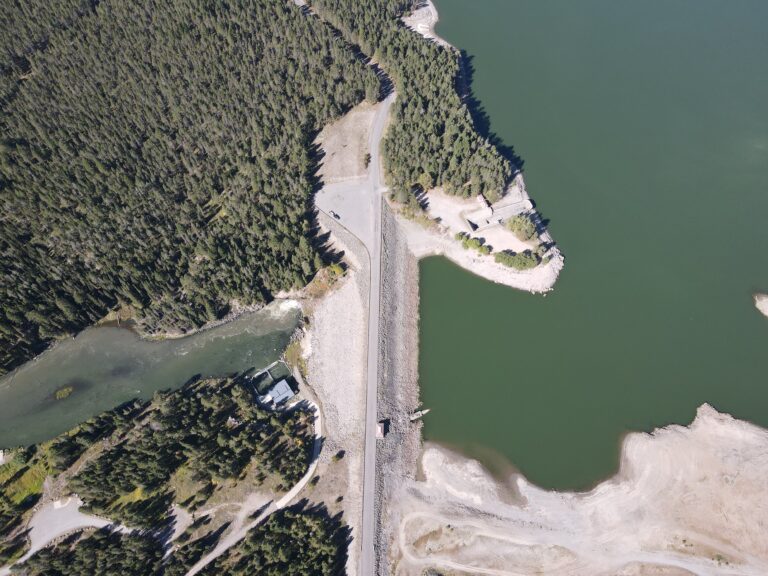
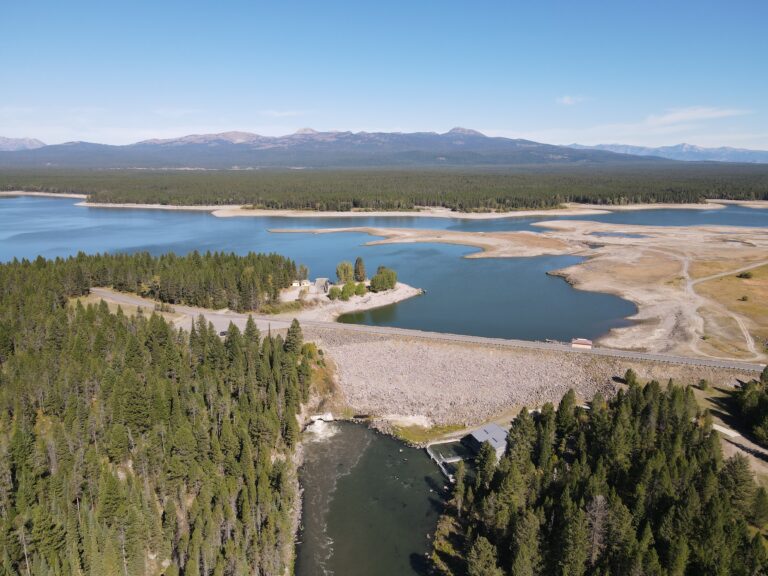
Drone photo of Island Park Dam taken on September 9, 2026 Looking Back on September September brought lows and highs to Island Park. Island Park Reservoir started September at 29% full and quickly fell to a low of 12% full on September 19. The rapid drawdown of the reservoir was the result of managers needing to move water downstream to American Falls (to irrigate farms in the Magic Valley with senior water rights). Such low
This story was written by Audrey Hunter (2026 intern) and was originally published in the Fall 2026 Newsletter. It’s no secret that late summers on Island Park Reservoir haven’t been in perfect conditions in recent years. Warm, turbid, algae-filled water plague reservoir recreationists while diminishing water quality downstream. Cyclical algal blooms decrease water clarity and create less-than-ideal circumstances for the reservoir’s flora and fauna. What’s the solution? HFF’s DIRTT Plan. In-Reservoir Oxygenation Nutrients released from
Drone photo taken on September 9, 2026 The Henry’s Fork Drought Management Planning Committee met on Wednesday, September 16 2026 to develop an updated reservoir management strategy. Downstream of the Henry’s Fork watershed, lower-valley irrigation demand over the rest of the season is anticipated to be slightly lower than projected last week, so Island Park Reservoir and Grassy Lake (in the Fall River drainage) do not need to deliver any more water out of the