Macrophyte FAQ

Fish Icon
Throughout August-September, there tends to be a lot of rooted aquatic plant (macrophyte) growth. These plants grow rapidly as they...
Home » Blog » Macrophyte FAQ
aquatic plants

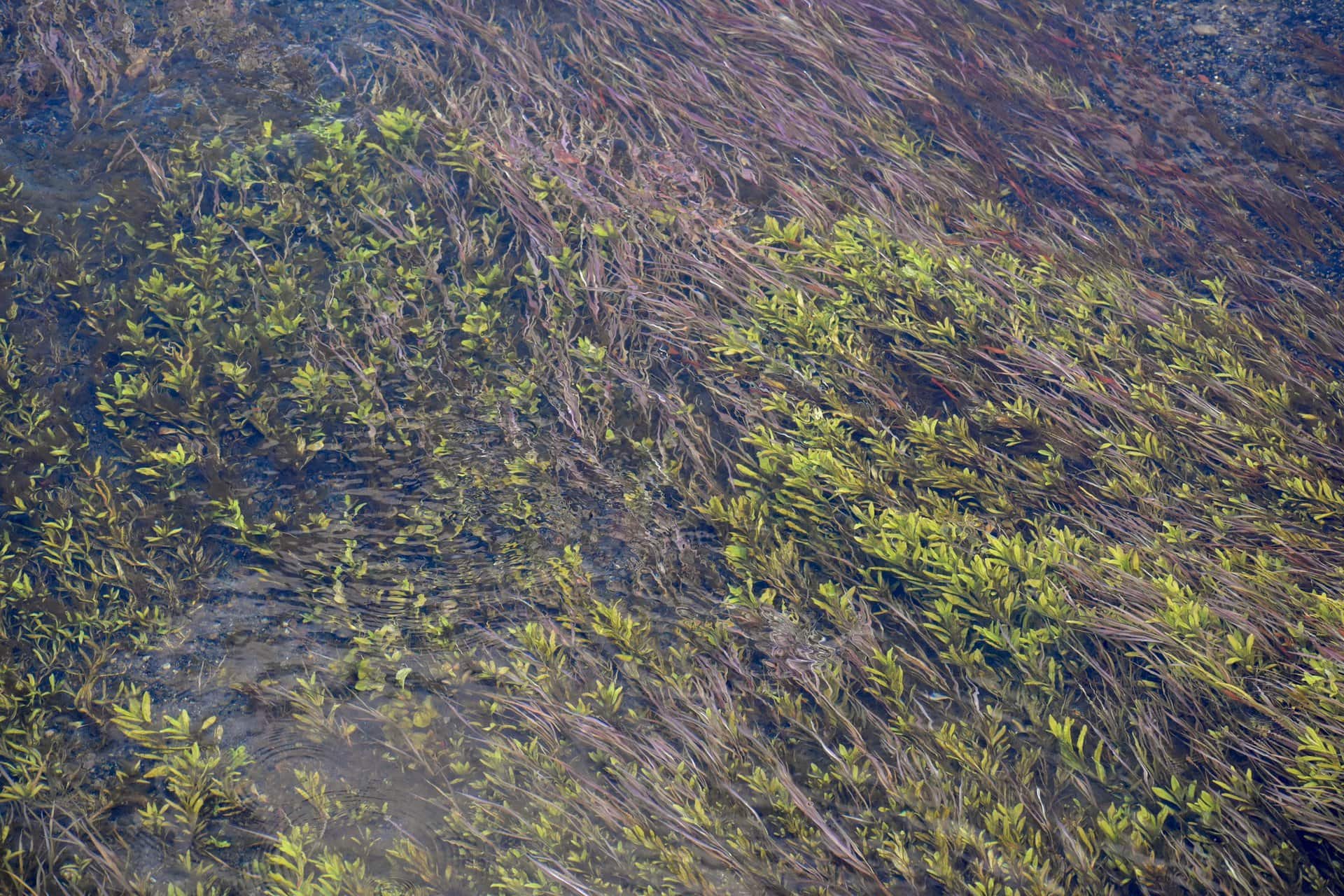
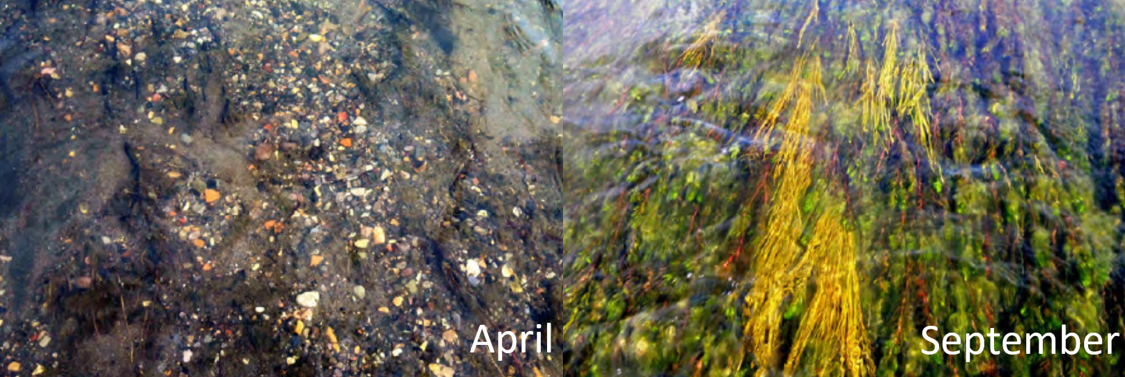
Throughout August-September, there tends to be a lot of rooted aquatic plant (macrophyte) growth. These plants grow rapidly as they photosynthesize due to warmer water temperatures. Dense mats of aquatic plants displace water, making it appear like the depth is greater.

Why does it seem like streamflow can be so high in the late summer/early fall?

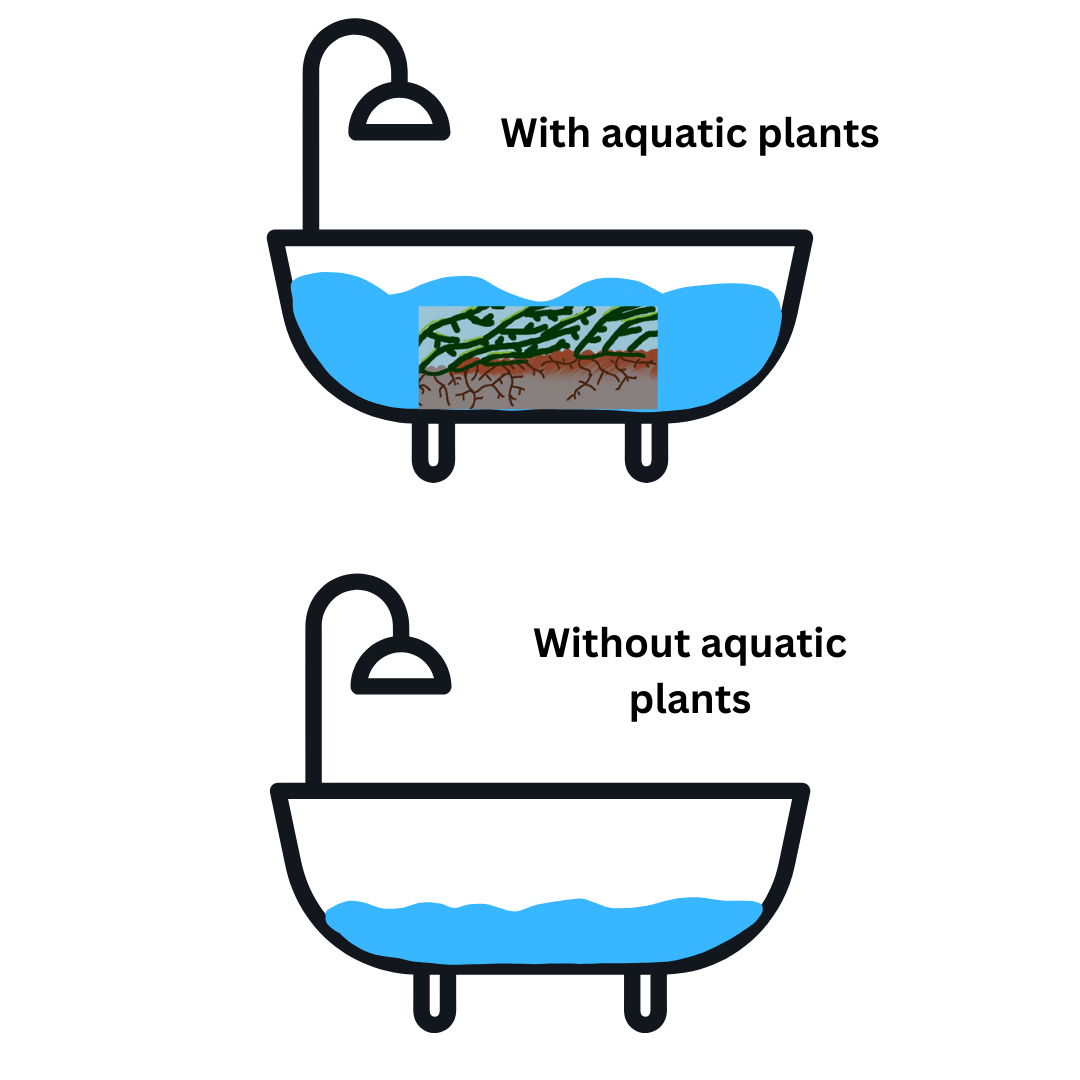
Think of the river as a bathtub. With a bathtub, the water level seems to increase when you step inside, as your weight displaces the water. It is the same with the river. The plants displace river water, making the river appear to be more full than it really is.

How long does macrophyte growth continue?

On average, macrophytes will continue to grow through early-to mid-September, but this is dependent on the weather. Once growth has peaked in the fall, macrophytes begin to decay and deteriorate, causing bits and pieces of old plant growth to float down the river. This is a normal process, and some of the species on the Henry’s Fork actually propagate in this way.

What are the implications of macrophyte growth?

  • Macrophyte growth is an indicator of increased aquatic ecosystem productivity.
  • Fish utilize macrophytes for shade and as a refuge from predators.
  • The photosynthesis of plants helps to create more dissolved oxygen in the river, which is good for fish.
  • Macrophytes act like a big filter, trapping fine sediment during the growing season. This sediment cannot be scoured or exported while the plants are still there (which is typically July- February).

Why does the USGS stream gage sometimes read slightly higher/lower than the “actual” flow of the river?

Aquatic vegetation at the Island Park stream gage reaches its peak for the season during the later summer/early fall. During this time, the vegetation begins to die and move out of the channel. That means that for the remainder of the fall, the gage will read slightly lower than the “actual” flow in between rating adjustments. Flow adjustments take place approximately every 6 weeks.

What can HFF do to remove sediment that gets trapped by macrophytes?

Once the macrophytes are gone, there is a limited window of time when the river can be scoured of fine sediment (March, April, May, June). The solution is to run a spring freshet (rush of fresh water at ~2,000 cfs) to help export this sediment.

For more information regarding the April 2023 spring freshet, check out HFF’s water quality website: https://henrysforkdata.shinyapps.io/Freshet2023/

Facebook
LinkedIn
Pinterest

Recent Posts

Photo of confluence of Warm River and Henry's Fork
Water Quality
Rob Van Kirk

Water Supply and Water Quality Predictions for Summer 2026

The photo above captures the unprecedented situation we face at the beginning of April. The photo, of the confluence of Warm River and the Henry’s Fork, was taken on February 7 and shows the shocking lack of snow we experienced in the watershed all winter as a result of record-breaking warm temperatures. How will the warm winter and lack of snow affect water supply, water quantity, and fisheries? The highlights are below. If you want

Read More »
Person holding a rainbow trout.
Water Quality
Rob Van Kirk

Water Year 2025: Everything you wanted to know and a lot more!

Every year since 2017, the Henry’s Fork Foundation Science and Technology Team has produced an annual technical report that documents all of our data collection and analysis activities for the year. Water and irrigation year 2025 was a very active year for the team, given one of the hottest and driest summers on record, our 11th year of aquatic invertebrate sampling, and the 20th year of monitoring the rainbow trout spawning run in the Buffalo

Read More »
Fishing
Jamie Powell

Q&A: Are We Seeing Fewer Bugs?

Are aquatic insects actually declining?  Not in the way many anglers might think. After 11 years of data collected across six sites on the Henry’s Fork, we’re seeing that overall invertebrate communities remain abundant, diverse, and comparable—or better—than other top western trout streams. In fact, key indicators show improving water quality and habitat conditions over time.   So why do hatches sometimes feel worse—especially at Last Chance? The short answer: it’s not just about insect

Read More »
Water Supply
Otto Lang

Monitoring the Upper Snake Snowpack: Updates from the Field

Hello! My name is Otto Lang, and I am a postdoctoral researcher with Boise State University and the Henry’s Fork Foundation. I’m working alongside Rob Van Kirk at the HFF, Lejo Flores, Professor in Geosciences at Boise State University, and Sarah Newcomb at Trout Unlimited. Together, we are in the midst of a two-year WaterSMART project funded by the U.S. Bureau of Reclamation to improve predictions of snow water supply across the Upper Snake River

Read More »