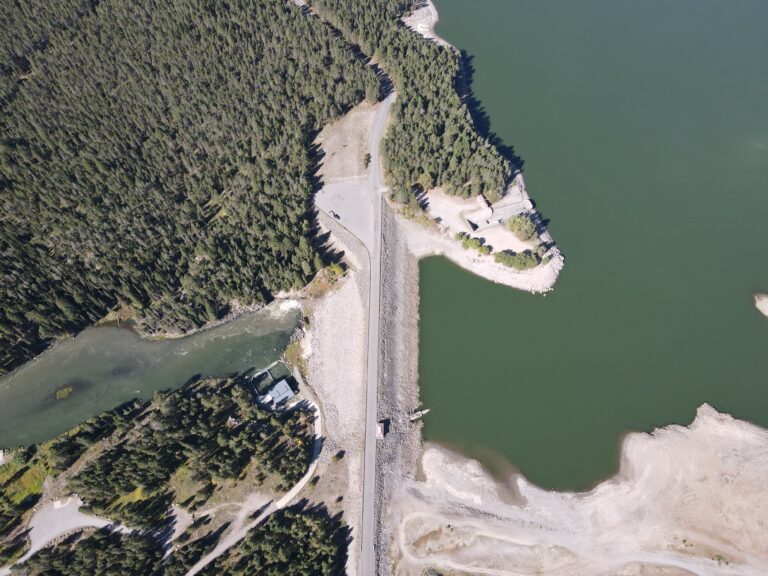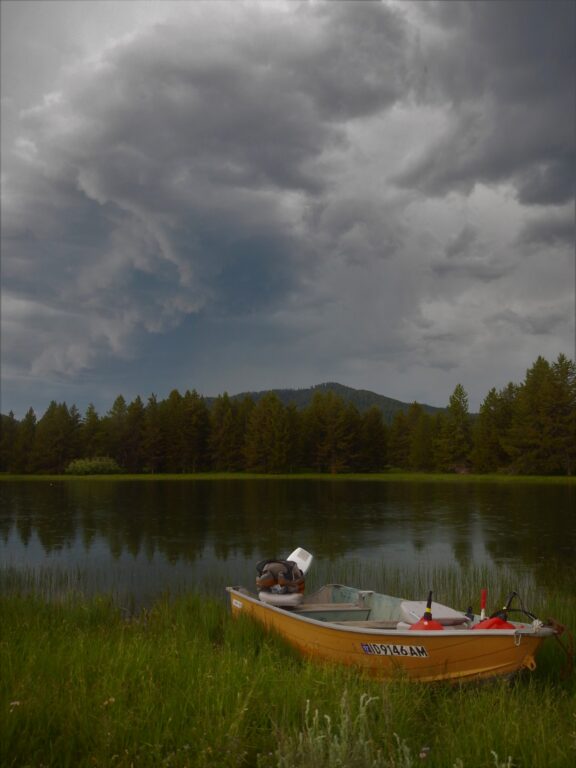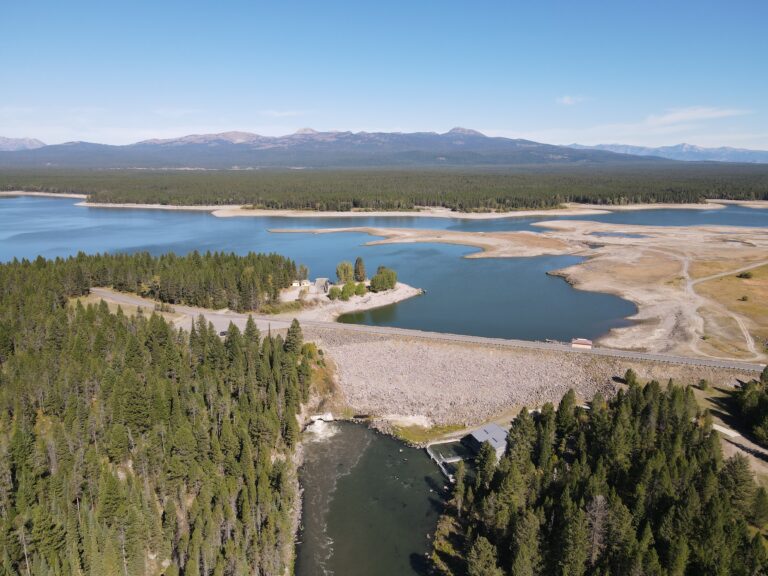
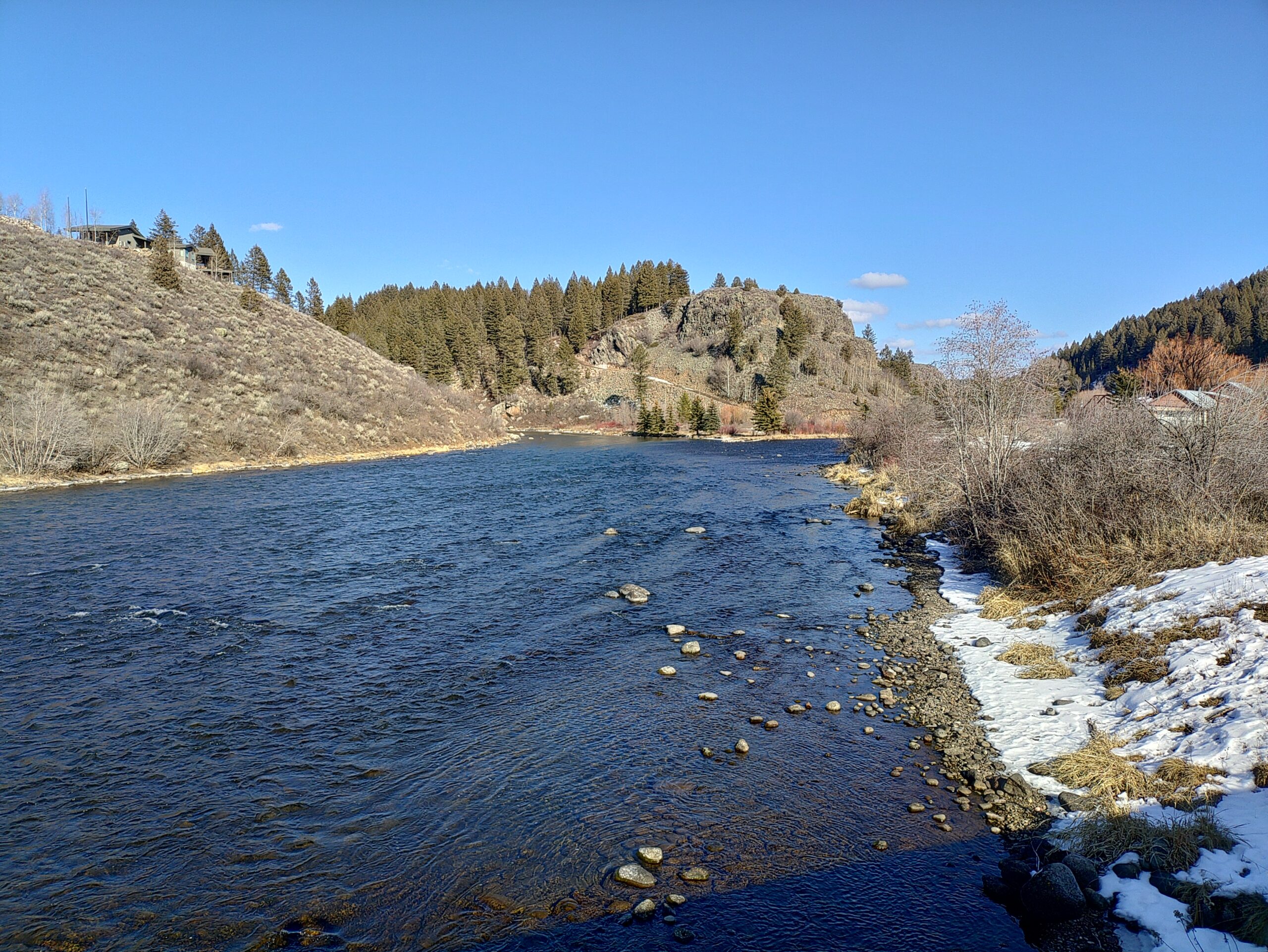
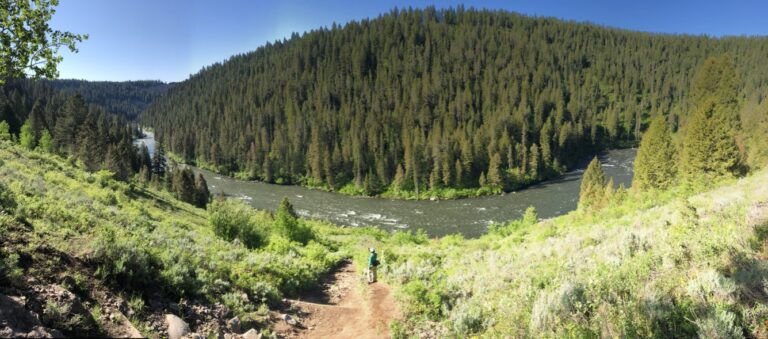

The photo above captures the unprecedented situation we face at the beginning of April. The photo, of the confluence of Warm River and the Henry’s Fork, was taken on February 7 and shows the shocking lack of snow we experienced in the watershed all winter as a result of record-breaking warm temperatures.
How will the warm winter and lack of snow affect water supply, water quantity, and fisheries? The highlights are below. If you want to read the full 21-page report and see the numbers and graphs, click here.
- Mean October–March temperature was 5.6°F above average and 2.0° warmer than 2015, which was second warmest in the 1989–2026 record.
- Natural flow between Henry’s Lake and Island Park Dam was 4.5% higher over the winter than I predicted on October 1, due to much of the winter’s precipitation falling as rain instead of snow.
- Winter flow out of Island Park Dam averaged 215 cfs, compared with the 1989–2025 average of 349 cfs and an expectation of 170 cfs based on water supply.
- Snow water equivalent (SWE) peaked on March 16, 27 days earlier than average, at 67% of average, 3rd lowest on record.
- Natural streamflow is predicted to be the lowest in the 1978–2026 record and 62% of the 2001–2025 average: 67% in upper Henry’s Fork, 65% in Fall River, and 60% in Teton River.
- Watershed natural flow is expected to peak in late May, around 2–3 weeks earlier than average.
- Island Park Reservoir will fill in early May, but draft is expected to start before June 9. Outflow could reach 1,200 cfs by mid-June.
- End-of-season reservoir volume is predicted to be 12,279 ac-ft (9% full), which would be 6th lowest on record but still higher than expected based on water supply.
- Turbidity, water temperature, and sediment load at Island Park Dam have a high probability of being the highest since we started monitoring in 2014, with onset of high turbidity in mid-June.
- We expect no acute effects of this year’s low water supply on fish populations, but high reservoir draft and subsequent low winter flow will result in decreased populations in the river reaches immediately upstream and downstream of Island Park Reservoir 2–4 years from now.