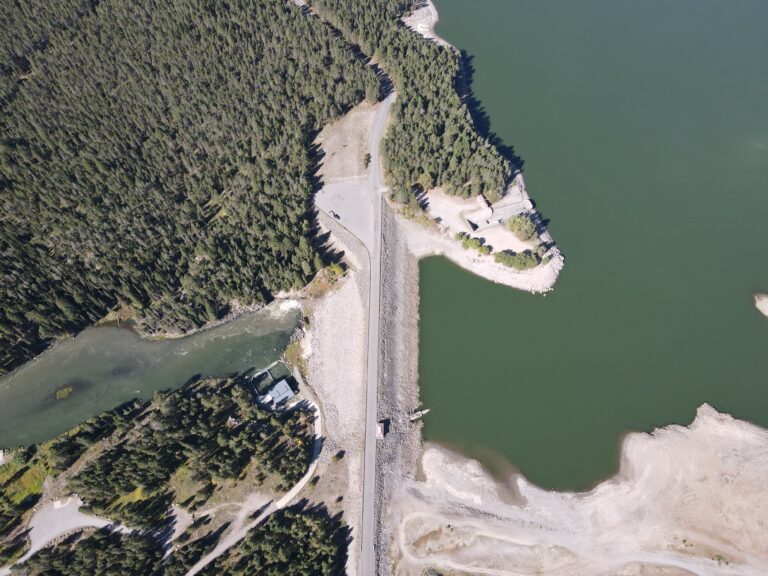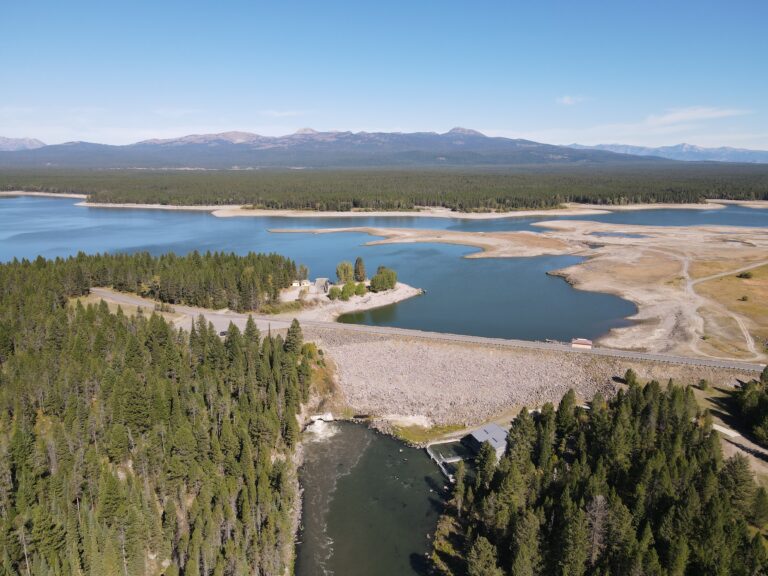
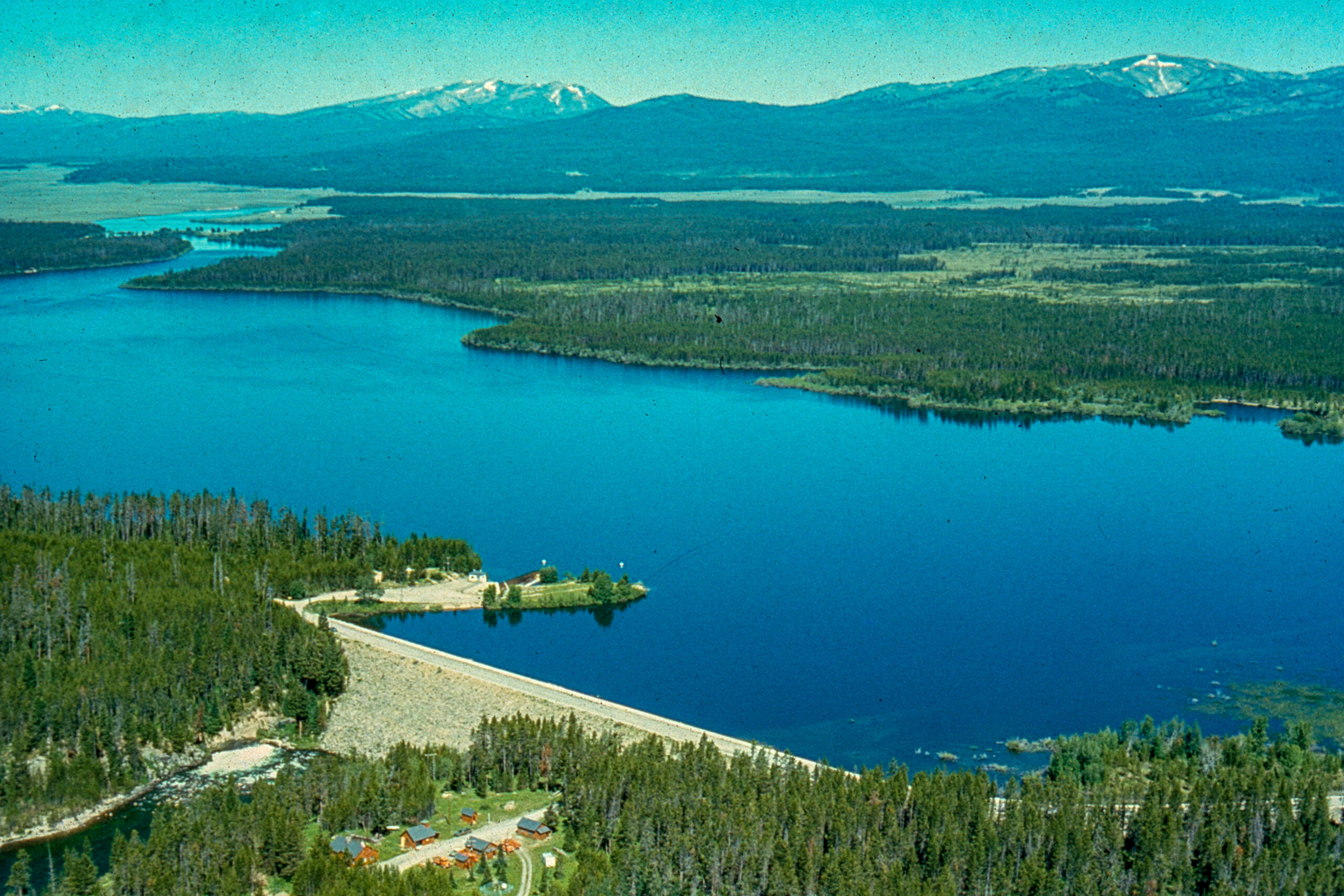


Warmer and drier conditions have slowly degraded water quality in Island Park Reservoir over the last 50 years.
In the 1970s and 1980s, federal reports and university research indicate that the reservoir had relatively good water quality. Island Park Reservoir was mesotrophic—with mostly clear water and occasionally low dissolved oxygen at the reservoir’s deepest depths during the summertime.
But, as time went on, water quality began to decline. Historical satellite imagery analyzed by the U.S. Geological Survey (USGS) recently classified Island Park Reservoir as eutrophic in the 1990s—warmer water, more algal scum, poor visibility, and low deepwater oxygen levels occurring annually each summer.
Unfortunately, the decline has continued. Using HFF monitoring data from 2015–2025 and funding from Friends of Reservoirs, consultants Hazen and Sawyer determined that Island Park Reservoir is now hyper-eutrophic—warm, nutrient dense, dominated by algae, creating exceptionally high turbidity and persistently low deepwater oxygen levels. With warmer air temperatures and less streamflow into the lake, Island Park Reservoir has become a metaphorical stewpot in the heat of summer.
After 50 years of decline, summertime water quality in Island Park Reservoir is now a major limiting factor in the Henry’s Fork watershed.
Poor summertime water quality minimizes fish habitat in Island Park Reservoir, impedes hydropower production at Island Park Dam, and diminishes the fishing experience on the Henry’s Fork downstream.
Decades of decline motivate HFF’s DIRTT Plan. But, thankfully, a better future does exist. Using federal WaterSMART funds and a $100K matching grant from The Chrysanta Foundation, HFF is hiring engineering consultants to investigate the most effective solutions portfolio to address decades of water quality decline in Island Park Reservoir.