

This story was written by Audrey Hunter (2026 intern) and was originally published in the Fall 2026 Newsletter.
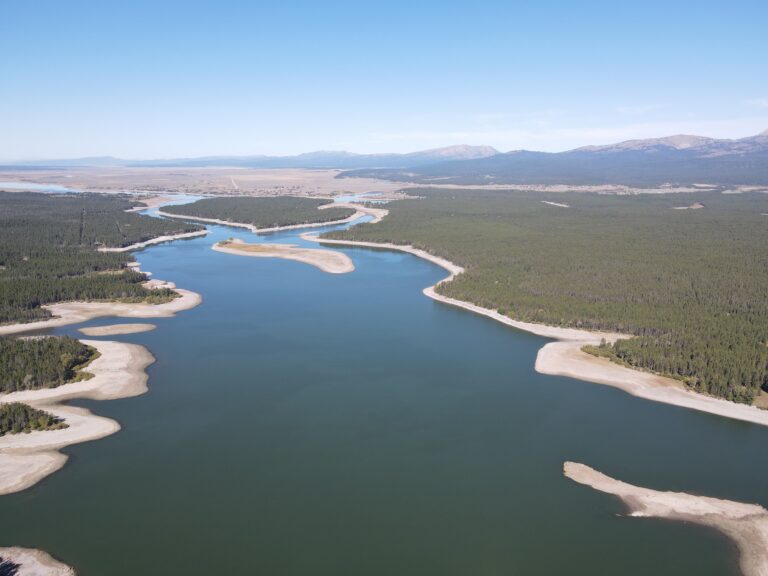
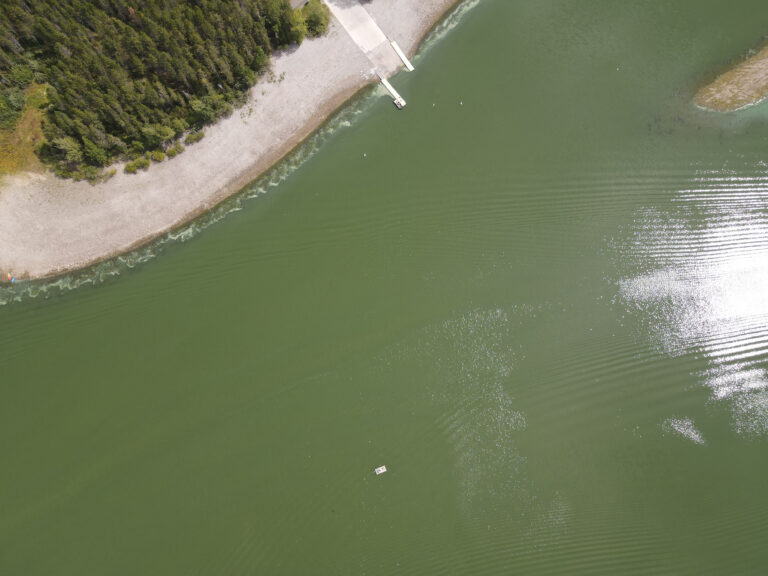
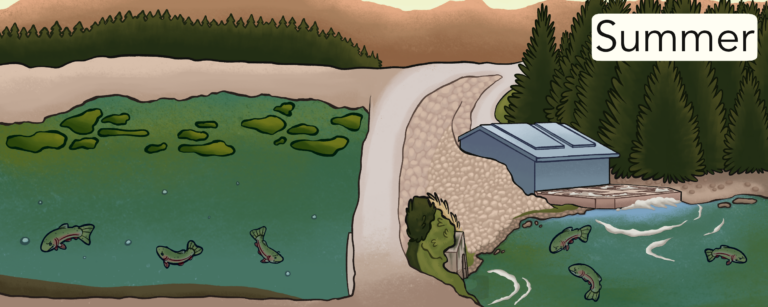
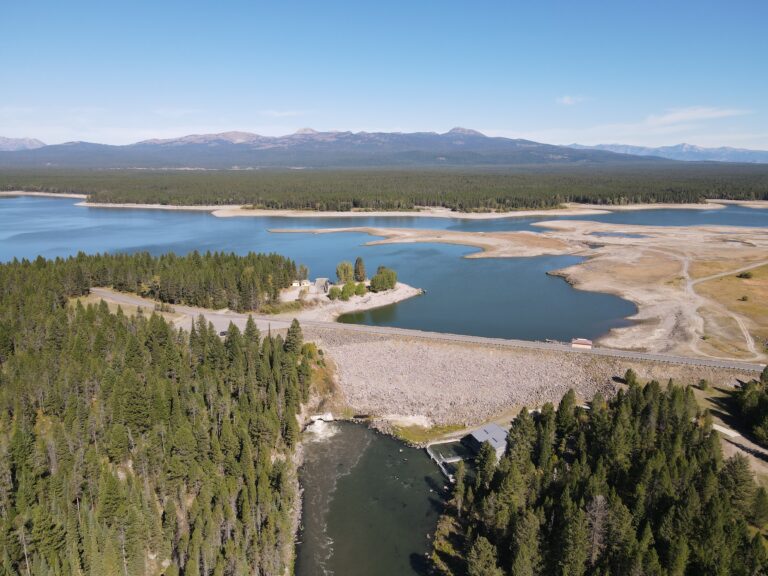
It’s no secret that late summers on Island Park Reservoir haven’t been in perfect conditions in recent years. Warm, turbid, algae-filled water plague reservoir recreationists while diminishing water quality downstream. Cyclical algal blooms decrease water clarity and create less-than-ideal circumstances for the reservoir’s flora and fauna. What’s the solution? HFF’s DIRTT Plan.
In-Reservoir Oxygenation
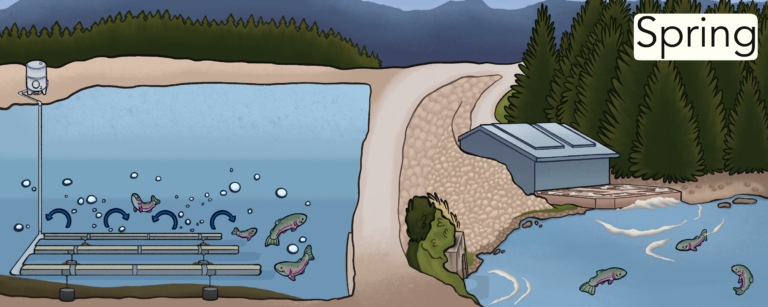
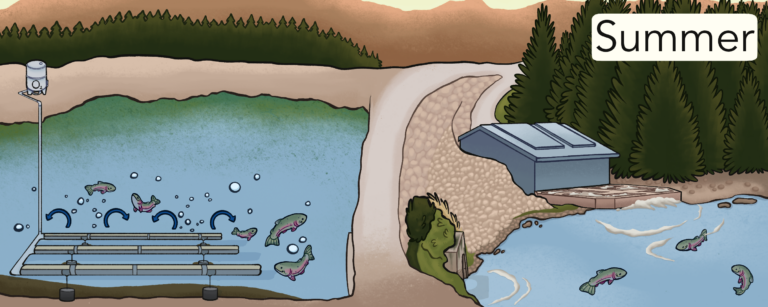
Nutrients released from reservoir sediment fuel algal blooms. Since sediment releases fewer nutrients in oxygenated water, oxygenation is incredibly effective in reducing algae blooms. Without algae, water clarity improves greatly in the reservoir and the Henry’s Fork downstream. By installing infrastructure at the bottom of the lake, we can bring oxygen bubbles directly to where they’re needed most.
Changing with the Seasons
In summer and fall, oxygen levels in the reservoir frequently get low enough that habitat is diminished—not only for fish, but for zooplankton that feed on algae. In-reservoir oxygenation works year-round to maintain an oxygen-rich bottom layer that supports these algae-eating zooplankton.
A Wide Range of Benefits
Oxygenation increases water clarity in the Henry’s Fork, improving your fishing experience, but it also provides the foundation for a healthier reservoir. Oxygenation could dramatically increase fish habitat—by up to 350%. Fewer algal blooms allow rooted aquatic plants to grow, stabilizing bottom sediments, absorbing nutrients, and creating clearer water.
We’re working with HDR and J-U-B Engineers to understand the cost and feasibility of reservoir oxygenation in Island Park Reservoir. Oxygenation is just one part of our vision. We’re committed to finding the most effective solutions to the reservoir’s biggest problems.
Learn more at https://henrysfork.org/dirtt-plan/.
The Oxygenation Vision: As Illustrated by Teddy Montalvo (2025 intern)