
September 2026 Water Quality Forecast for Island Park

Home » Blog » September 2026 Water Quality Forecast for Island Park

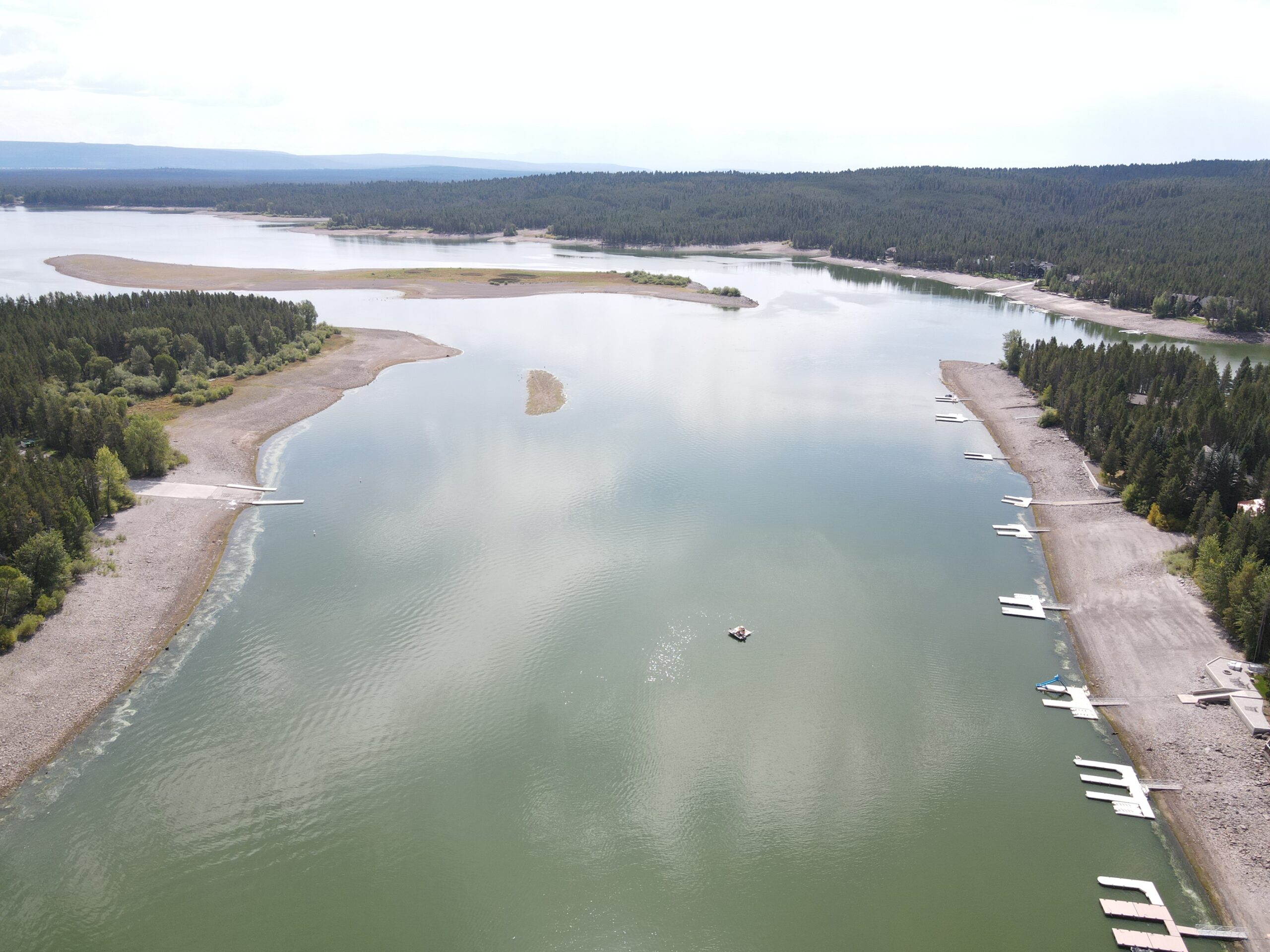
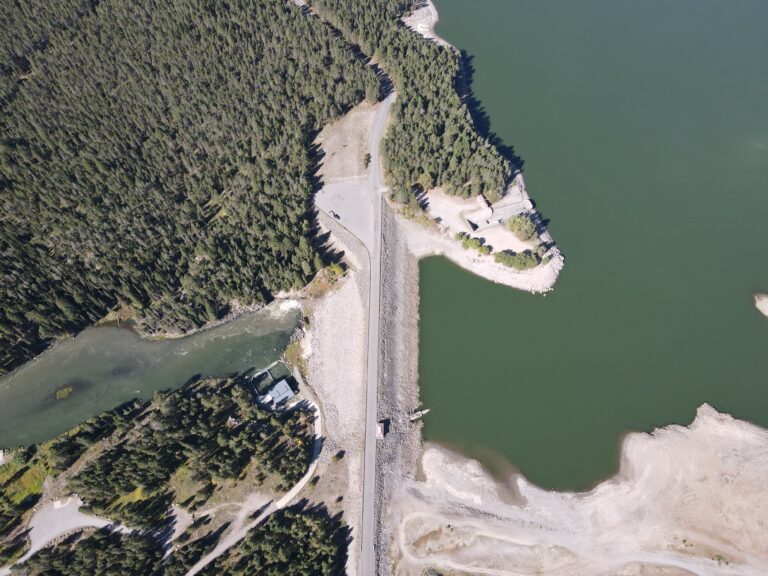
Photo of Island Park Reservoir taken Friday, August 28, 2026

The ingredients for green algae blooms, the primary culprit for turbid water in Island Park, stacked up one after the other earlier this spring. Warm air temperatures. Low streamflow. Long, sunny days. And an ice-free reservoir 30 days earlier than normal. At the Henry’s Fork Foundation, where we swim in water data daily, we braced ourselves for the water quality worst-case scenario: another summer with pea-soup-poor water clarity in Island Park Reservoir and the Henry’s Fork downstream.

The August Story

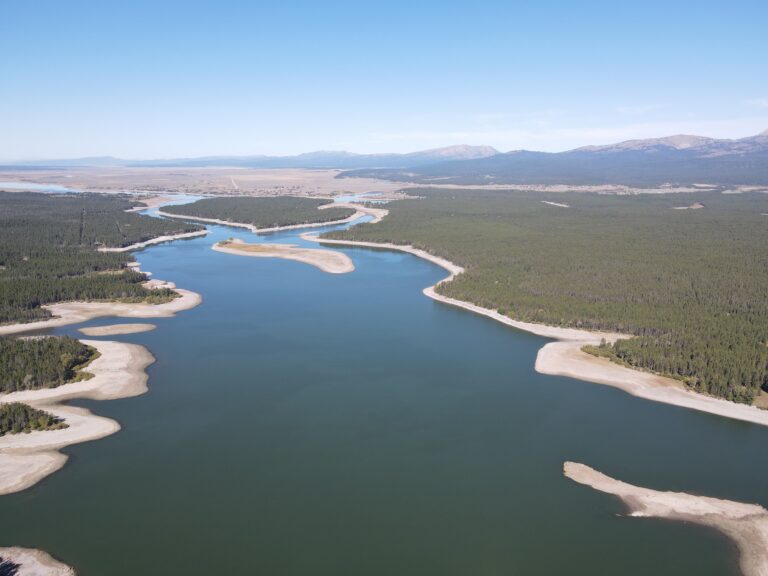
But, it looks like we are in the clear. Green algae blooms have been mild and fleeting. As a result, water clarity coming out of Island Park Dam and into Box Canyon is above average. Without the growth and decay of green algae, dissolved oxygen levels are staying high—allowing the hydropower plant to remain operational and continue to move clear water from the reservoir into the Henry’s Fork downstream. Although there have been bumps in turbidity, they have been short-lived and largely the result of rain falling on exposed shoreline, as water levels in Island Park Reservoir are low (and getting lower). However, toxic cyanobacteria (“blue-green algae”) responsible for harmful algal blooms (HABs) remain present and have re-energized, creeping from Lakeside down towards the dam. For HAB recreation advisories, please visit the Idaho Dept. of Environmental Quality website: https://www.deq.idaho.gov/water-quality/surface-water/cyanobacteria-harmful-algal-blooms/.

Unfortunately, where water clarity overachieved, water temperatures underperformed. Outflow from Island Park Reservoir hit record-high temperatures this summer and limited angling opportunities on the Henry’s Fork downstream. Thankfully, river temperatures have cooled in many places over the last week.

Water Quality Forecast for September

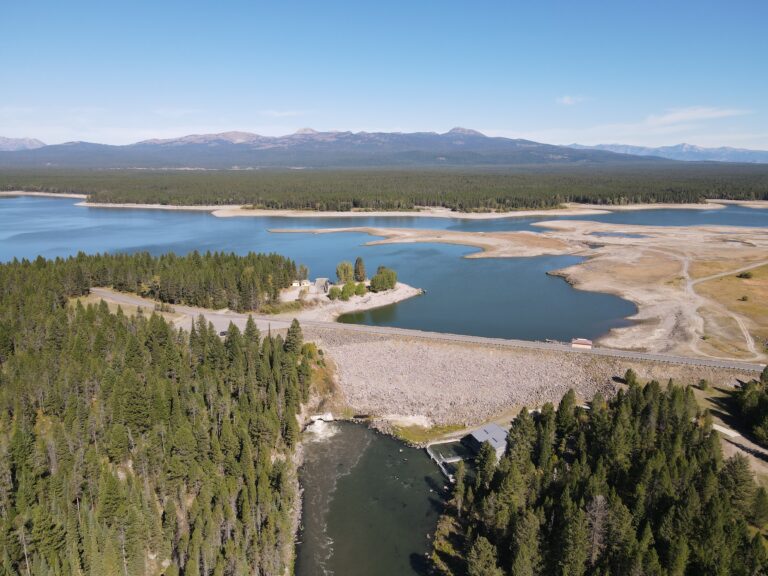
Here is what to look for in September: By Labor Day, the reservoir will likely be too low for the hydropower plant to operate and all outflow will move to the gates (on the dam’s west side). Once that occurs, outflow from Island Park Dam will be turbid and off-color. Water clarity will be at its worst for a day or two before leveling out to something still not great, but not absolutely terrible. With the gates open at these low levels, plant chunks, algae mats, suspended gunk, and even fish will flow out of the reservoir and into the river. These conditions will persist until late September, when outflow will be drastically reduced to begin filling Island Park Reservoir for the 2027 irrigation season.

Resources

For water quality resources for the river and reservoir, please visit henrysfork.org/river-conditions and send questions to hff@henrysfork.org.

The Henry’s Fork Foundation envisions a better future for water quality in Island Park. Learn more about HFF’s plan to mitigate algae cycles and preserve cool water in Island Park Reservoir by visiting henrysfork.org/dirtt-plan.

Facebook
LinkedIn
Pinterest

Recent Posts

Water Quality
Christina Morrisett

September 2026 Water Quality Forecast for Island Park

Photo of Island Park Reservoir taken Friday, August 28, 2026 The ingredients for green algae blooms, the primary culprit for turbid water in Island Park, stacked up one after the other earlier this spring. Warm air temperatures. Low streamflow. Long, sunny days. And an ice-free reservoir 30 days earlier than normal. At the Henry’s Fork Foundation, where we swim in water data daily, we braced ourselves for the water quality worst-case scenario: another summer with

Read More »
Water Quality
Christina Morrisett

FAQ: Island Park Reservoir Water Quality

Island Park Reservoir on June 24, 2026 Questions answered in this article: Why are Island Park Reservoir levels so low this year? Is Island Park Reservoir hyper-eutrophic? Are silt and sediment building up behind the dam?   Island Park Reservoir is the center of the Henry’s Fork universe. Reservoir water quality and quantity shape our fisheries, and your fishing experience. But after a warm winter and lower-than-average snowfall, we’ve received a lot of questions about

Read More »
A river surrounded by snow. There are rocks in the foreground pillowy with snow. The river flows from right to left in the middle. On the other side sits needled trees and a snow covered bank. The photo almost appears to be black and white.
Research and Monitoring
Christina Morrisett

Following the Snowmelt: From Mountains to Rivers

Eastern Idaho just had its warmest winter on record—and a changing climate may mean more warm winters to come. Warm winters have big implications for our snowpack, and consequently, the water that supports our fisheries. How? Snowstorms build mountain snowpacks. When a snowpack melts, some of the water is absorbed by soil, recharging groundwater and giving thirsty plants a drink. The rest of the water runs into rivers and reservoirs. In the winter, our mountain

Read More »
Lake surrounded by trees
Research and Monitoring
Rob Van Kirk

HFF Seeks Proposals for Restoration Design

The Henry’s Fork Foundation (HFF), in partnership with the U.S. Bureau of Reclamation (Reclamation), Idaho Department of Fish and Game (IDFG), and Idaho Department of Environmental Quality (IDEQ), seeks qualified consultants or consultant teams (hereby referred to as “the consultant”) to develop an adaptation plan for the natural, engineered, and social resources of the Henry’s Fork watershed upstream of Mesa Falls. Anticipated additional partners in this effort include the U.S. Forest Service (USFS), Idaho Department

Read More »