Why are Island Park Reservoir levels so low this year?
Is Island Park Reservoir hyper-eutrophic?
Are silt and sediment building up behind the dam?
Island Park Reservoir is the center of the Henry’s Fork universe. Reservoir water quality and quantity shape our fisheries, and your fishing experience. But after a warm winter and lower-than-average snowfall, we’ve received a lot of questions about the health and future of the reservoir, and how it will affect the Henry’s Fork and its fisheries. Although low levels, warm temperatures, and the potential for algal blooms are concerning, we are committed to understanding, and helping you understand, the reservoir’s biggest issues.
Keep reading to learn more about the reservoir’s hypereutrophic status, sediment in the reservoir, falling water levels, how the Henry’s Fork is affected, and what our DIRTT Plan will do about it.
Why are Island Park Reservoir levels so low this year?
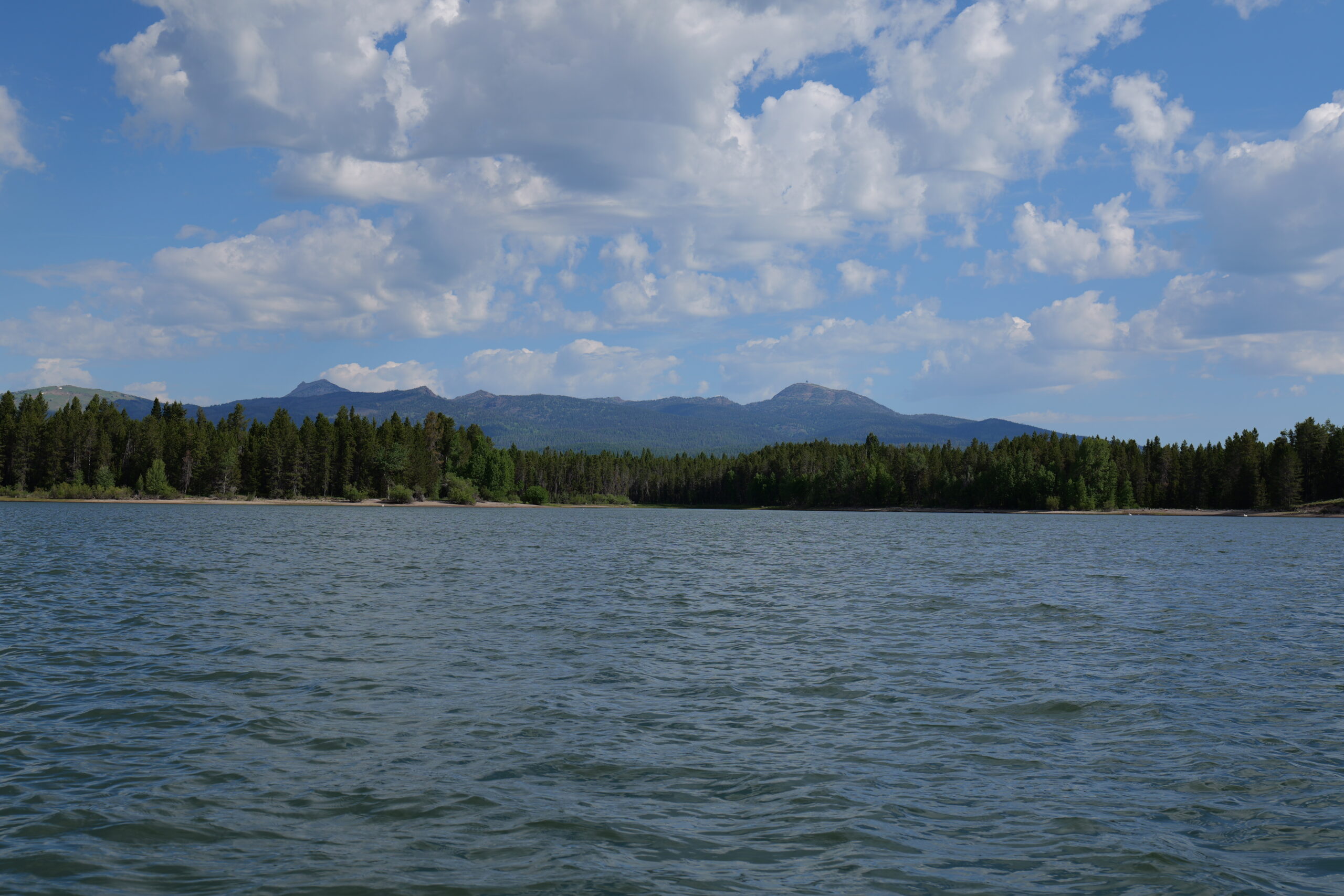
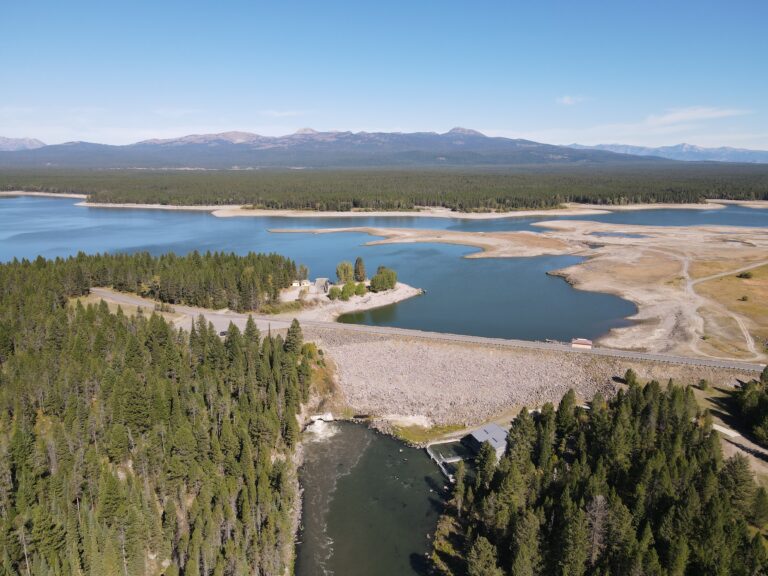
Island Park Reservoir on August 13, 2026
The reservoir was 33% full as of August 24, 2026, much lower than the average of 55%. Why? This year, the Henry’s Fork watershed experienced a snow drought, meaning warmer-than-average temperatures caused more precipitation to fall as rain, and less as snow. This led to less snowpack, which is a huge factor in the reservoir’s current low levels. Essentially, less snowpack = less snow melting into the river = less streamflow into the reservoir = lower reservoir water levels. In fact, streamflow into Island Park Reservoir was almost 60% below average this spring (April 15–June 15). But reservoir inflow is only part of the story. Outflow from the reservoir is just as important in creating the conditions we see today.
Though Island Park Reservoir filled to 97% full, a warm spring meant irrigation demands got high fast—irrigation diversions in April were the highest on record. By the end of the season, Island Park Reservoir is likely to be 13% full. We recognize that this is low and indeed lower than we’ve seen in almost 20 years, but these levels are not unheard of in the reservoir’s 88-year history. How could reservoir levels improve? Wetter, cooler weather can lower temperatures slightly, disrupt algal blooms, decrease irrigation demand, and keep the reservoir a little bit fuller, especially when combined with careful management strategies.
These low reservoir levels have no immediate effect on Henry’s Fork trout populations, but will lead to decreased populations from Island Park to Riverside in the next 2–4 years. Learn more about the relationship between reservoir management and trout populations here.
Is Island Park Reservoir hypereutrophic?
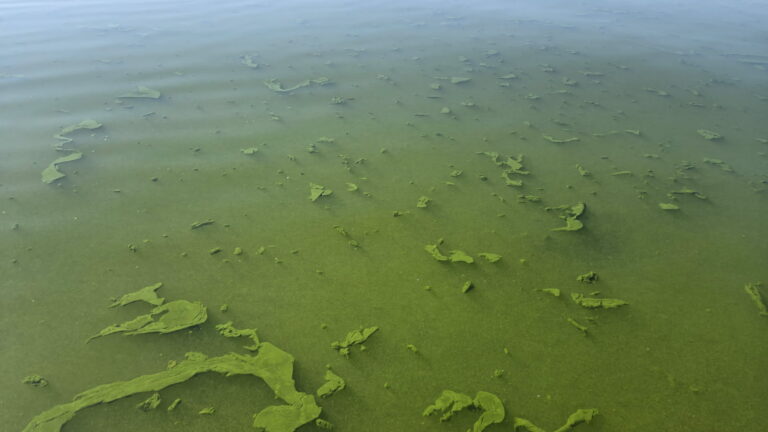
Photo taken from Trude Bay during routine water quality monitoring on August 19, 2026
In 2025, Hazen and Sawyer, a consulting company hired by HFF, determined that Island Park Reservoir is hypereutrophic. This means that warm water and high phosphorus levels encourage large algae blooms, which reduce water clarity and lower dissolved oxygen in the reservoir. These blooms greatly diminish fish habitat in the reservoir, since they take much needed oxygen from trout and kokanee.
Besides algae, there’s another serious factor in the reservoir’s hypereutrophic status: cyanobacteria. Island Park Reservoir intermittently has high levels of cyanobacteria, some of which are capable of producing dangerous cyanotoxins. These toxins can be harmful to both fish and humans. It is important to note that not all algal blooms contain harmful toxins, but it’s best to check conditions before recreating on the reservoir.
HFF’s DIRTT Plan includes sediment stabilization and oxygenation strategies that will improve water quality and decrease the frequency of harmful algal blooms. Learn more about the Plan here!
Are silt and sediment building up behind the dam?
No, silt and sediment are not building up in Island Park Reservoir. How do we know?
Underwater imaging in 2017 revealed the exact landscape present before Island Park Reservoir was ever created 88 years ago. Even the now-submerged roads are still visible!
In 2023, water managers conducted a springtime freshet at Island Park Dam, sending a large rush of water out of the reservoir into the Henry’s Fork to flush fine sediment from the river-bottom downstream. If the reservoir was full of sediment, we would have seen brown-colored water coming out of the dam during most of the freshet flush. Instead, the water was only off-color for a few hours and remained clear for the duration of the 4-day event. Photo evidence, water samples, and real-time water quality monitoring downstream of the dam all support this finding!
If you’re seeing brown or off-color water coming out of the dam, it is probably not sediment.
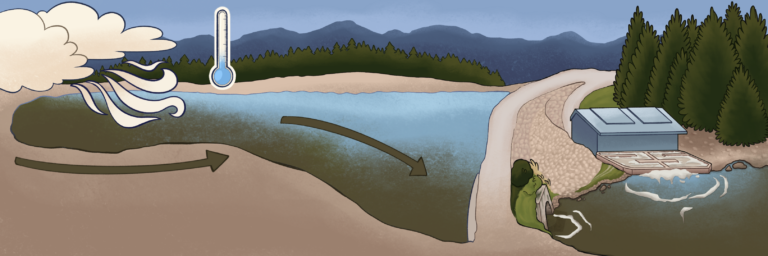
Brown or off-color water is primarily caused by dead algae (part of the reservoir’s hypereutrophic status. Read more above). In the rare cases where off-color water is caused by sediment or silt, density currents are to blame. Density currents originate in the reservoir’s west end and occur during cold weather or from excessive recreational boating activity, when inflow is low and drawdown is high. These conditions stir up sediment that then flows along the bottom of the reservoir, downhill, until it reaches the dam and is flushed downstream. But this inorganic sediment is completely natural—it’s been there for millions of years.
How do we tackle turbidity issues in Island Park Reservoir? Our DIRTT Plan has strategies like sediment stabilization and oxygenation that will lead to fewer algal blooms and clearer water.
Density Current Illustration by Teddy Montalvo
Looking Ahead.
As the summer cools down, the Henry’s Fork Foundation continues to monitor conditions in the Island Park Reservoir to develop a long term understanding of the reservoir, while also creating accessible information through our Island Park Reservoir Water Quality website. Though there are many challenges facing the reservoir, the Foundation has a plan for each one.
Learn more about the DIRTT project here.
This blog post was written by Audrey Hunter (2026 Stanford Intern) in consultation with HFF science and communication staff.
Our Aquatic Ecology Program Manager, Dr. Jack McLaren, joined Idaho Falls city and FIPS-Mouche leadership at the opening ceremony parade along the Snake River Greenbelt to welcome competitors to the watershed and to make sure conservation was front and center.
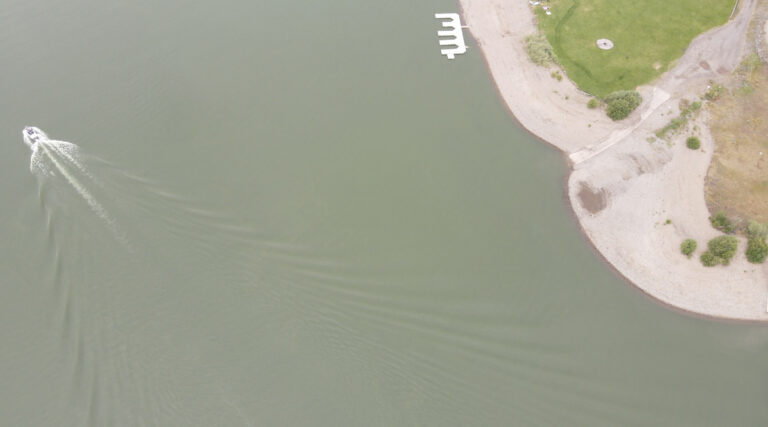
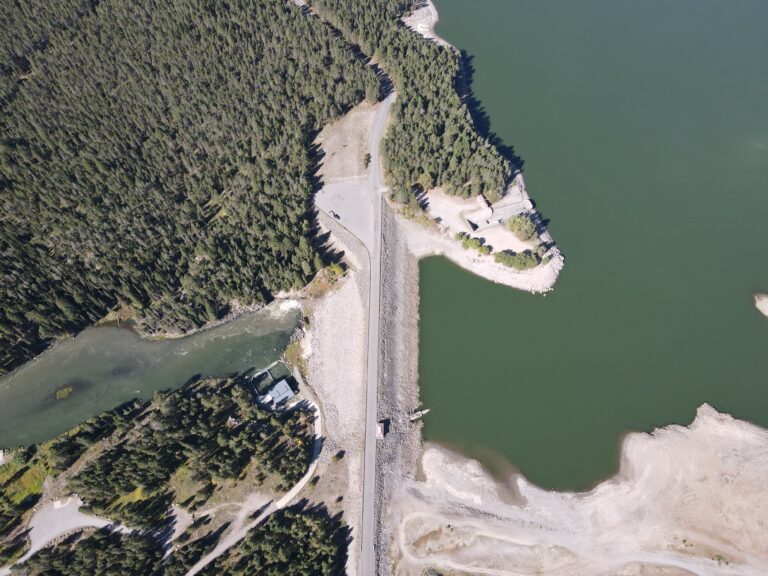
Drone photo of Island Park Dam taken on September 9, 2026 Looking Back on September September brought lows and highs to Island Park. Island Park Reservoir started September at 29% full and quickly fell to a low of 12% full on September 19. The rapid drawdown of the reservoir was the result of managers needing to move water downstream to American Falls (to irrigate farms in the Magic Valley with senior water rights). Such low
This story was written by Audrey Hunter (2026 intern) and was originally published in the Fall 2026 Newsletter. It’s no secret that late summers on Island Park Reservoir haven’t been in perfect conditions in recent years. Warm, turbid, algae-filled water plague reservoir recreationists while diminishing water quality downstream. Cyclical algal blooms decrease water clarity and create less-than-ideal circumstances for the reservoir’s flora and fauna. What’s the solution? HFF’s DIRTT Plan. In-Reservoir Oxygenation Nutrients released from
Drone photo taken on September 9, 2026 The Henry’s Fork Drought Management Planning Committee met on Wednesday, September 16 2026 to develop an updated reservoir management strategy. Downstream of the Henry’s Fork watershed, lower-valley irrigation demand over the rest of the season is anticipated to be slightly lower than projected last week, so Island Park Reservoir and Grassy Lake (in the Fall River drainage) do not need to deliver any more water out of the