
What’s Hatching on the Henry’s Fork?

Home » Blog » What’s Hatching on the Henry’s Fork?
A salmonfly nymph and newly-hatched adult sit on a blade of grass alongside the river. Text reads "What's Hatching? (Or Not)"

In this blogpost, learn about what we know, what we don’t know, and how you can help by reporting the hatches you see (or don’t see) every time you visit the river. Check out the Henry’s Fork Hatch Survey today at tinyurl.com/hfhatchreport.

What We Know

The Henry’s Fork Foundation has been monitoring aquatic macroinvertebrates (insects) at multiple locations since 2015. Each March (normally on St. Patrick’s Day), HFF and a team of entomologists from River Continuum Concepts head out to the Henry’s Fork to scrub rocks and collect bugs from the river-bottom for expert identification and robust analysis to answer questions like:

  1. How many bugs are there? (Abundance)
  2. What kind of bugs are there? (Species Diversity, Richness, Composition)
  3. How have the bugs changed through time?

As scientific river detectives, we pair aquatic insect numbers with water quality and streamflow data and run it through rigorous statistical analysis to better understand changes to the macroinvertebrate community. What have we learned so far? A decade of data show that aquatic invertebrates on the Henry’s Fork are largely happy and healthy. When it comes to Pale Morning Duns, we are seeing declines in abundance at Flat Rock and St. Anthony, but no trends one way or the other at Last Chance, Osborne, or Marysville. Overall, our bug metrics are as good as or better than any other popular western trout stream.

What We Don’t Know

But anglers are reporting wonky, pleasantly unexpected, or downright disappointing hatches—in stark comparison to the consistent hatches Henry’s Fork anglers have longtime counted on in planning their fishing day or fishing vacation. What’s up with that? How can we have strong, stable insect populations and unreliable, inconsistent hatches?

There are so many possibilities. These river bottom-living bugs may be hatching at different times of day or maybe even multiple times per year. Maybe it’s about weather or water temperatures or streamflow. We don’t know. And we need your help.

At HFF, we can’t be everywhere on the river all the time. But we can just about get there by relying on all of you, the Henry’s Fork community, to be our eyes with every trip to the river—whether there’s a rod in your hand or not.

The Henry’s Fork Hatch Survey

After every river visit, please fill out our survey. Tell us when you visited the river, where you visited the river, and what you saw (even if you saw nothing at all).

This is a numbers game. With enough observations, you can help us build a more complete picture of the river and contribute to innovative, science-based river conservation. Add the Henry’s Fork Hatch Survey to your river routine and invite your fishing buddies to do the same. It takes less than 2 minutes.

Extra Info:

  • Don’t let the size of the hatch prevent you from reporting. If you see bugs hatching, whether it’s a whole bunch or just a few, we want to hear from you.
  • If you need a bug identification refresher, don’t worry—the survey provides pictures (courtesy of some generous photographers, thank you!). We’ve also put together an identification guide together for reference.
  • If you feel skeptical about reporting your observations and are concerned with having all kinds of anglers on your favorite river reach, we get it. Be assured: we will not broadcast your observations in real-time. This is purely for science, not for social media. All observations will be summarized for seasonal reports. Although I (Christina Morrisett, author of this blog and lead scientist on this survey) might email you to verify an observation because of an entry typo or unexpected sighting, your observation will be anonymized for inclusion in our handy dandy scientific spreadsheet.

Your input is valuable. Thank you for your contributions so far and let’s keep it going!


Facebook
LinkedIn
Pinterest

Recent Posts

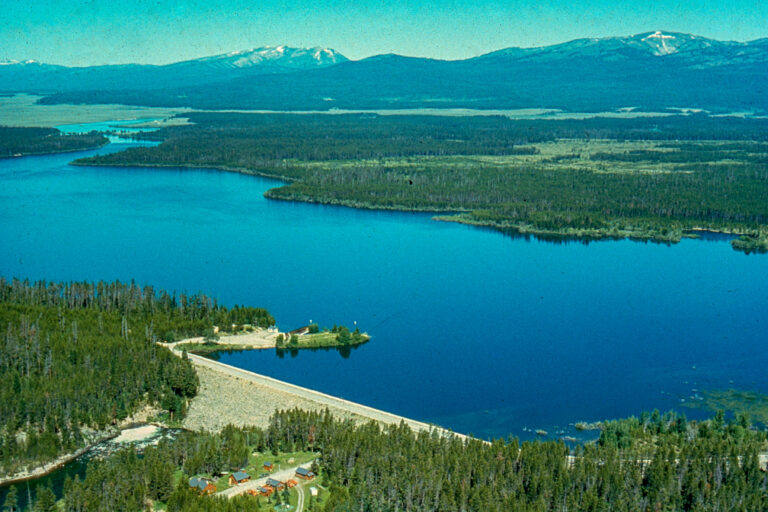
Aerial photo of Island Park Reservoir. The dam is in the bottom left corner. The Centennial Mountain Range is in the top.
Water Quality
Christina Morrisett

History of Water Quality in Island Park Reservoir

Warmer and drier conditions have slowly degraded water quality in Island Park Reservoir over the last 50 years.  In the 1970s and 1980s, federal reports and university research indicate that the reservoir had relatively good water quality. Island Park Reservoir was mesotrophic—with mostly clear water and occasionally low dissolved oxygen at the reservoir’s deepest depths during the summertime. But, as time went on, water quality began to decline. Historical satellite imagery analyzed by the U.S.
Read More »
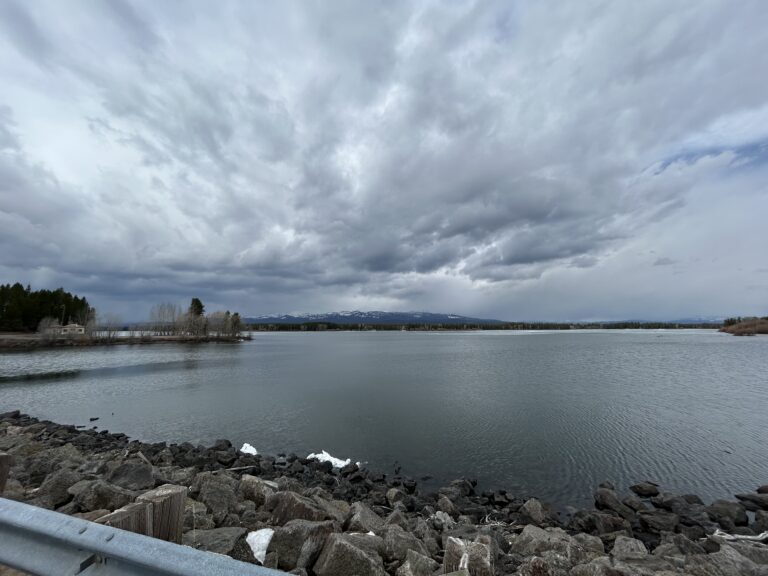
A photo taken of Island Park Reservoir while standing on the dam and looking north. The sky is cloudy, Mt Sawtelle sits with little snow in the background, and the reservoir is open water (save for a few small sheets of ice in the distance).
Frequently Asked Questions
Christina Morrisett

Reservoir Ices Off, Growing Season Turns On

Photo of an ice-free Island Park Reservoir taken on March 31, 2026 On March 31, 2026, with no accompanying commentary, HFF scientist Christina Morrisett stood on top of Island Park Dam and texted colleagues Rob Van Kirk and Jack McLaren photos of open water on Island Park Reservoir. Rob, eager to see that the reservoir reality matched what he was seeing in the real-time river data downstream, texted back, “Yep! That’s close enough to ice

Read More »
Photo of confluence of Warm River and Henry's Fork
Water Quality
Rob Van Kirk

Water Supply and Water Quality Predictions for Summer 2026

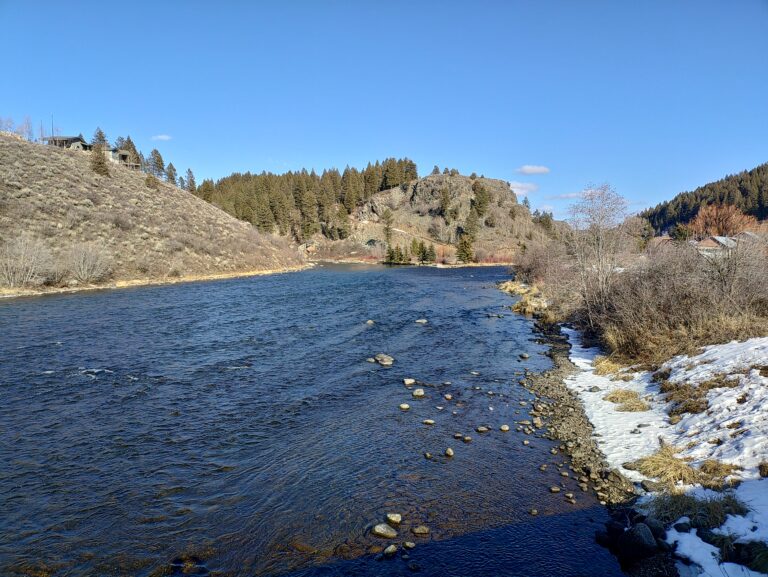
The photo above captures the unprecedented situation we face at the beginning of April. The photo, of the confluence of Warm River and the Henry’s Fork, was taken on February 7 and shows the shocking lack of snow we experienced in the watershed all winter as a result of record-breaking warm temperatures. How will the warm winter and lack of snow affect water supply, water quantity, and fisheries? The highlights are below. If you want

Read More »
Person holding a rainbow trout.
Water Quality
Rob Van Kirk

Water Year 2025: Everything you wanted to know and a lot more!

Every year since 2017, the Henry’s Fork Foundation Science and Technology Team has produced an annual technical report that documents all of our data collection and analysis activities for the year. Water and irrigation year 2025 was a very active year for the team, given one of the hottest and driest summers on record, our 11th year of aquatic invertebrate sampling, and the 20th year of monitoring the rainbow trout spawning run in the Buffalo

Read More »