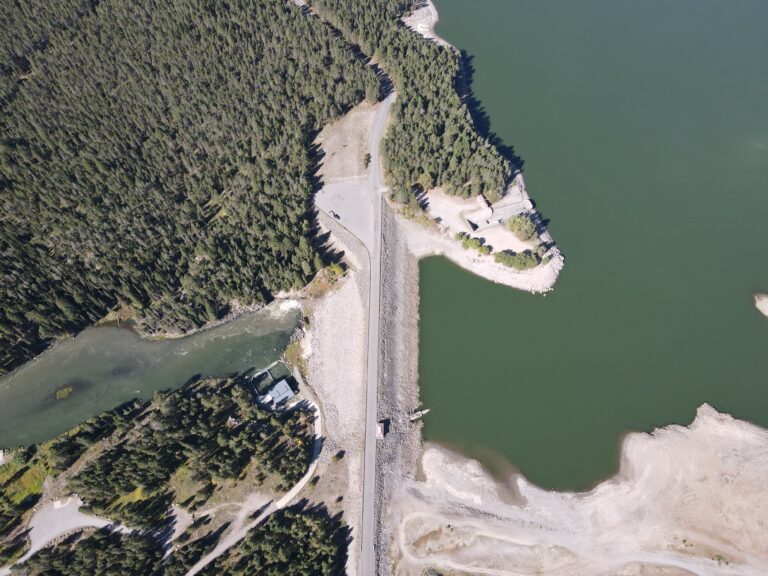
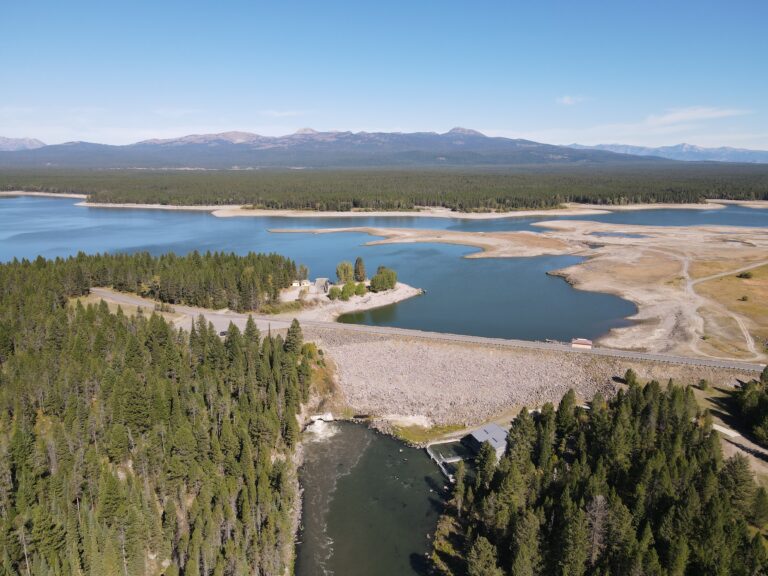
People are noticing pelicans by the hundreds in the upper Henry’s Fork each summer, especially around Island Park Reservoir. What’s the deal? I asked our Aquatic Ecology Program Manager, Dr. Jack McLaren about pelicans, and this is what I learned:
Pelicans can definitely be a nuisance and watching them feed is alarming to say the least! Should we be worried?
We’re watching, but we’re not concerned yet. Why? Pelicans are here to eat suckers.
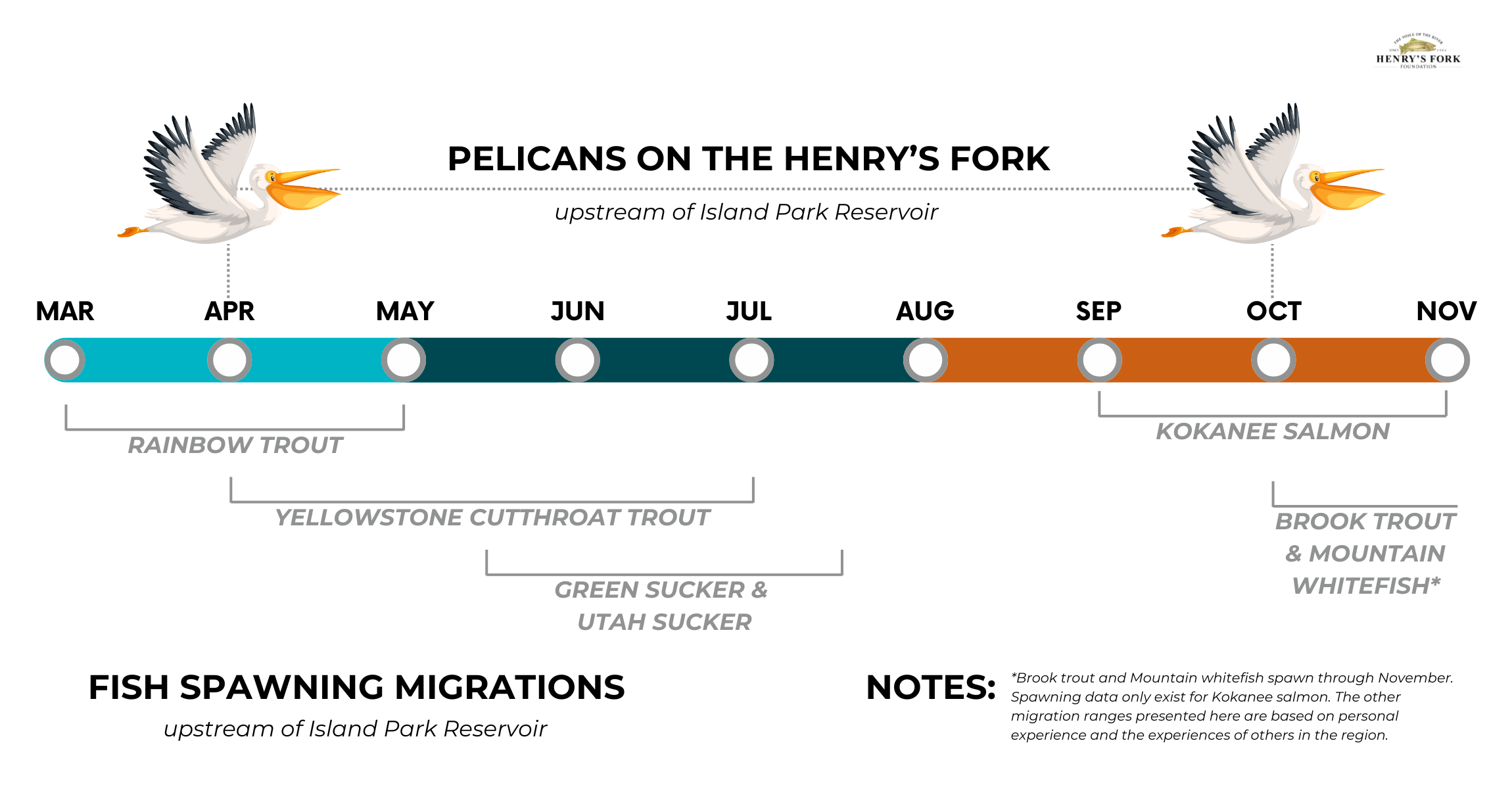
After following melting lakes and rivers north from their wintering grounds, pelicans tend to arrive in East Idaho and the Yellowstone ecosystem in April to begin feeding and nesting. They typically hang around until the end of September or so. Their presence overlaps with spawning migrations for Rainbow and Cutthroat trout in the spring, Utah and Green suckers in the summer, and Brook trout, Mountain whitefish, and Kokanee salmon in the fall.
But pelican behavior in recent years follows closely with Utah and Green sucker spawning migrations out of Island Park Reservoir. Pelicans aren’t picky about what they eat, so they’ll simply eat whatever’s most abundant. When suckers migrate, they make up the largest of all spawning migrations by biomass in the upper Henry’s Fork, above Island Park Reservoir. Dr. McLaren estimates at least tens of thousands of suckers spawn from mid-May to mid-July. So it makes sense that Dr. McLaren and concerned citizens typically begin seeing large numbers of pelicans hunting near Coffee Pot when the sucker migration begins in mid-May. Informal conversations with Idaho Department of Fish and Game indicate that fish consumption by pelicans on Island Park Reservoir is mostly made up of “rough fish”—likely suckers and Utah chub.
Are pelicans having a detrimental effect on trout populations?
Dr. McLaren says no. Even if pelicans eat some trout, pelicans have no detectable effect on trout populations in or upstream of Island Park Reservoir. Jack has studied fish populations in Island Park Reservoir and the river upstream for the last ten years. His conclusion? Keeping Island Park Reservoir as full as possible and for as long as possible in consecutive years 1) increases the number of spawning Rainbow trout and Kokanee salmon and 2) improves juvenile survival in the upper Henry’s Fork. Island Park Reservoir management is key to sport fish population sizes in Island Park Reservoir and the Mack’s Inn reach of the Henry’s Fork.
As for trout populations downstream of Island Park Reservoir (and on down to Riverside), twenty years of HFF research remains clear: winter flow in Box Canyon is the only factor that influences Rainbow trout population sizes. Winter flow is determined by end-of-season minimum reservoir volume, natural winter inflow, outflow management in October and November, and rain/snow that falls directly on the reservoir surface. Learn more in our StoryMap or in Rob’s 2025 winter flow blog.
That’s why HFF focuses our 24/7/365 efforts on helping water managers manage every drop, every day, everywhere within the Henry’s Fork watershed.
What does the future of pelicans in Island Park look like?
The major local pelican nesting ground (called a rookery) is an island in Island Park Reservoir. American White Pelicans are protected under the Migratory Bird Treaty Act—one of the oldest and most successful conservation laws in the United States. The Idaho Department of Fish and Game (IDFG) has special permission to manage these protected birds under a science-based pelican management plan. That plan includes an objective to reduce and stabilize the population on the Island Park Reservoir rookery. To meet that objective, IDFG monitors the population and hazes adult birds to reduce nesting success. Occasionally, egg predators like skunks, raccoons, and even coyotes and bears join in on the effort! Statewide efforts have reduced pelican populations, but the work is ongoing.
It’s important to note though that these birds frequently travel hundreds of miles to feed. So the pelicans near Coffee Pot, for example, might not entirely be “local” birds from Island Park Reservoir. They may instead be coming from rookeries in other states like Red Rock Lakes, Yellowstone Lake, or even the Great Salt Lake. If you see an unusual concentration of pelicans on Idaho’s waterways, making a detailed report with photos to IDFG can be useful for their monitoring and management. As usual, HFF will continue to monitor trout populations and the fisheries health.