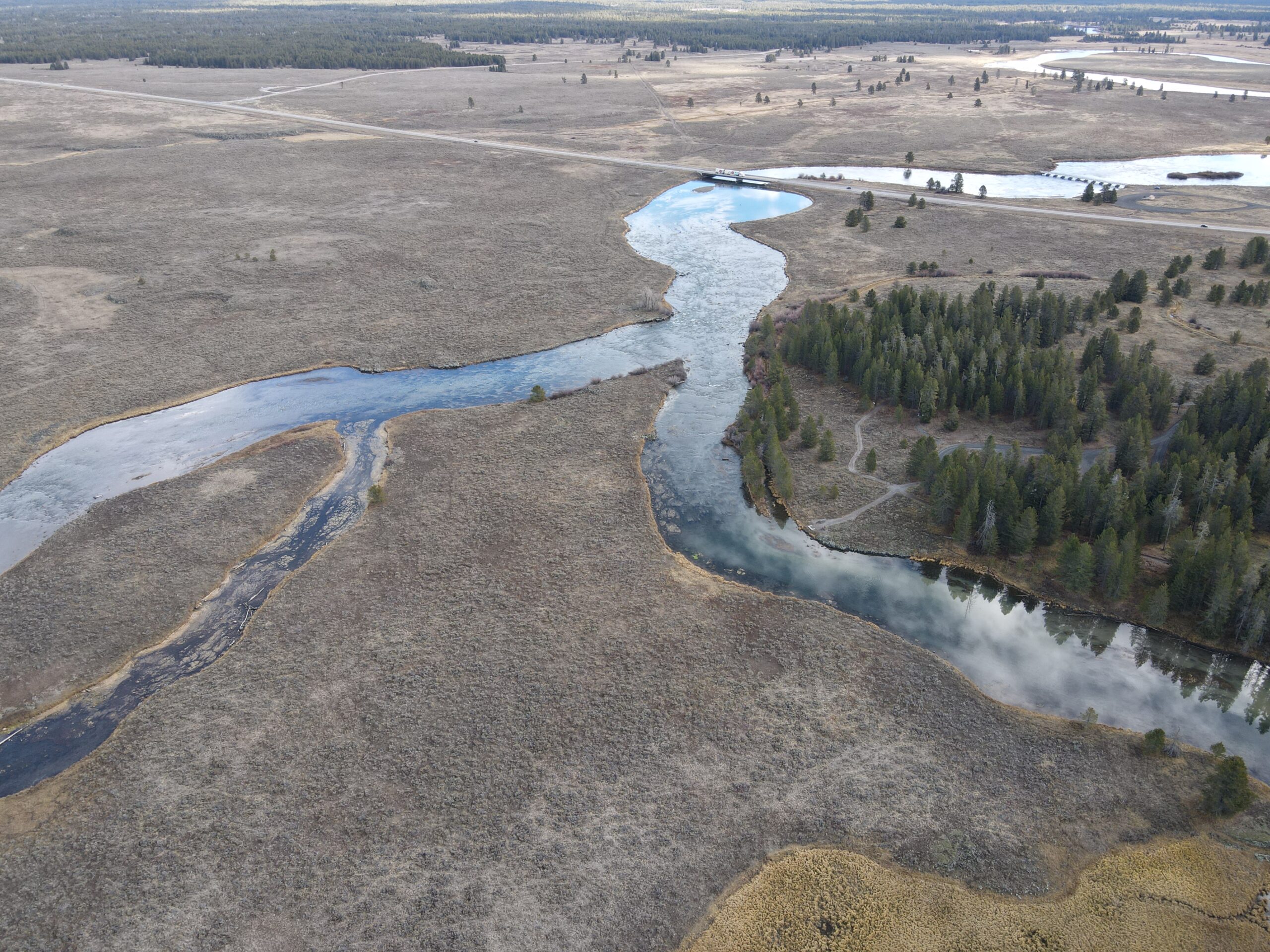
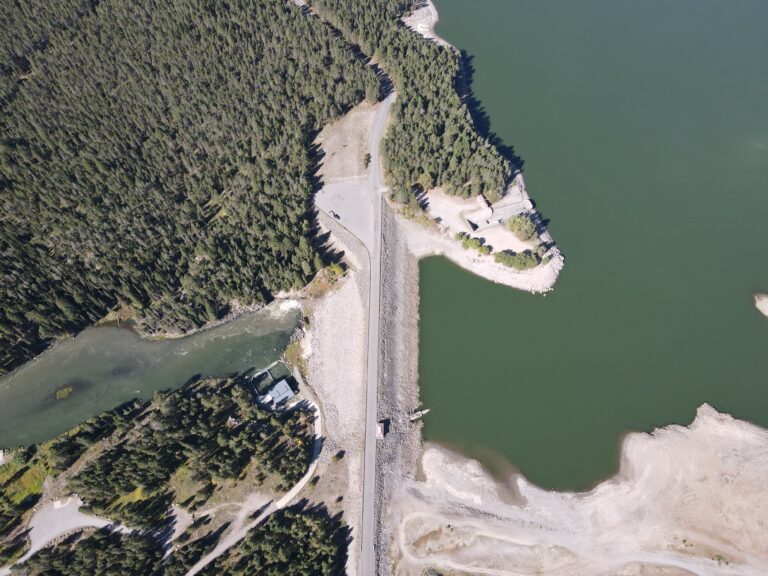
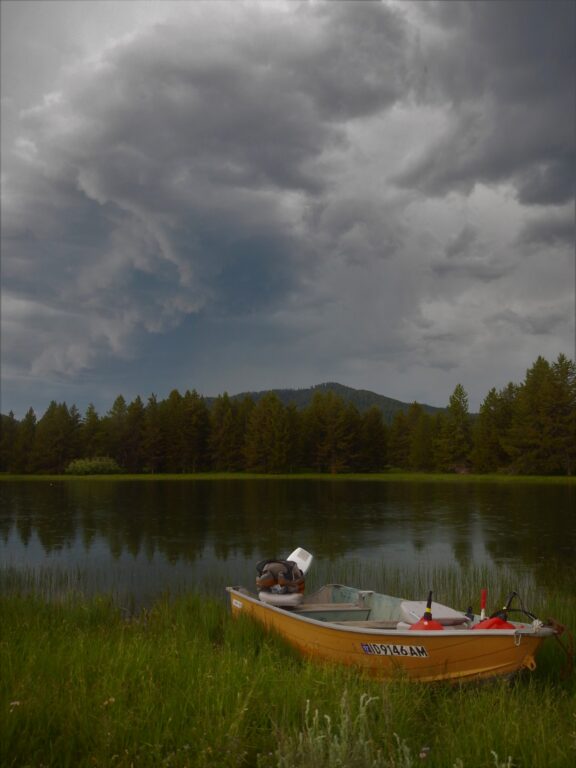
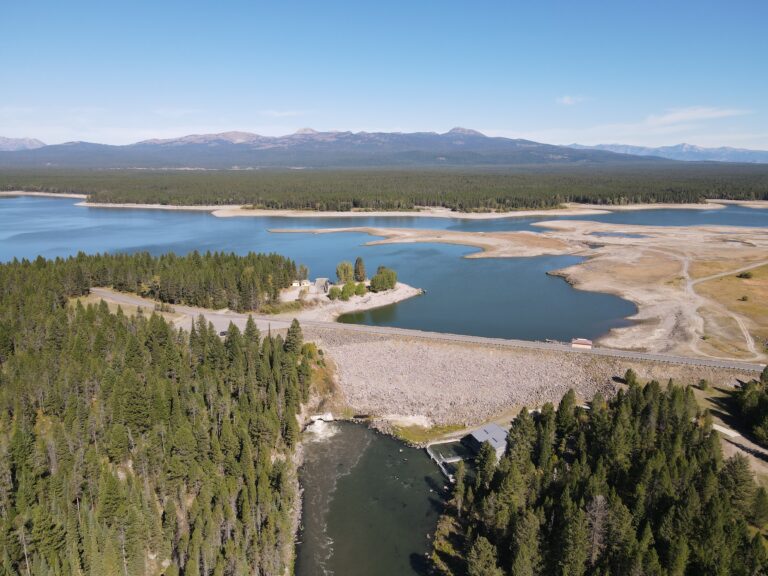
The Henry’s Fork Foundation (HFF) has become aware of, and is actively investigating, the recent drawdown of Silver Lake in Harriman State Park. The sudden lowering of the lake released a large amount of fine sediment downstream into Thurmon Creek and the Third Channel of the Henry’s Fork through the Ranch.
HFF was not informed that the lake would be drawn down. Fortunately, our science team responded immediately, documenting conditions, collecting samples, and assessing the river as soon as impacts became visible.
Read more about the event and HFF’s response here.
- Did this kill any fish?
A few 3–12″ Utah chub have been seen belly up, but no other dead fish have been found. Trout appeared to move quickly away from the heaviest sediment, and our team even documented fish rising and feeding in pockets of clearer water just outside the plume.
We’ll continue monitoring fish behavior as conditions develop, but early observations are encouraging.
- How bad is the sediment, really?
The sediment pulse is noticeable, especially in Thurmon Creek and the Third Channel, but it has not resulted in an acute fish-kill event.
Turbidity levels reached unusually high values near the outflow, but the most intense sediment appears to be settling within the upper reaches of Third Channel and has not moved downstream to Pinehaven.
This situation is still developing, and we’re sharing information as we collect it.
- Why did this happen, and why weren’t river partners notified?
Harriman State Park lowered Silver Lake to access and repair a compromised headgate and culvert.
We’re working to understand the full permitting and communication process. To do that, HFF has filed a FOIA request for all permits and project-related communications. We expect more information once those records are released.
- What is HFF doing about it?
Our team responded immediately when the sediment was discovered. Since then, we’ve been:
- Collecting water samples
- Tracking turbidity and suspended sediment
- Monitoring fish presence and behavior
- Coordinating with IDEQ and the Army Corps of Engineers
- Gathering data to assess any longer-term ecological impacts
We’ll continue monitoring this event closely and sharing updates as more information becomes available.
- Can this sediment be cleaned up?
Possibly — but options are limited.
A spring freshet (the most effective tool for large-scale sediment movement) won’t help here because Third Channel doesn’t have enough stream power, and the watershed won’t have the water supply for a freshet until at least 18 months from now.
That means engineered or physical intervention may be the only viable remediation strategy.
HFF is working with IDEQ and other partners to determine what’s feasible.