Following the Heron’s Call

Fish Icon
Home » Blog » Following the Heron’s Call
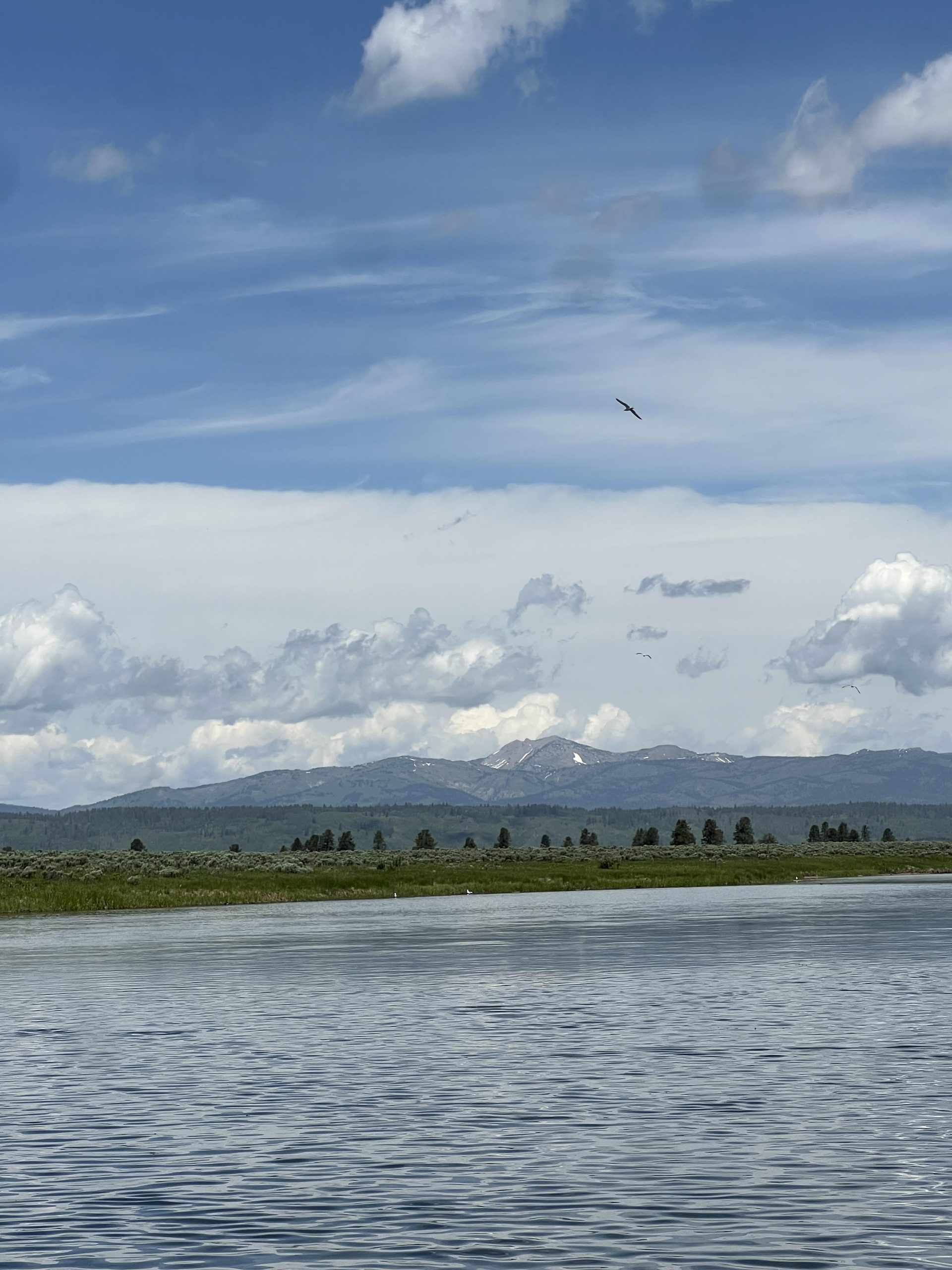
Mountains and water

The call of the Great Blue Heron (Ardea Herodias) when they greet their mate at their nest has been described as a series of squawking “roh-roh-rohs”, also known as a landing call. This is a sound I’ve become familiar with while living in the Great Lakes basin, exploring riverbanks and marshes. This is a sound that makes me feel at home. When I timidly arrived in Idaho in early June, I knew I likely missed the heron breeding season, but that didn’t stop the bird from presenting me with my own “landing call”. 

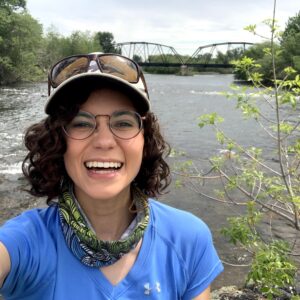
Hi. My name is Dela, and I’m a recent University of Wisconsin-Madison graduate where I earned a dual degree in Environmental Studies and Science Communication. Here at the Henry’s Fork Foundation, I’m the 2025 Aquatic Ecology Intern. I’ll be spending my summer collecting water quality data in Island Park Reservoir and Harriman State Park. But today, I’d like to tell you a story about my first time on the ranch.  

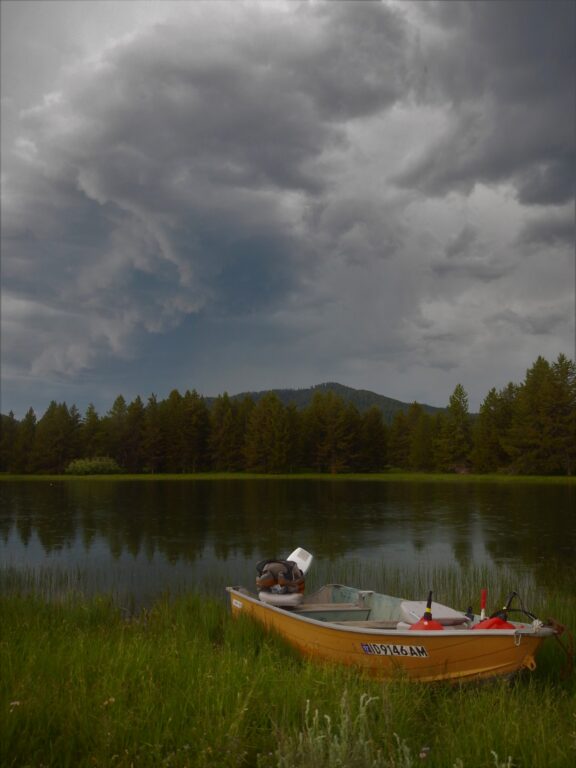
It was a balmy Thursday as I loaded our field equipment into a drift boat with my supervisor Dr. Jack McLaren and fellow intern Teddy Montalvo. Curiosities ran rampant through my mind. Will I see a young trout fingerling? How swift is the flowing water? Which peaks are rising in the distance?  My mind felt as turbulent as the river as Jack pushed and pulled us over the rocks. The tumbling thoughts only increased until we passed Osborne Springs and there he stood: a Great Blue Heron.  

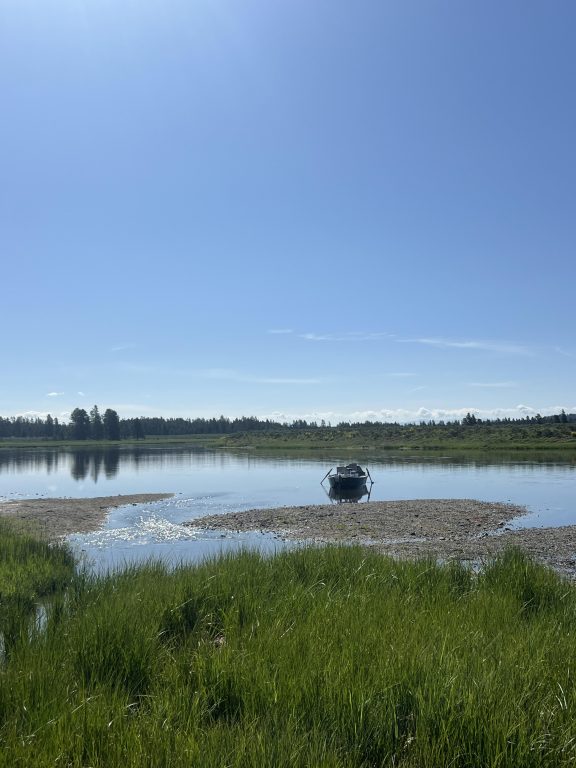
The drift boat we use for field sampling.

As we floated towards his home in the brush, he squawked and scrambled onward. Every couple of feet the watchful bird would notice us, fly ahead, and wait for us to meet him before repeating the pattern. My supervisor lightheartedly described this as awkward. I described it as beautiful. I admit, herons tend to move with a sort of clumsy grace that can seem eccentric to humans. That’s part of the reason why I love them. I couldn’t help but feel like this bird was a special gift, welcoming me to the West and showing me the way – giving me a unique “landing call”. 

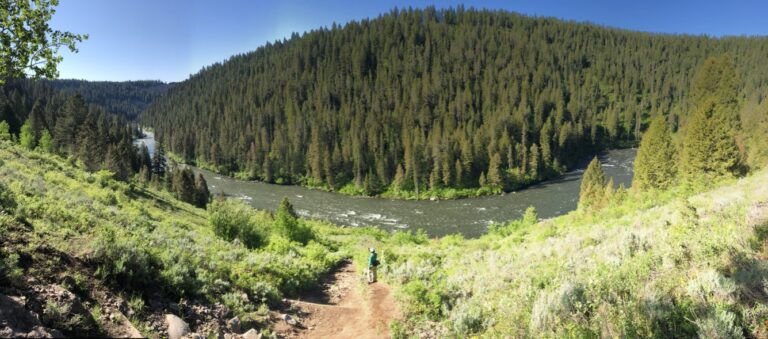
My view of the Great Blue!

In the weeks since this initial encounter, I’ve had the honor of witnessing these beautiful birds over and over again. Every Thursday, I head to the ranch. Every Thursday, I find a Great Blue Heron waiting for me. Maybe it’s a coincidence – perhaps we both simply enjoy perching near sagebrush and sunflowers. However, I can’t quite explain why they always appear when I need a moment of encouragement.  

As June fades into July, I look forward to more of these intimate moments getting to know Idaho’s many wild, living creatures. I can only imagine where the heron’s call will lead me next.   

Facebook
LinkedIn
Pinterest

Recent Posts

Person holding a rainbow trout.
Water Quality
Rob Van Kirk

Water Year 2025: Everything you wanted to know and a lot more!

Every year since 2017, the Henry’s Fork Foundation Science and Technology Team has produced an annual technical report that documents all of our data collection and analysis activities for the year. Water and irrigation year 2025 was a very active year for the team, given one of the hottest and driest summers on record, our 11th year of aquatic invertebrate sampling, and the 20th year of monitoring the rainbow trout spawning run in the Buffalo

Read More »
Water Supply
Otto Lang

Monitoring the Upper Snake Snowpack: Updates from the Field

Hello! My name is Otto Lang, and I am a postdoctoral researcher with Boise State University and the Henry’s Fork Foundation. I’m working alongside Rob Van Kirk at the HFF, Lejo Flores, Professor in Geosciences at Boise State University, and Sarah Newcomb at Trout Unlimited. Together, we are in the midst of a two-year WaterSMART project funded by the U.S. Bureau of Reclamation to improve predictions of snow water supply across the Upper Snake River

Read More »
2 people in gear taking water samples
Research and Monitoring
Rob Van Kirk

Henry’s Fork Aquatic Invertebrate Trends, 2015-2025

To address angler concerns about decreased hatches, particularly at Last Chance and the upper Ranch, and holistically assess ecological function throughout the mainstem Henry’s Fork, we implemented a statistically rigorous, quantitative study of aquatic invertebrates in 2015. This followed implementation of a watershed-wide water-quality monitoring program in 2014 and prompted subsequent expansion of stream gaging. After our 11th year of sampling in 2025, we had a set of 56 independent observations of macroinvertebrates collected at

Read More »
Aquatic Insects
Rob Van Kirk

Fish of the Month: Year 11

As it is the afternoon of December 31, I am closing the year with my annual fish-of-the-month blog, this one at the end of my 11th year of catching a fish in my home waters in each month of the year. To spare you the math, that’s 132 consecutive months of catching a wild trout or whitefish (and in some years I’ve fair-caught suckers and shiners, too) within a three-hour drive of my home in

Read More »