Most of my code this summer starts with a river. Or snow. Or both.
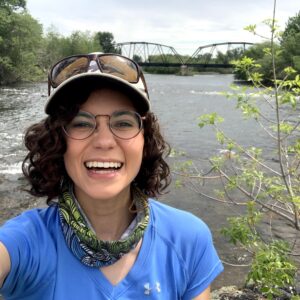
Hi! I’m Eiman Jawwad, a rising junior at Stanford University, majoring in Computer Science with a minor in Environmental Engineering originally from Lahore, Pakistan. This summer, I’ve had the incredible opportunity to intern at the Henry’s Fork Foundation (HFF) in Ashton, Idaho — a place where cold, clear rivers meet powerful conservation work.
I’m working with the Henry’s Fork Foundation (HFF) as a Science & Technology Intern under the mentorship of Dr. Rob Van Kirk, HFF’s Senior Scientist. Working on a range of data-driven projects building and refining data systems that help monitor and model water flow, snowpack, and climate conditions across the Henry’s Fork and Upper Snake River Basin.
But it’s not just about the code (although there’s a lot of that). It’s about understanding the landscape, the science, and the people behind it.
In my first few weeks, I’ve been focused on improving the way the organization manages real-time and historical hydrologic and climate data. So far, I’ve expanded our daily data pipeline to include stream gages and reservoirs not just from the Henry’s Fork, but also from the South Fork of the Snake River and the Snake River headwaters. This expansion helps provide a more comprehensive view of regional water movement.
Lately, I’ve been working on integrating long-term climate datasets—some dating back to the 1980s—to support model calibration, hydrologic trend analysis, and long-term water availability assessments. It’s been rewarding to write code that doesn’t just run correctly, but that directly supports better decision-making in a complex and changing watershed.
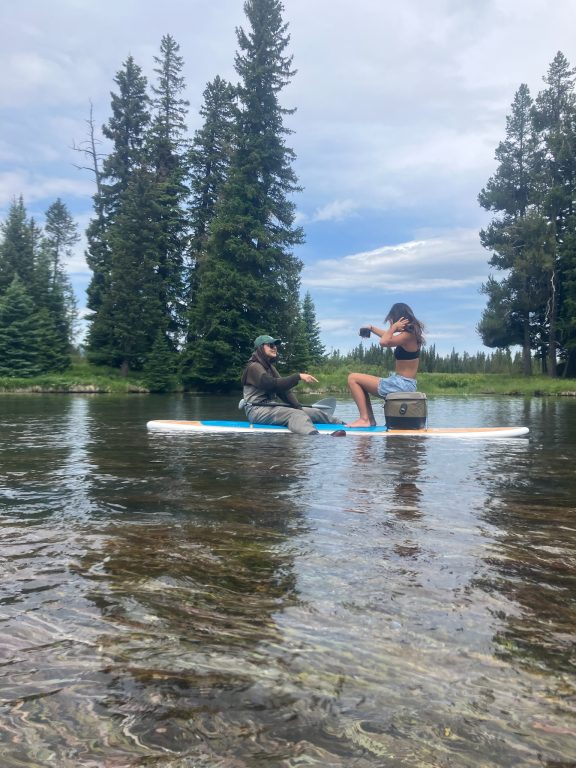
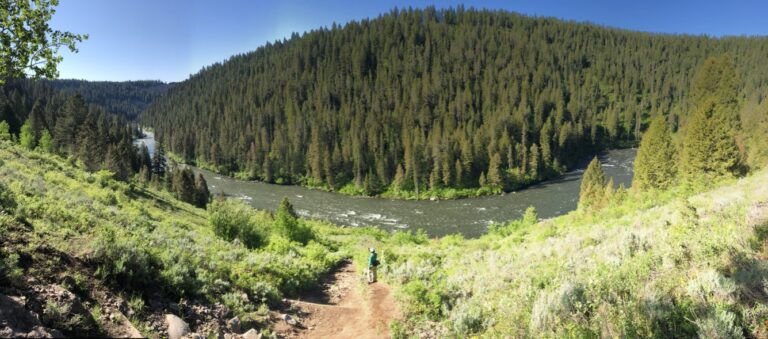
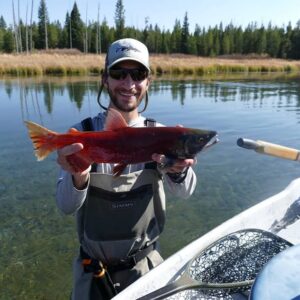
While my work is grounded in code, some of the most unforgettable moments this summer have happened far from a screen. From casting a line into the Teton River on my very first fly-fishing trip to floating the crystal-clear waters of Big Springs, I’ve gotten to experience the ecosystems I’m working to understand through data. A field day at Harriman State Park gave me the chance to explore the zones I usually only see on a map.
Floating the Big Springs
These field moments have helped me understand the stakes of my work. It’s one thing to clean a time series on snowmelt—it’s another to stand where that snow used to be.
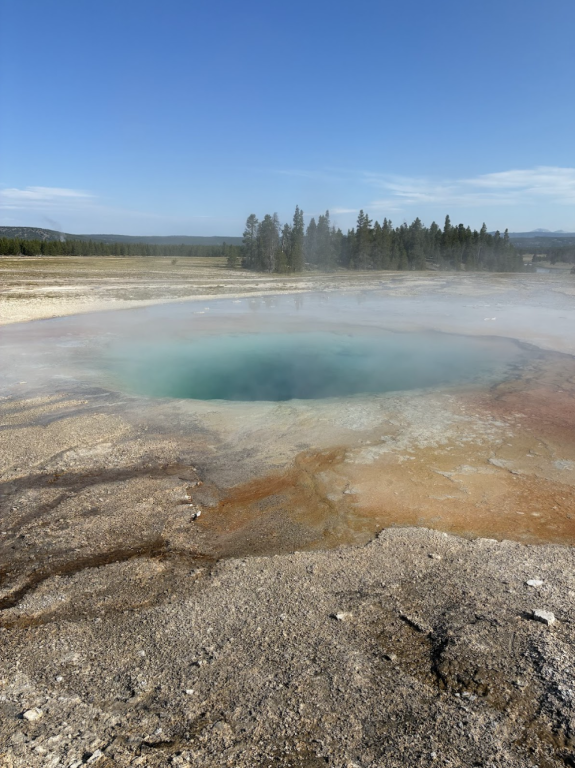
Living in the HFF intern suite with other interns has also added a sense of community to the summer — from late-night gaming & movie nights to trips into Yellowstone, it’s been a mix of learning, laughing, and exploring that I’ll never forget.
Hot Spring at Yellowstone National Park
This isn’t the kind of summer where you’re sitting in an office all day writing tests. It’s a place where the work you do with code shows up in conversations about climate, conservation, and community. I came in wanting to understand how software could support environmental work—and I’m sure I will be leaving with a much deeper appreciation for what that actually looks like on the ground (and in the water).
It’s been a first-of-its-kind summer for me, and I know it won’t be the last time I try to bring systems and sustainability together. Grateful to be learning from the team at HFF—and from the rivers themselves.
Our Aquatic Ecology Program Manager, Dr. Jack McLaren, joined Idaho Falls city and FIPS-Mouche leadership at the opening ceremony parade along the Snake River Greenbelt to welcome competitors to the watershed and to make sure conservation was front and center.
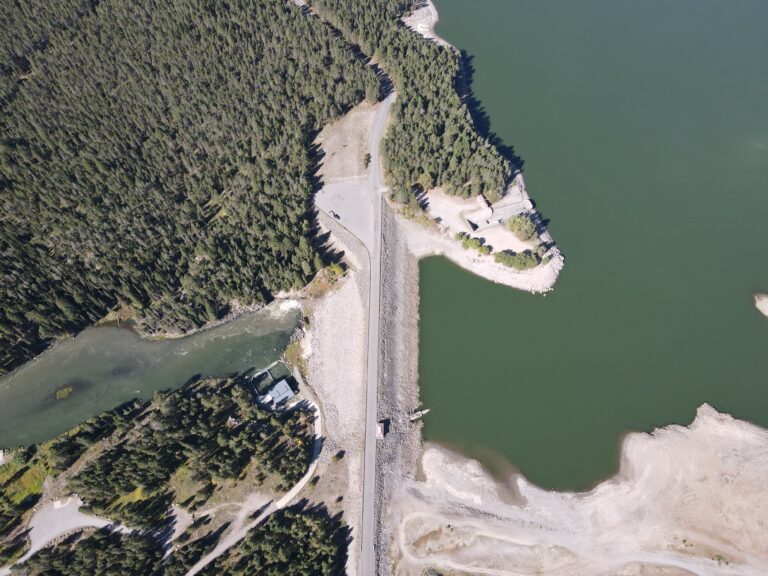
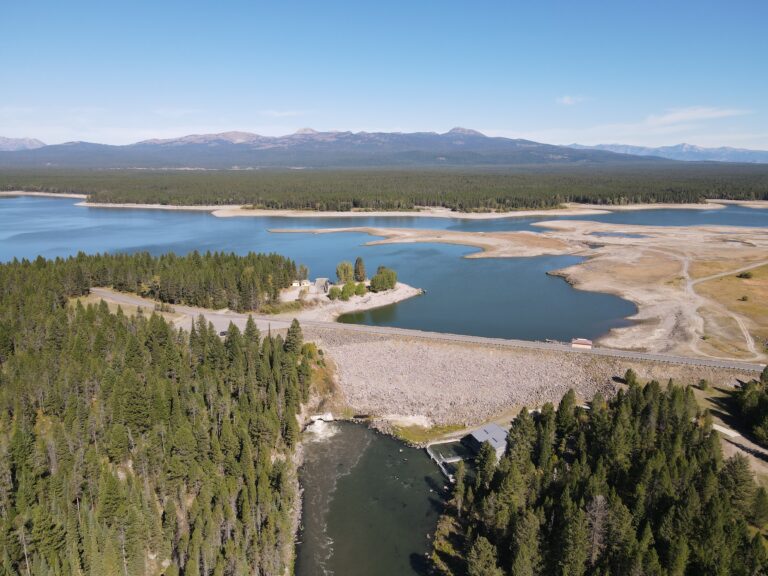
Drone photo of Island Park Dam taken on September 9, 2026 Looking Back on September September brought lows and highs to Island Park. Island Park Reservoir started September at 29% full and quickly fell to a low of 12% full on September 19. The rapid drawdown of the reservoir was the result of managers needing to move water downstream to American Falls (to irrigate farms in the Magic Valley with senior water rights). Such low
This story was written by Audrey Hunter (2026 intern) and was originally published in the Fall 2026 Newsletter. It’s no secret that late summers on Island Park Reservoir haven’t been in perfect conditions in recent years. Warm, turbid, algae-filled water plague reservoir recreationists while diminishing water quality downstream. Cyclical algal blooms decrease water clarity and create less-than-ideal circumstances for the reservoir’s flora and fauna. What’s the solution? HFF’s DIRTT Plan. In-Reservoir Oxygenation Nutrients released from
Drone photo taken on September 9, 2026 The Henry’s Fork Drought Management Planning Committee met on Wednesday, September 16 2026 to develop an updated reservoir management strategy. Downstream of the Henry’s Fork watershed, lower-valley irrigation demand over the rest of the season is anticipated to be slightly lower than projected last week, so Island Park Reservoir and Grassy Lake (in the Fall River drainage) do not need to deliver any more water out of the