FAQ: Is Outflow from Island Park Dam Higher Than it Used to Be?

Fish Icon
Summertime outflow from Island Park Reservoir is lower (not higher) than it was in the "glory days".
Home » Blog » FAQ: Is Outflow from Island Park Dam Higher Than it Used to Be?
Henry's Fork Watershed

The short answer is no.

Summer outflow from Island Park Reservoir has been lower since 2001 than it was between 1970 and 2000.

The mean outflow during the month of July was 1,227 cfs from 1970-2000 and 1,173 cfs from 2001-2023. Mean outflow during August was 1,173 cfs in the 1970-2000 period and 920 cfs in the 2001-2023 period.

OK, then why does it seem that way?

Outflow may seem higher for two reasons:

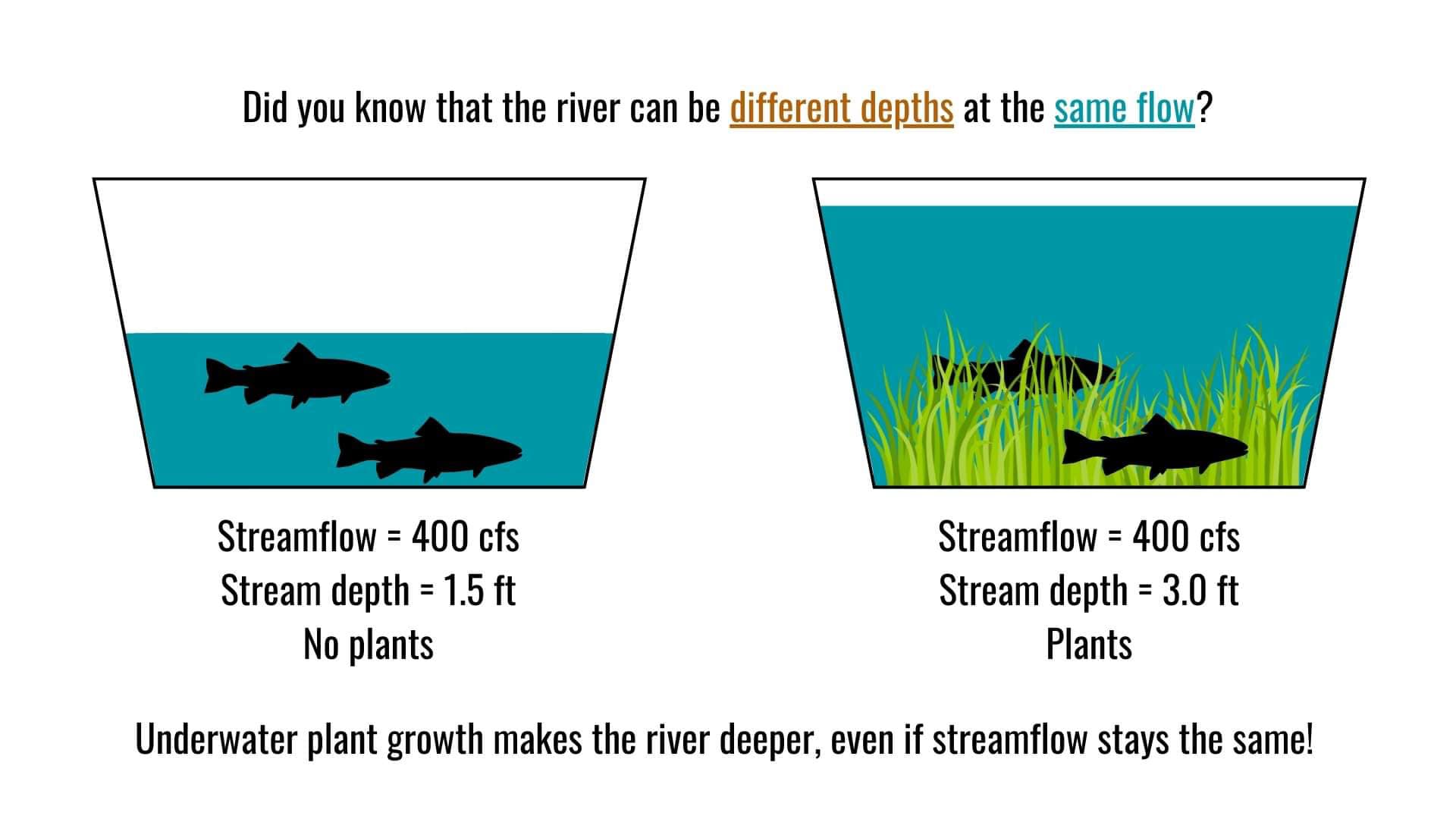
1) Aquatic plant abundance is much higher now than it was decades ago, which makes the water deeper at a given outflow.

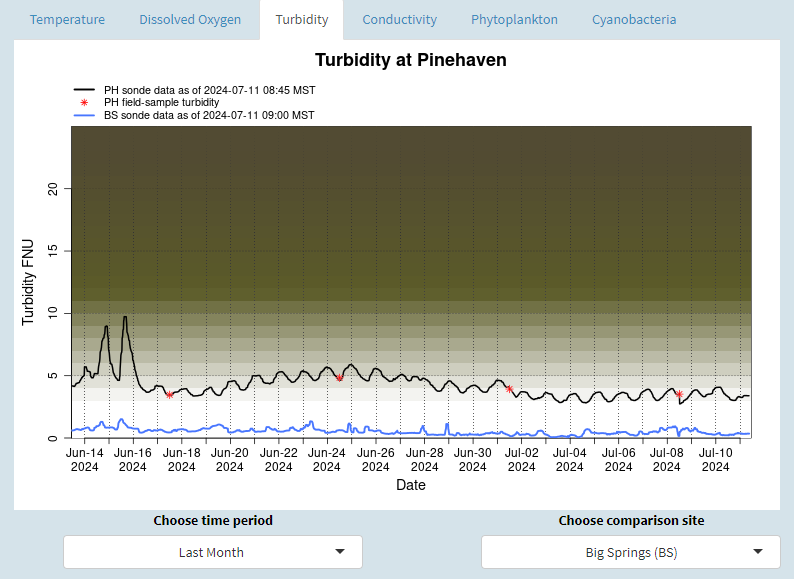
2) Turbidity is higher now than it was decades ago, so the water appears deeper than it really is because it’s harder to see the bottom of the river.

The reasons for higher macrophyte growth and higher turbidity are somewhat complex but can be roughly boiled down to changing climate and increased nutrient concentrations, the latter most likely tied to development.

Why is summertime outflow LOWER than it used to be?

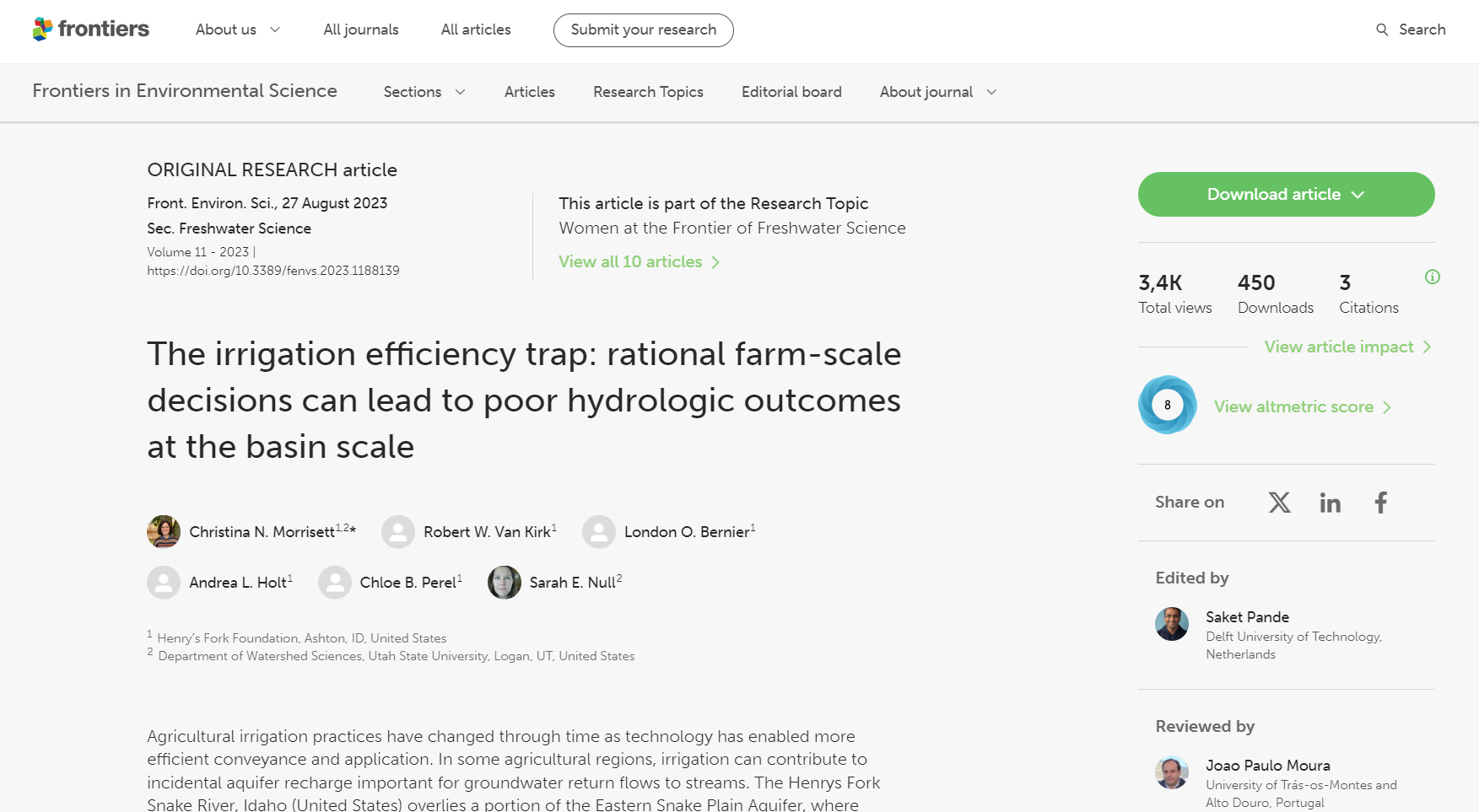
1) Irrigation diversion is around 20% lower than it was in the 1970s-1990s as a result of increased irrigation efficiency, primarily conversion from flood irrigation to sprinkler irrigation. HFF recently published a groundbreaking paper on this subject.

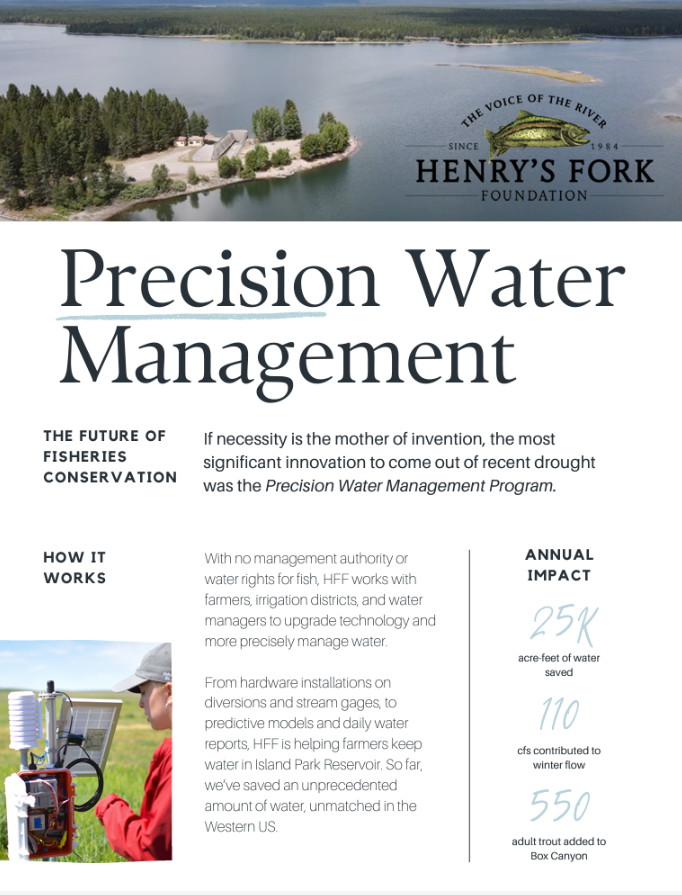
2) Water management has become much more precise over the past 10 years due to remote-controlled irrigation technology and a lot more stream and canal gaging. In the Henry’s Fork watershed, we led the technological advances and funding acquisition that made this possible.

Since the start of Precision Management efforts in 2018, the amount of water left in Island Park Reservoir at the end of the irrigation season has exceeded expectations based on water supply by 26,000 ac-ft/year (over 10,000 Olympic swimming pools worth of water). This has been accompanied by a 100-cfs decrease in summertime outflow, despite the fact that water supply is 15% lower than it was in the 1970s-1990s. If we had the same water supply we had in the 70s-90s, it’s fathomable that we would hardly use any reservoir storage at all these days.

Facebook
LinkedIn
Pinterest

Recent Posts

Photo of confluence of Warm River and Henry's Fork
Water Quality
Rob Van Kirk

Water Supply and Water Quality Predictions for Summer 2026

The photo above captures the unprecedented situation we face at the beginning of April. The photo, of the confluence of Warm River and the Henry’s Fork, was taken on February 7 and shows the shocking lack of snow we experienced in the watershed all winter as a result of record-breaking warm temperatures. How will the warm winter and lack of snow affect water supply, water quantity, and fisheries? The highlights are below. If you want

Read More »
Person holding a rainbow trout.
Water Quality
Rob Van Kirk

Water Year 2025: Everything you wanted to know and a lot more!

Every year since 2017, the Henry’s Fork Foundation Science and Technology Team has produced an annual technical report that documents all of our data collection and analysis activities for the year. Water and irrigation year 2025 was a very active year for the team, given one of the hottest and driest summers on record, our 11th year of aquatic invertebrate sampling, and the 20th year of monitoring the rainbow trout spawning run in the Buffalo

Read More »
Fishing
Jamie Powell

Q&A: Are We Seeing Fewer Bugs?

Are aquatic insects actually declining?  Not in the way many anglers might think. After 11 years of data collected across six sites on the Henry’s Fork, we’re seeing that overall invertebrate communities remain abundant, diverse, and comparable—or better—than other top western trout streams. In fact, key indicators show improving water quality and habitat conditions over time.   So why do hatches sometimes feel worse—especially at Last Chance? The short answer: it’s not just about insect

Read More »
Water Supply
Otto Lang

Monitoring the Upper Snake Snowpack: Updates from the Field

Hello! My name is Otto Lang, and I am a postdoctoral researcher with Boise State University and the Henry’s Fork Foundation. I’m working alongside Rob Van Kirk at the HFF, Lejo Flores, Professor in Geosciences at Boise State University, and Sarah Newcomb at Trout Unlimited. Together, we are in the midst of a two-year WaterSMART project funded by the U.S. Bureau of Reclamation to improve predictions of snow water supply across the Upper Snake River

Read More »