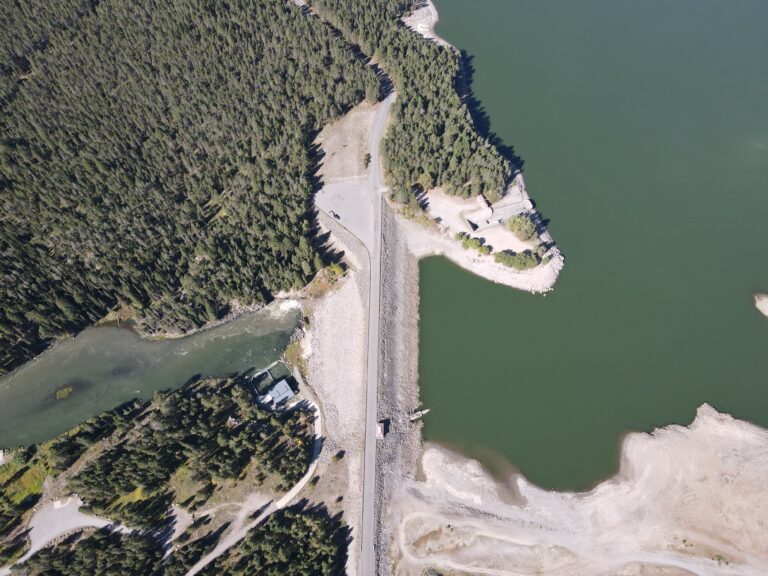
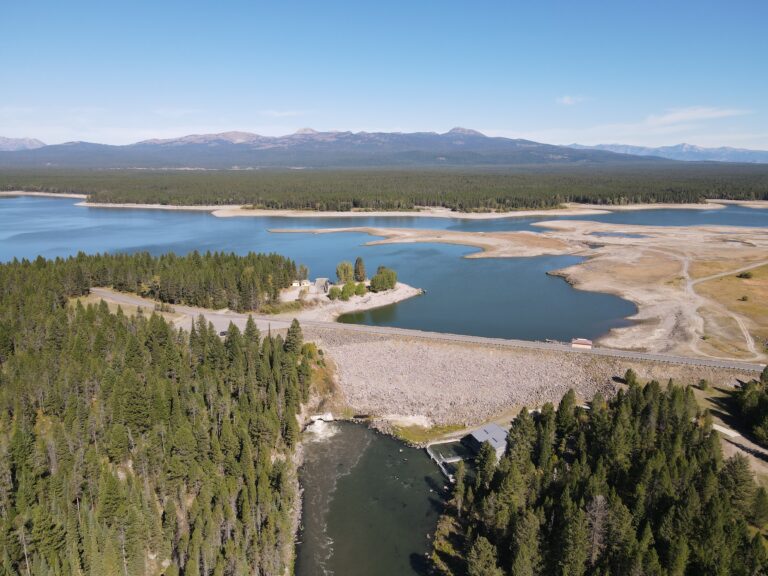
Below Island Park Reservoir as of Dec 3, 2024
It’s never a happy feeling reporting on tough conditions. And it feels like—when it comes to snowpack and water supply for our Western fisheries—it’s been nothing but tough conditions lately. While we wish we could say we’re immune, the Henry’s Fork has not escaped these dry conditions. But we are fortunate that we have: 1) projects and programs in place that are making things better than they would be otherwise, and 2) a Plan to keep working hard and improve fishing conditions no matter what Mother Nature brings.
Now the nitty gritty. Here’s the current data and winter flow strategy that was set by the Drought Management Committee earlier this month.
As of now, the Henry’s Fork watershed is experiencing dry conditions. Unfortunately, due to unseasonably warm temperatures, a significant chunk of the water we worked to save in Island Park Reservoir—through Precision Management and other programs—has been taken up by evaporation.
Outflow from Island Park Dam is currently set at 275 cfs for December, January, and February, with a planned reduction to 200 cfs in March. The approach remains flexible with the hope that conditions might improve (through snow or rainfall), but that’s uncertain.
Although our winter-season prediction on October 1st considered the likelihood of below-average conditions, the reality has been worse than expected. We originally predicted inflow to Island Park Reservoir would be 12% below average for the upcoming winter. Currently, inflow is 18% below average. The good news here is that winter outflow at Island Park Dam, although lower than we’d like, is exactly what would be expected based on these conditions—Water Year 2024 ranked 29th out of the last 47 water years and outflow this winter is also setting up to rank 29th.
The average winter flow between 1978-2023 was ~355 cfs, so we’re operating well below that. Unfortunately, lower winter outflow this winter will impact fish populations, as there will be less available habitat for juvenile trout survival. As a result, we can expect a smaller fishable trout population in a couple of years. Every year, our work stretches whatever it is that Mother Nature gives us to ensure the maximum possible benefit for trout populations. The same is true this year, but our reality is that we have starkly less water to work with as climate brings more and more drought, less precipitation falling as snow, and higher evaporation rates.
On a more positive note, things could be worse. Thanks to our water savings in the reservoir this year—a direct result of Farms and Fish and Precision Water Management programs—we’re doing better than we would have otherwise, where we might have only been seen winter flows of 200 cfs. We saved a total of 12,353 acre-feet of water in Water Year 2024—much better than expected given the current weather conditions.
We will continue to stay on top of the situation—monitoring inflow to Island Park Reservoir and advocating for adjustments based on what Mother Nature brings in the coming months. If you have any questions or need further clarification, please don’t hesitate to reach out.