On the Trail, Part II: Sunscreen, Goats, and Goodbyes

Home » Blog » On the Trail, Part II: Sunscreen, Goats, and Goodbyes
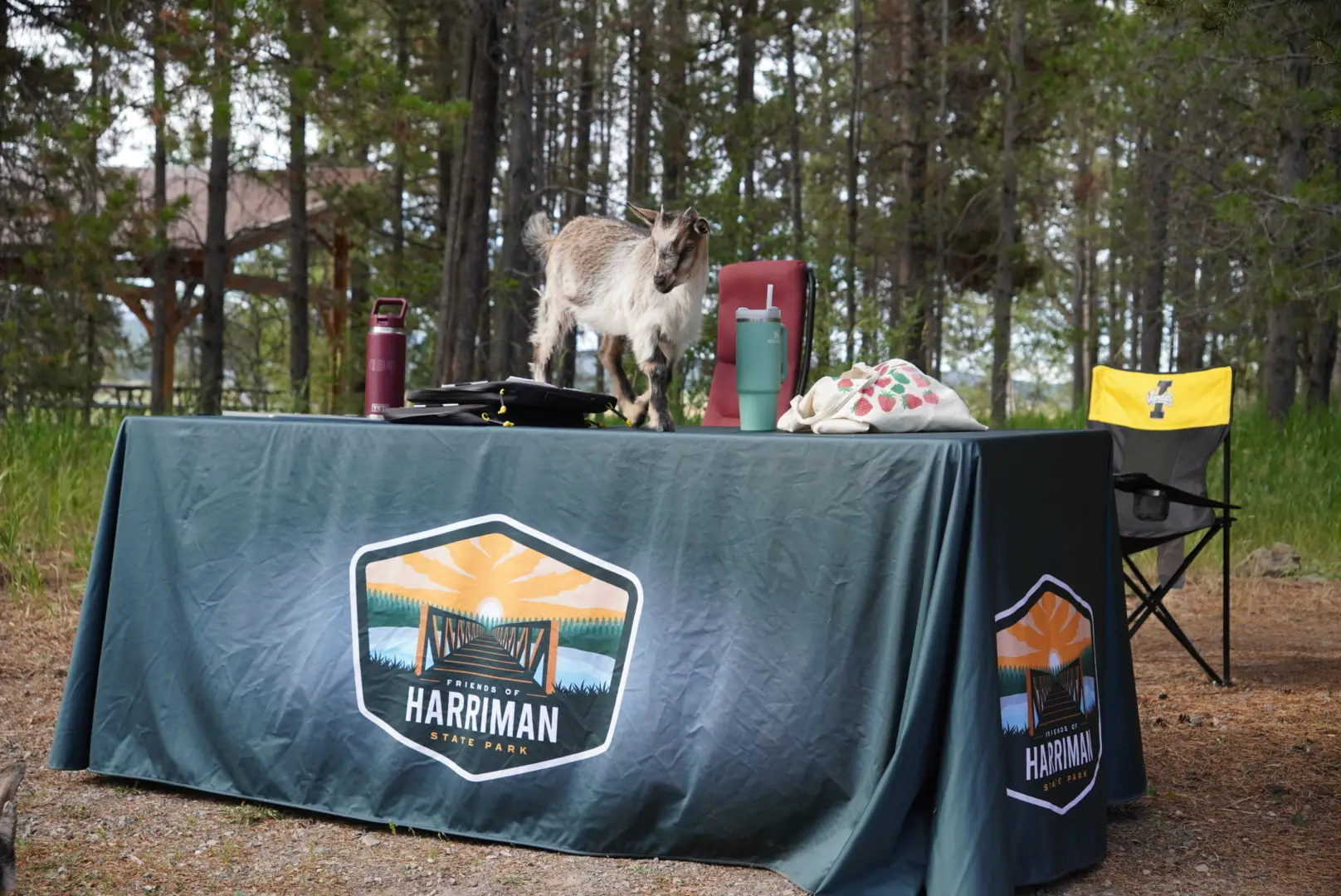
Image of goat on Harriman display table

I apologize for being a bit late with this post. In my defense, I was busy wrapping up the summer and my internship with the Henry’s Fork Foundation and Friends of Harriman. Part I of this blog was about rejection. Part II is about everything else: small lessons, strange encounters, and the bittersweet feeling of closing a chapter.

This internship was educational in unexpected ways, and I learned a few things:

  • Wear sunscreen. Always. Even if it’s freezing in the morning.
  • Always offer an incentive.
  • Don’t let goats on the table. No further explanation.

Not Just Work

Of course, it wasn’t all data collection and sending emails. I got to do some exploring- Sawtelle Peak, Mesa Falls, swimming at Cliff and Wade Lake, and road-tripping to the Tetons. I even managed to see Lord Huron in concert.

And then there were the people. I had Dara (another W&L student) plus plenty of catch-ups with old friends I hadn’t seen in over a year. Being back in Island Park reminded me of how weird and wonderful small-town connections can be. You can leave, but somehow, everyone still knows exactly where you’ve been.

This summer wasn’t about dramatic breakthroughs; it was about showing up every day, asking questions, and listening when people let me. It was about remembering what Harriman means to people and the reasons they visit year after year, generation after generation. And it was about realizing that even when the goats are on the table (literally or metaphorically), the mess is still worth it.

So, that’s it, my second and final blog post of the summer. I’m walking away with a bit of sunburn, a lot of stories, and the reminder that sometimes the best work is the kind nobody sees, but everybody benefits from.


Until next time,

Ella Paini

Facebook
LinkedIn
Pinterest

Recent Posts

Photo of confluence of Warm River and Henry's Fork
Water Quality
Rob Van Kirk

Water Supply and Water Quality Predictions for Summer 2026

The photo above captures the unprecedented situation we face at the beginning of April. The photo, of the confluence of Warm River and the Henry’s Fork, was taken on February 7 and shows the shocking lack of snow we experienced in the watershed all winter as a result of record-breaking warm temperatures. How will the warm winter and lack of snow affect water supply, water quantity, and fisheries? The highlights are below. If you want

Read More »
Person holding a rainbow trout.
Research and Monitoring
Rob Van Kirk

Water Year 2025: Everything you wanted to know and a lot more!

Every year since 2017, the Henry’s Fork Foundation Science and Technology Team has produced an annual technical report that documents all of our data collection and analysis activities for the year. Water and irrigation year 2025 was a very active year for the team, given one of the hottest and driest summers on record, our 11th year of aquatic invertebrate sampling, and the 20th year of monitoring the rainbow trout spawning run in the Buffalo

Read More »
Frequently Asked Questions
Jamie Powell

Q&A: Are We Seeing Fewer Bugs?

Are aquatic insects actually declining?  Not in the way many anglers might think. After 11 years of data collected across six sites on the Henry’s Fork, we’re seeing that overall invertebrate communities remain abundant, diverse, and comparable—or better—than other top western trout streams. In fact, key indicators show improving water quality and habitat conditions over time.   So why do hatches sometimes feel worse—especially at Last Chance? The short answer: it’s not just about insect

Read More »
Water Supply
Otto Lang

Monitoring the Upper Snake Snowpack: Updates from the Field

Hello! My name is Otto Lang, and I am a postdoctoral researcher with Boise State University and the Henry’s Fork Foundation. I’m working alongside Rob Van Kirk at the HFF, Lejo Flores, Professor in Geosciences at Boise State University, and Sarah Newcomb at Trout Unlimited. Together, we are in the midst of a two-year WaterSMART project funded by the U.S. Bureau of Reclamation to improve predictions of snow water supply across the Upper Snake River

Read More »