Ten Years of Aquatic Insect Data from the Henry’s Fork: What have we learned?

Fish Icon
Home » Blog » Ten Years of Aquatic Insect Data from the Henry’s Fork: What have we learned?
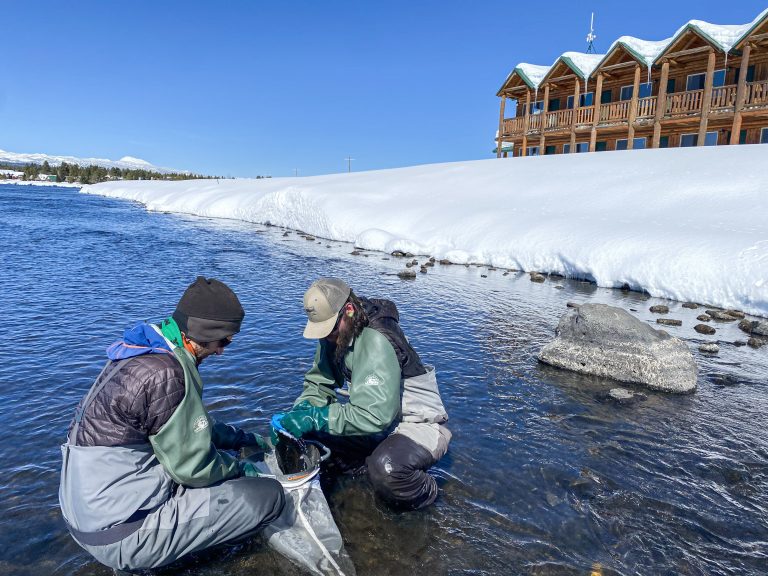
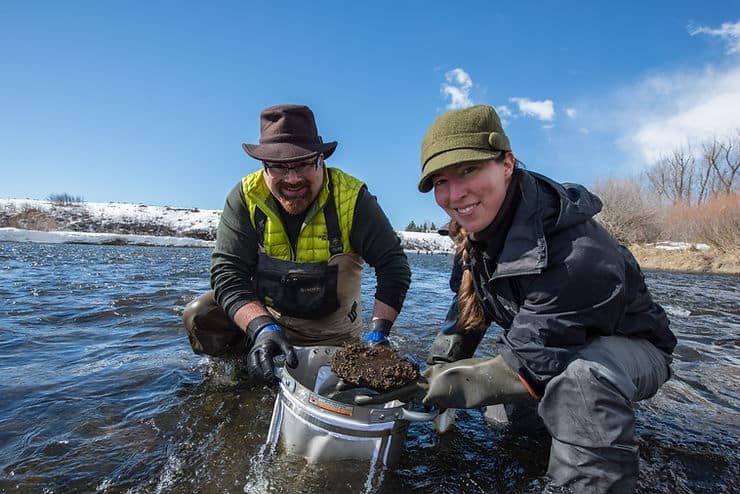
team-members collecting samples

To address angler concerns about decreased Henry’s Fork hatches, particularly at Last Chance and the upper Ranch, and holistically assess ecological function throughout the mainstem Henry’s Fork, we implemented a statistically rigorous study of aquatic invertebrates in 2015.

This followed implementation of a watershed-wide water-quality monitoring program in 2014 and prompted subsequent expansion of stream gaging. The result to date is a unique data set of 50 independent observations of macroinvertebrates collected at six different sites on the river over a 10-year period, each accompanied by a full suite of water-quality and streamflow variables.

The sites—Flat Rock, Last Chance, Osborne Bridge, Marysville, Ashton Dam, and St. Anthony—represent conditions over the 80 miles of river most popular among anglers. We analyzed invertebrate abundance, five standard community metrics—abundance, Shannon’s diversity, EPT taxa richness (the number of mayfly, stonefly, and caddisfly species), Hilsenhoff Biotic Index (HBI), percent non-insects, and percent EPT—as well as the abundance of Pale Morning Duns (Ephemerella sp.), Drunella mayflies (Flavs + Green Drakes), and Spotted Sedge caddis (Hydropsychidae), three species of interest to anglers.

For each of these response variables, we tested for dependence on distance downstream from Big Springs as would be predicted by the River Continuum Concept, difference across sites independent of the river continuum, and dependence on seven streamflow and water-quality variables: annual streamflow, 3-day maximum streamflow, 21-day minimum streamflow, daily flow variability across the year, suspended sediment concentration, conductivity, and 7-day maximum water temperature. The primary results are:

  1. By all measures, the aquatic invertebrate communities of the Henry’s Fork are abundant, diverse, and stable. Most metrics change predictably with distance downstream as temperature, sediment, and effects of water management increase. However, metrics are as good as or better than on other popular western trout streams and as good or better than they were on the Henry’s Fork in previous decades. HBI scores indicate good to excellent water quality all the way to St. Anthony, with little to no evidence of organic pollutants such as wastewater and pesticides. There is no evidence that temperature or sediment are decreasing insect numbers.
  2. While most metrics are either improving or stable across the watershed, the number of Pale Morning Duns is decreasing at the watershed scale, driven primarily by a decrease at Flat Rock.
  3. Other measures of the invertebrate community at Flat Rock have also degraded substantially over the past decade, likely due to warming temperatures and decreased water supply.
  4. None of the metrics we analyzed show any trend one way or the other at Last Chance.
  5. Changes in the dry-fly angling experience at Last Chance and the upper Ranch are likely due to a combination of lower trout populations, increased temperatures, and decreased water supply and not likely due to decreased insect numbers.

Read the full report.

Click here to view.

24 pages

Facebook
LinkedIn
Pinterest

Recent Posts

Person holding a rainbow trout.
Research and Monitoring
Rob Van Kirk

Water Year 2025: Everything you wanted to know and a lot more!

Every year since 2017, the Henry’s Fork Foundation Science and Technology Team has produced an annual technical report that documents all of our data collection and analysis activities for the year. Water and irrigation year 2025 was a very active year for the team, given one of the hottest and driest summers on record, our 11th year of aquatic invertebrate sampling, and the 20th year of monitoring the rainbow trout spawning run in the Buffalo
Read More »
Water Supply
Otto Lang

Monitoring the Upper Snake Snowpack: Updates from the Field

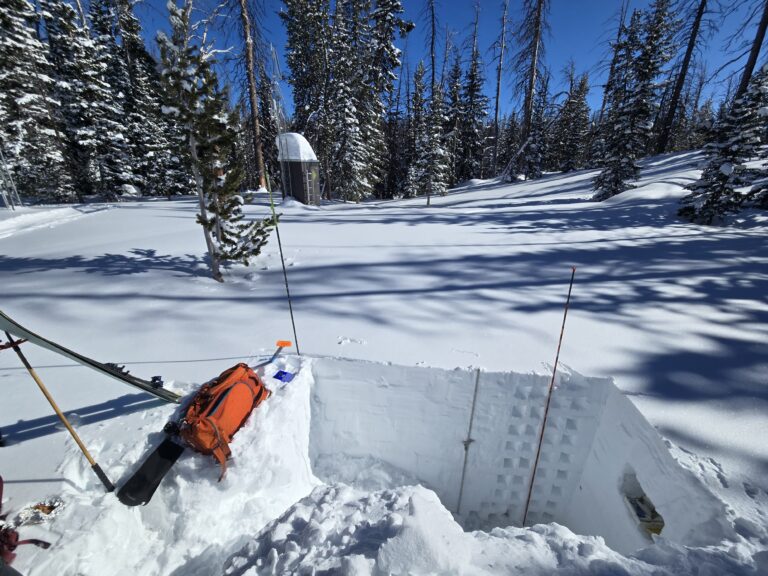
Hello! My name is Otto Lang, and I am a postdoctoral researcher with Boise State University and the Henry’s Fork Foundation. I’m working alongside Rob Van Kirk at the HFF, Lejo Flores, Professor in Geosciences at Boise State University, and Sarah Newcomb at Trout Unlimited. Together, we are in the midst of a two-year WaterSMART project funded by the U.S. Bureau of Reclamation to improve predictions of snow water supply across the Upper Snake River

Read More »
2 people in gear taking water samples
Research and Monitoring
Rob Van Kirk

Henry’s Fork Aquatic Invertebrate Trends, 2015-2025

To address angler concerns about decreased hatches, particularly at Last Chance and the upper Ranch, and holistically assess ecological function throughout the mainstem Henry’s Fork, we implemented a statistically rigorous, quantitative study of aquatic invertebrates in 2015. This followed implementation of a watershed-wide water-quality monitoring program in 2014 and prompted subsequent expansion of stream gaging. After our 11th year of sampling in 2025, we had a set of 56 independent observations of macroinvertebrates collected at

Read More »
Aquatic Insects
Rob Van Kirk

Fish of the Month: Year 11

As it is the afternoon of December 31, I am closing the year with my annual fish-of-the-month blog, this one at the end of my 11th year of catching a fish in my home waters in each month of the year. To spare you the math, that’s 132 consecutive months of catching a wild trout or whitefish (and in some years I’ve fair-caught suckers and shiners, too) within a three-hour drive of my home in

Read More »