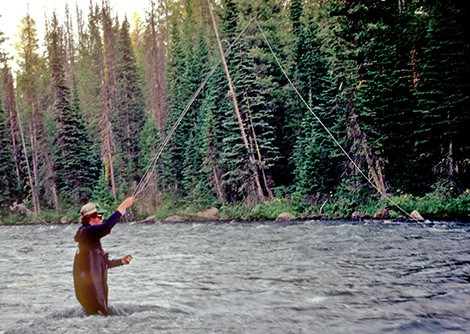
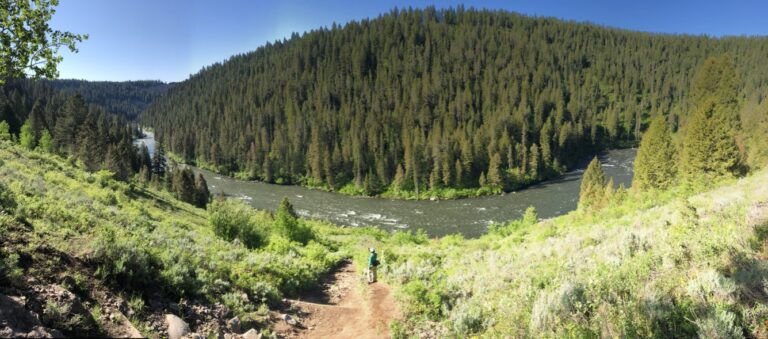
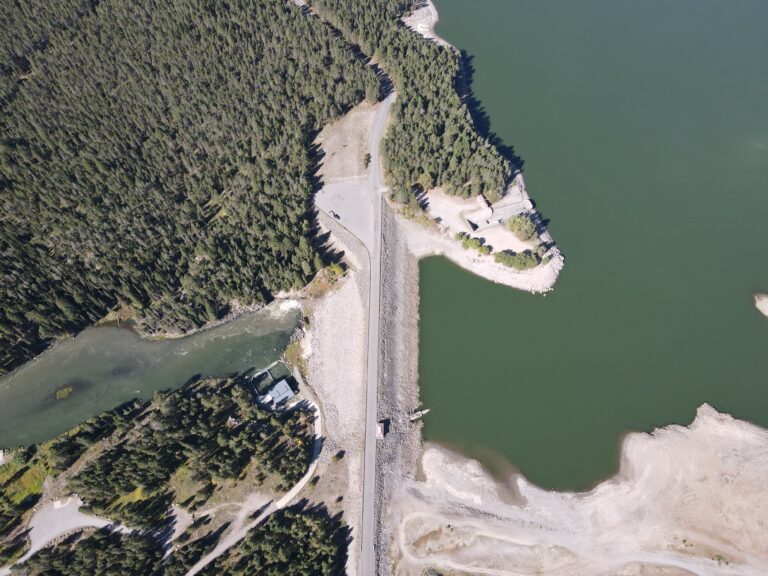
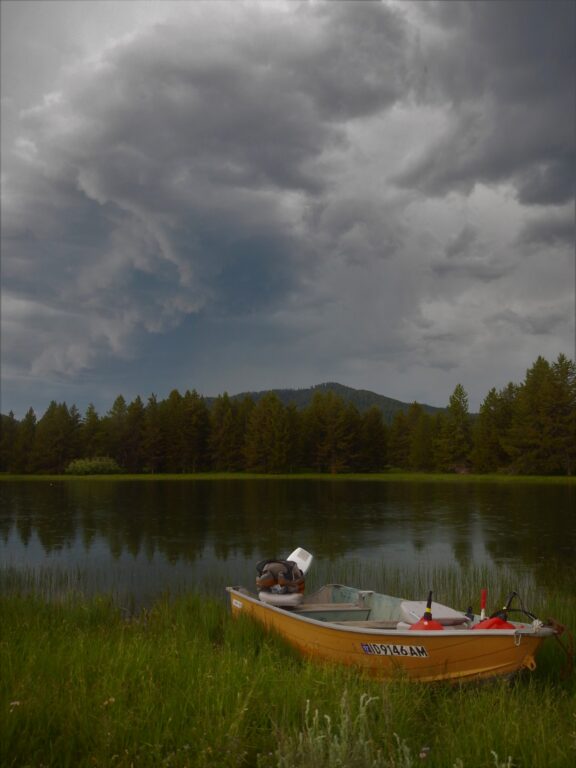
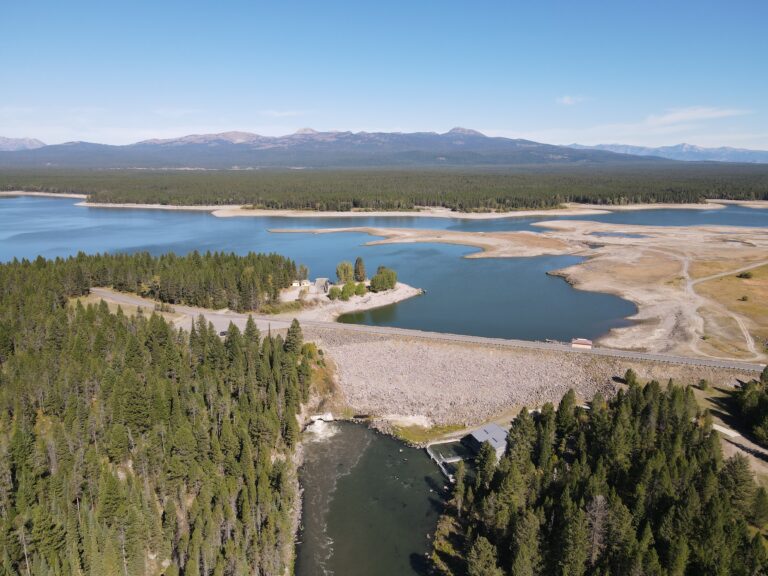
As most of you know, I started fishing the Harriman Ranch reach of the Henry’s Fork in 1977. I worked for Henry’s Fork Anglers from 1981 through 1987 and fished the Box, Last Chance, and Ranch all summer during those years. I was literally behind the counter at Henry’s Fork Anglers in 1984 while the founders of what would become the Henry’s Fork Foundation were meeting at Joan and Jim Lansche’s cabin. They founded the organization because there were tangible threats to the river—most notably hydroelectric power developments proposed at Island Park Dam and Mesa Falls.
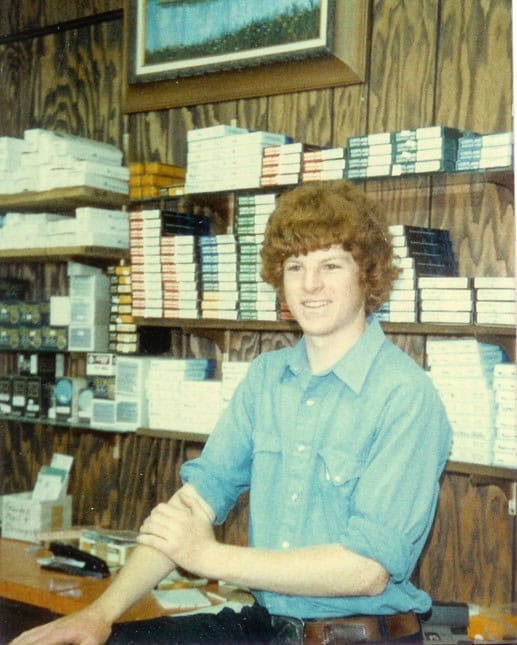
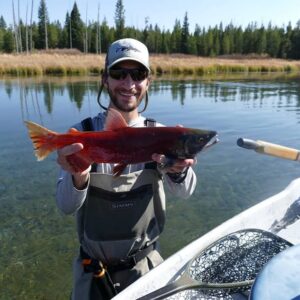
There were also other visible sources of degradation, including livestock grazing along the streambanks, at the same time as the fishing was still great. Although I had many great years of fishing the Henry’s Fork back then, nothing could compare with 1984, when I caught two rainbow trout in the 25–26 inch range within two weeks of each other, one in the Box and one in the Ranch.
But by the summer of 1985, anglers were starting to report declines in the fishing experience, and by 1987—heading into what would be the first multi-year drought in nearly 20 years—anglers were genuinely worried about the future of the Ranch fishery and asking why the fishing had declined. Due in large part to these questions and my desire to answer them scientifically, I started graduate school in 1988.

Fast forward to 1994, as I was finishing my Ph.D. at the University of Utah, chosen in large part because it was a world-class university close to the Henry’s Fork (and skiing!). I started working for HFF in the fall of 1994, and wouldn’t you know it, I found myself answering the same question: “Why is the fishing experience not as good as it was in the 1970s–1980s?”
I provided a substantial part of the answer in a peer-reviewed paper published in 2000, and nearly everything in that paper is still correct and relevant. After a 14-year detour into the academic world—during which I continued to better understand hydrology and water management in the Snake River basin—I returned to HFF in 2013. And guess what, I was still asked the same question, only now the 1990s were included in the “good old days.”

Fortunately, this time around I have a team of highly creative scientists around me, and we now have 10 years of continuous monitoring of water quality and aquatic insects to help answer the question. I am proud to announce this year’s annual technical report because it not only represents a monumental amount of effort and new information but finally provides a coherent answer to the question: “Why is the dry-fly fishing experience between Last Chance and Pinehaven not as good as it was in the 1970s–1990s?” More importantly, it provides innovative ideas for what to do about it.
While you can download the 97-page report and read the full details yourself, the short answer is that summertime air temperatures are about 4°F warmer than 40 years ago, and water supply at Island Park Dam is 22% lower. First and foremost, decreased winter flow, a direct result of decreased water supply, has led to a trout population downstream that is 25–35% lower than it was prior to 2000 and will only decrease in the future. This decrease is not due to increased water use; diversion for agricultural irrigation downstream is 23% lower than it was prior to 2000, and water conservation measures implemented collaboratively among HFF, water users, and water managers, has increased reservoir carryover and winter flow by around 40% relative to water supply. Even without any water use at all, trout populations in the future will be 30–40% lower than they were in the 1970s–1990s, when stocking and down-migration of reservoir fish into the river augmented the wild trout population.
Second, water quality in Island Park Reservoir and hence in the river downstream has declined as a result of warmer temperatures and lower inflow, substantially degrading the fishing experience during mid-summer. Third, while increasing water temperatures are not causing widespread decrease in numbers of mayflies, stoneflies, and caddisflies, they are very likely changing timing and location of emergence of these insects (“hatches”). These three factors have resulted in fewer rising fish and a far less desirable dry-fly fishing experience.
So what can we do about these three things? None of us can cool air temperatures or make more water.
1) HFF and its partners may be able to squeeze out a few more cfs of winter flow, but even the river’s natural flow is not going to maintain the trout population at 1970s-1990s levels. We either accept lower numbers of fish or consider creative ways to replace the hatchery and reservoir fish that augmented the population 40 years ago.
2) HFF’s DIRTT project has great potential to improve water quality in Island Park Reservoir and downstream, but that will require many years, large infrastructure upgrades, and tens of millions of dollars beyond the current $1.7 million project to design the upgrades.
3) Through DIRTT and other restoration projects in the Ranch, we can create and maintain locally cooler areas within the Ranch as refuges for insects and trout. If we have more trout, these refuge areas can again provide high-quality dry-fly fishing.
Click here to read the full report.