Summary
New research by HFF scientists and interns demonstrates how adopting center-pivot sprinkler irrigation over the last 40 years reduced diversion of streamflow for irrigation from the Henry’s Fork—but also reduced flow of groundwater back into the river. Groundwater inputs to streams are important for trout habitat, especially during summer low-flow periods.

Past versus Present
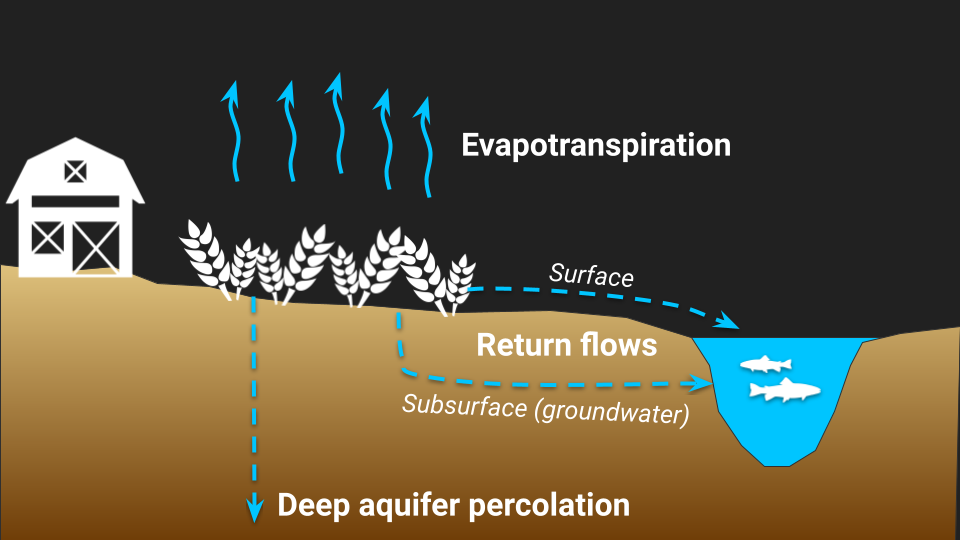
If you drove through the Henry’s Fork watershed before the 1970s, you would have seen a lot of flood-irrigated agricultural fields. Small ditches and furrows would have spread water across fields for crop roots to take up as much water as they needed. But you wouldn’t have seen what happened next: Below ground, leftover irrigation water—water not consumed by crops—seeped down to the shallow aquifer and followed underground pathways back to the river. This “leftover” water, known as groundwater return flow, added cool water to the Henry’s Fork, increasing streamflow and providing more water to farms and fish downstream.
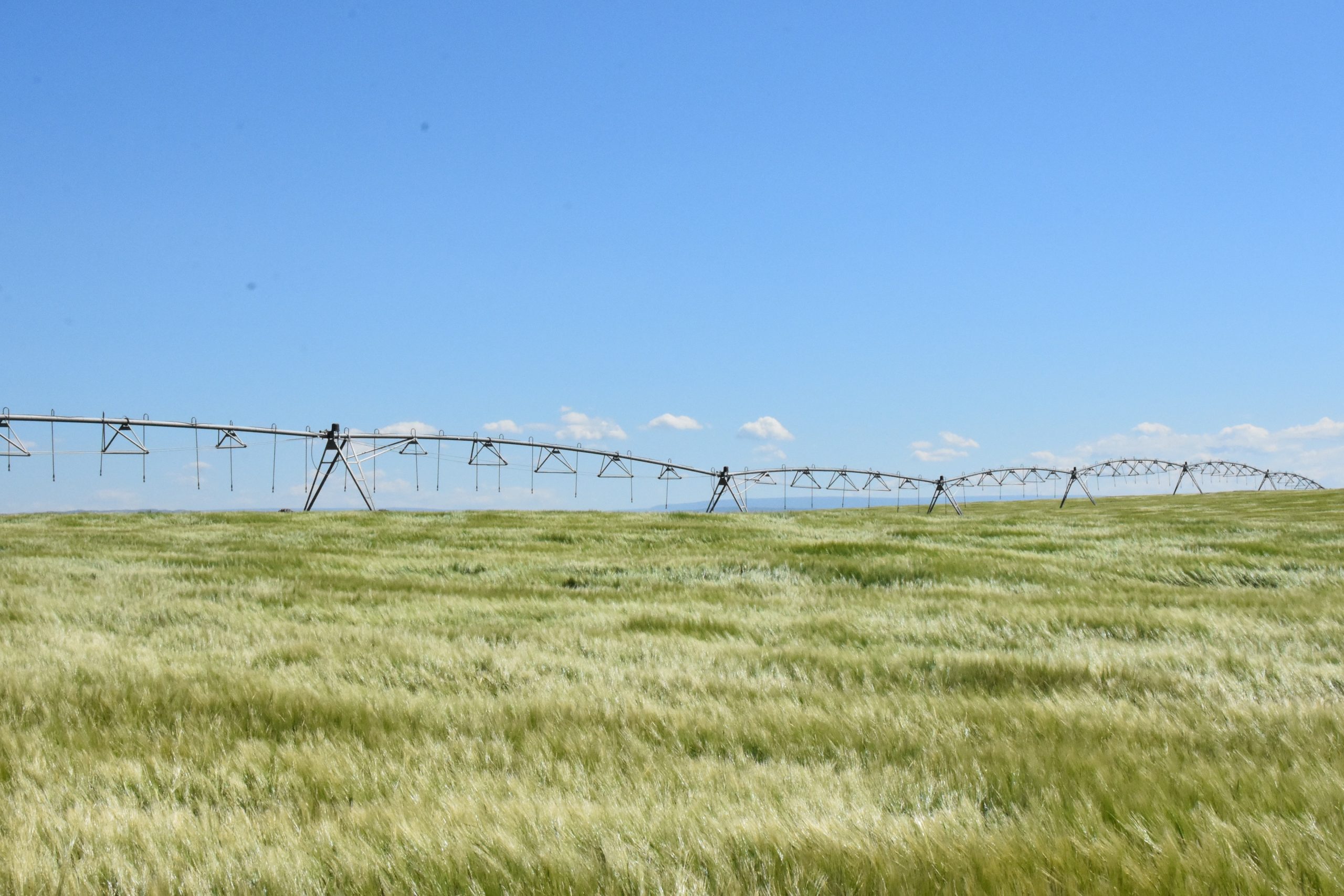
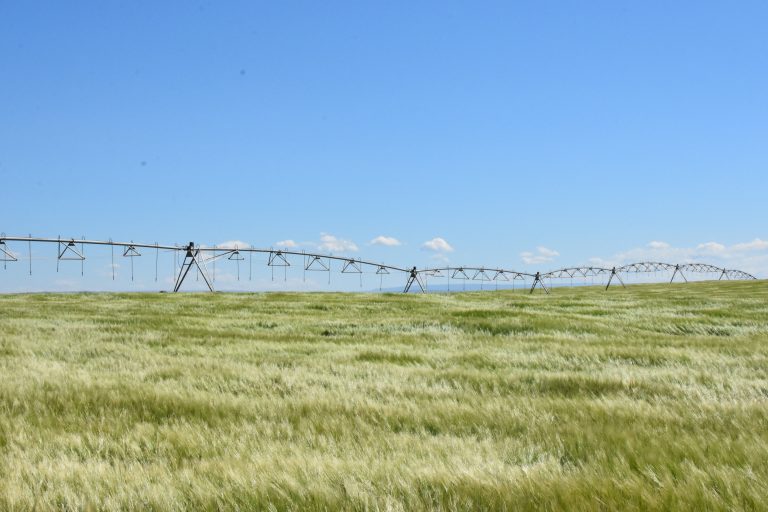
But for decades, water conservationists and agricultural producers alike viewed this “leftover” water as “lost” or “wasted.” Folks would have rather seen this “leftover” water put to a different use—either to grow more crops or kept in the river for fish. As such, when you drive through the Henry’s Fork watershed now, you see center-pivot sprinklers across the landscape. Rather than spreading water across a field, these sprinklers simulate rainfall. And these sprinklers are incredibly efficient: 85–95% of water applied is used by crops… whereas flood-irrigated crops only use 30–60% of the water applied.
Project Background
In the early 2000s, HFF Senior Scientist Dr. Rob Van Kirk noticed a decline in both irrigation diversion and groundwater return flows in the Henry’s Fork. But he needed more data to make a firm conclusion. Now, we finally have enough data to investigate streamflow trends and the broader story behind them. Here, we’ll start from the beginning—understanding how and why these changes in irrigation occurred at the farm-scale and then zooming out to analyze streamflow in the Henry’s Fork over the last 40 years.
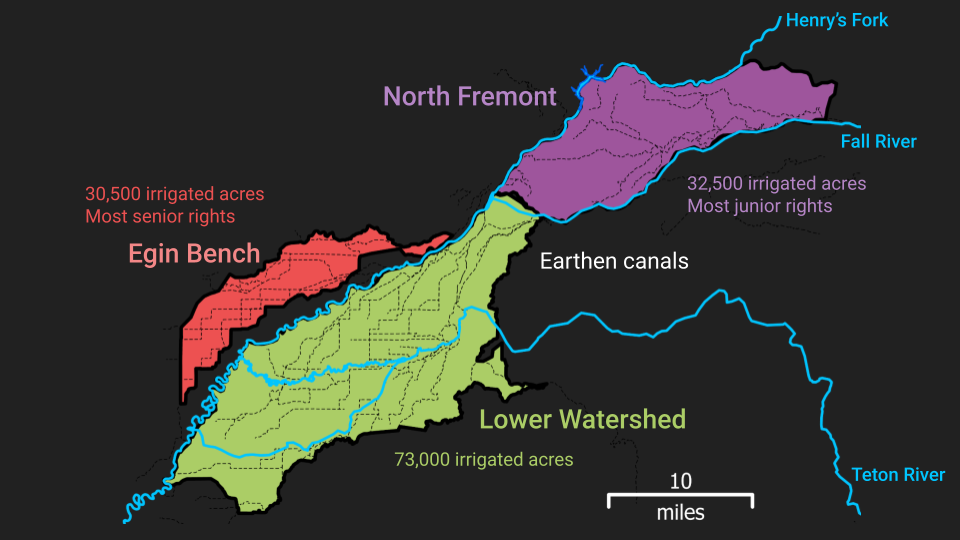
What motivated Henry’s Fork farmers to convert to more efficient irrigation application? Chloe Perel, the HFF Farms and Fish intern in 2022, interviewed current and former agricultural irrigators and irrigation entity representatives. Irrigators largely converted from flood to sprinkler irrigation to reduce water lost (to evaporation, infiltration, and runoff) and reduce labor costs (flood irrigation is labor intensive and, these days, center-pivot sprinklers can be operated via mobile phone). Irrigators who have yet to adopt center-pivot sprinkler irrigation noted the high cost of sprinklers.
When and at what rate did farmers improve their irrigation efficiency in the Henry’s Fork? Andrea Holt, the HFF Farms and Fish intern in 2021, used satellite imagery to count pivot circles through time. Sprinkler adoption has increased through time. From Chloe’s interviews, we learned how the North Fremont agricultural area around Ashton converted to sprinklers as early as the 1950s due to its hilly terrain. Andrea’s work demonstrated that farms on the Egin Bench (west of St. Anthony), rapidly installed center-pivot sprinklers between 1988 and 2000—with land irrigated by pivots increasing from 22% to 73% of the total acreage there. As of 2020, the Ashton and Egin Bench farming regions had ~80% of irrigated acres in center-pivot. Farms in the Lower Watershed, near Wilford and Sugar City, have gradually adopted center-pivot sprinklers. As of 2020, only 47% of irrigated acres in the lower watershed used center-pivot sprinklers. Most remaining flood irrigated fields are in the lower watershed.
How did these changes affect watershed-wide hydrology? Dr. Rob Van Kirk and London Bernier, the HFF summer intern from St. Lawrence University in 2020, analyzed streamflow data from 1978–2022. Streamflow diversions decreased by 250,000 acre-ft (23%) between 1978 and 2000 and remained constant at this lower level between 2001 and 2022. At the same time, groundwater return flows decreased by an almost-identical amount—240,000 acre-ft. The reduction in groundwater return flow is most likely a result of reduced streamflow diversion due to increased irrigation efficiency.
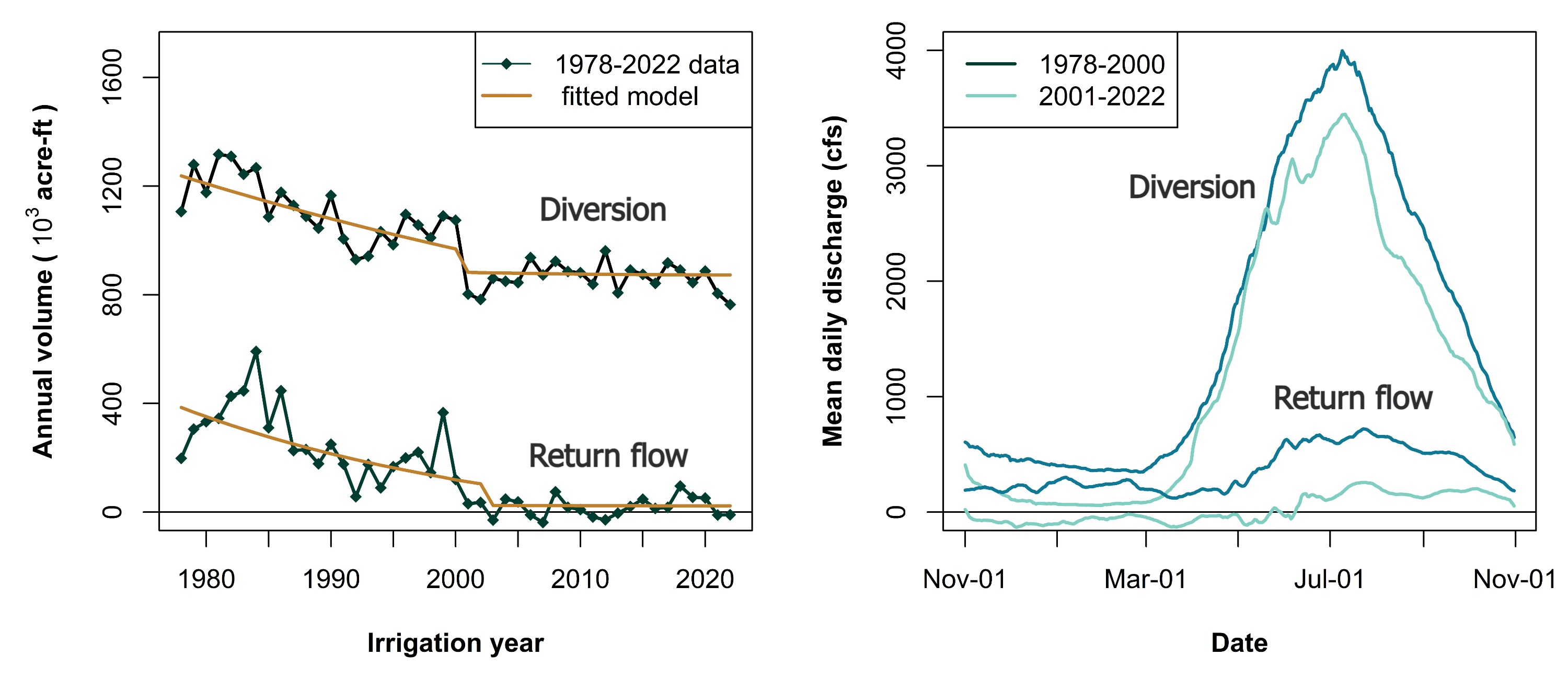 Comparison of diversion and return flow annually (left) and daily across two time periods (right)
Why this Matters
Drought adaptation for farms and fish. Dr. Christina Morrisett, a Water Resources Consultant with HFF, connected these pieces into a coherent story as part of her HFF-sponsored PhD dissertation studying water management in the Henry’s Fork. As documented in previous HFF research, groundwater return flows from inefficient irrigation provide cool water and more of it during the warm, low-flow periods of the summer. Groundwater return flow can improve summer habitat conditions for trout in the lower watershed—and may be an important strategy for adapting to drought. But to improve summer trout habitat, groundwater return flows need to be recovered and maintained. To do so, HFF needs to understand where flood irrigation still occurs on the landscape and why irrigators are motivated to use more efficient irrigation techniques so we can 1) better target areas for recovery/maintenance of flood irrigation and 2) develop appropriate irrigator relationships and incentives.
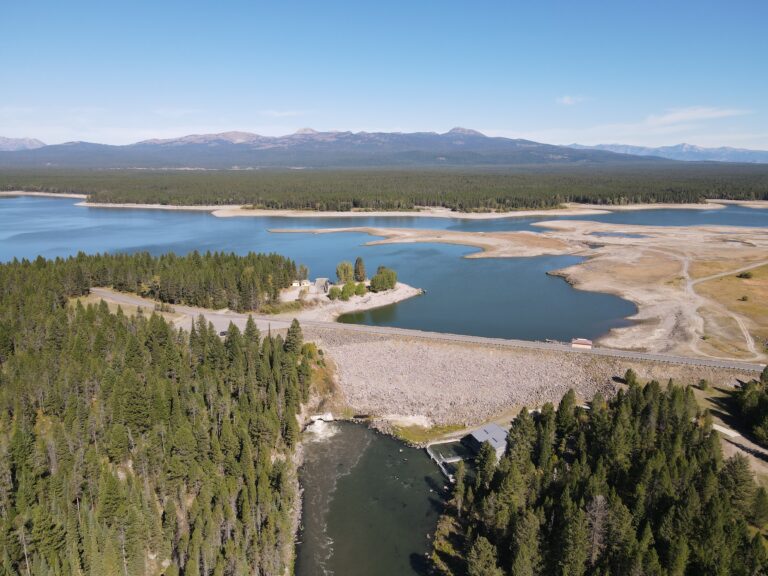
Secondly, irrigators rely on water stored in headwater reservoirs and natural streamflow to water their crops. Groundwater return flows to streams can provide an additional water source for irrigators, reducing the amount of water needed to be sent downstream from Island Park Reservoir and increasing the amount of water stored in Island Park. As we know, keeping more water in Island Park has benefits for winter flow and trout recruitment in Box Canyon as well as for the fishery upstream of the reservoir and for water quality in and downstream of the reservoir. If HFF can help bolster groundwater return flows through processes like aquifer recharge—diverting water in the springtime for infiltration to the aquifer, knowing it will return ~3 months later during the summer period of high irrigation demand—then we can reduce draft of Island Park Reservoir in the summer and have more winter flow for trout. Dr. Christina Morrisett investigates this potential in yet-to-be-published research—keep an eye out!
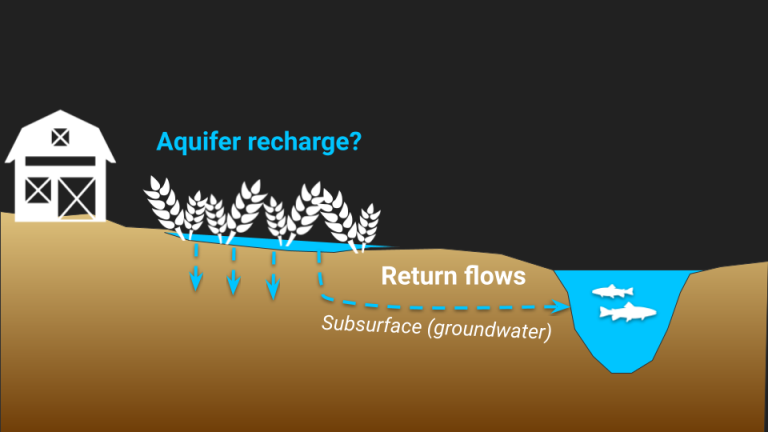

Water routes after flood irrigation application (top), and our proposed solution (bottom)
Thank you. This work was made possible by the USBR WaterSMART Applied Science grant (R21AP10036) and individual donations to the Henry’s Fork Foundation, as well as support from the National Science Foundation (grant no. 1633756), a USDA National Institute for Food and Agriculture grant on Secure Water Future, and internship funding from both St. Lawrence University and the HFF’s Farms and Fish Program. Other HFF staff and affiliates who contributed to this work include Daniel Wilcox, Sarah Newcomb, and Dr. Sarah Null. Lastly, we thank the irrigators who shared their time, perspective, and networks during a busy irrigation season.
Want to learn more? Contact Christina (christina@henrysfork.org) or check out the following resources.