FAQ: Pilot Relocation of Wild Rainbows

Fish Icon
Home » Blog » FAQ: Pilot Relocation of Wild Rainbows

Q: What does “relocation” mean?

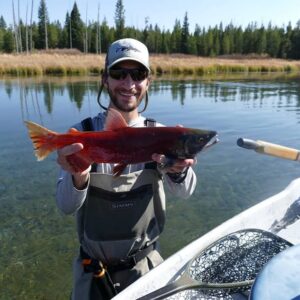
A: Relocation means carefully moving wild trout from one part of our watershed to another under IDFG oversight. It is not hatchery stocking — these are wild fish from the same original lineage as the Henry’s Fork rainbows.

Q: What are the benefits of this approach?

A: The possibility for an immediate bump in angling opportunity, and high transport survival, based on past efforts (~98%).

Q: Why are you doing this?

A: To test whether relocation could be one more tool in our adaptive science toolbox. It’s a pilot experiment designed to learn, not a long-term policy.

Q: How will you measure success?

A: Monitoring survival rates, contribution to the population, and overall acceptance. Results will be transparent and guide future decisions.


View the joint press release from IDFG and HFF here.

Facebook
LinkedIn
Pinterest

Recent Posts

General
Jamie Powell

FAQ: Pilot Relocation of Wild Rainbows

Q: What does “relocation” mean? A: Relocation means carefully moving wild trout from one part of our watershed to another under IDFG oversight. It is not hatchery stocking — these are wild fish from the same original lineage as the Henry’s Fork rainbows. Q: What are the benefits of this approach? A: The possibility for an immediate bump in angling opportunity, and high transport survival, based on past efforts (~98%). Q: Why are you doing

Read More »
Fishing
Jamie Powell

Pilot Relocation of Wild Rainbows Demonstrates Adaptive Science to Strengthen the Henry’s Fork Fishery

In a first-of-its-kind adaptive science effort for the Henry’s Fork, the Idaho Department of Fish and Game (IDFG) and Henry’s Fork Foundation (HFF) are launching a pilot project this October to evaluate whether small-scale relocation of wild Rainbow Trout can strengthen long-term fishery resilience. On the South Fork, a small number of Rainbow Trout are being relocated as part of IDFG efforts to suppress Rainbow Trout abundance by 30% to benefit native Yellowstone Cutthroat Trout

Read More »
Image of a lake
Water Quality
Jasper Davis

Turbidity FAQ – Fall 2025

What is the current climate like in the Henry’s Fork Watershed? We have seen warmer temperatures and less water as a whole in water year 2025. *2025 is currently tied with 2016 for the 4th warmest water year in the 37-year record and the 5th warmest spring and summer in that record. *The total precipitation so far for water year 2025 is 15% less than average. *Precipitation since April 1, 2025, is the 3rd lowest

Read More »
Image of goat on Harriman display table
Intern
Ella Paini

On the Trail, Part II: Sunscreen, Goats, and Goodbyes

I apologize for being a bit late with this post. In my defense, I was busy wrapping up the summer and my internship with the Henry’s Fork Foundation and Friends of Harriman. Part I of this blog was about rejection. Part II is about everything else: small lessons, strange encounters, and the bittersweet feeling of closing a chapter. This internship was educational in unexpected ways, and I learned a few things: Wear sunscreen. Always. Even

Read More »