Understanding SWE and Snowpack in Winter

Home » Blog » Understanding SWE and Snowpack in Winter
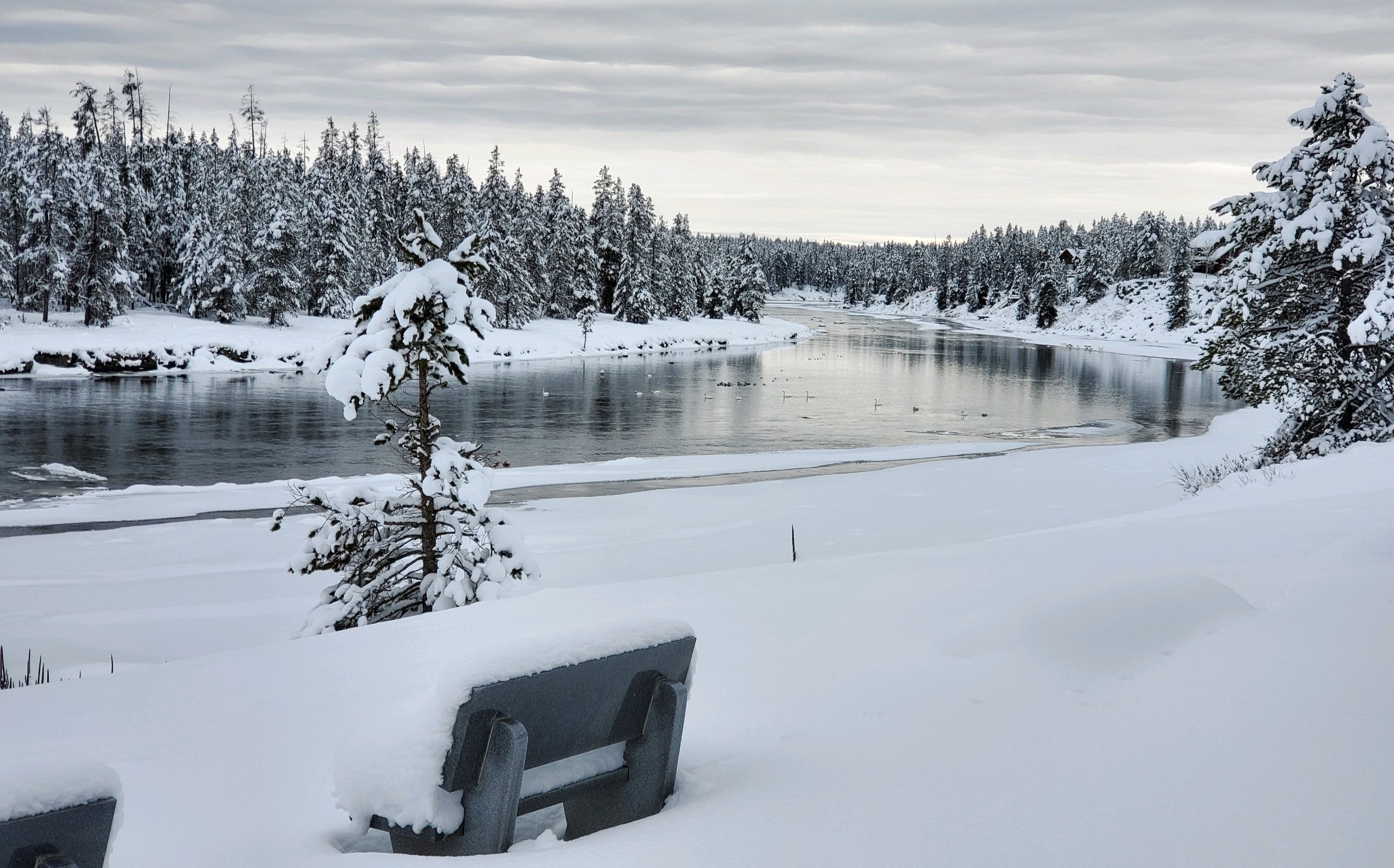
snow covered trees and river

What is Snow-Water Equivalent (SWE)?

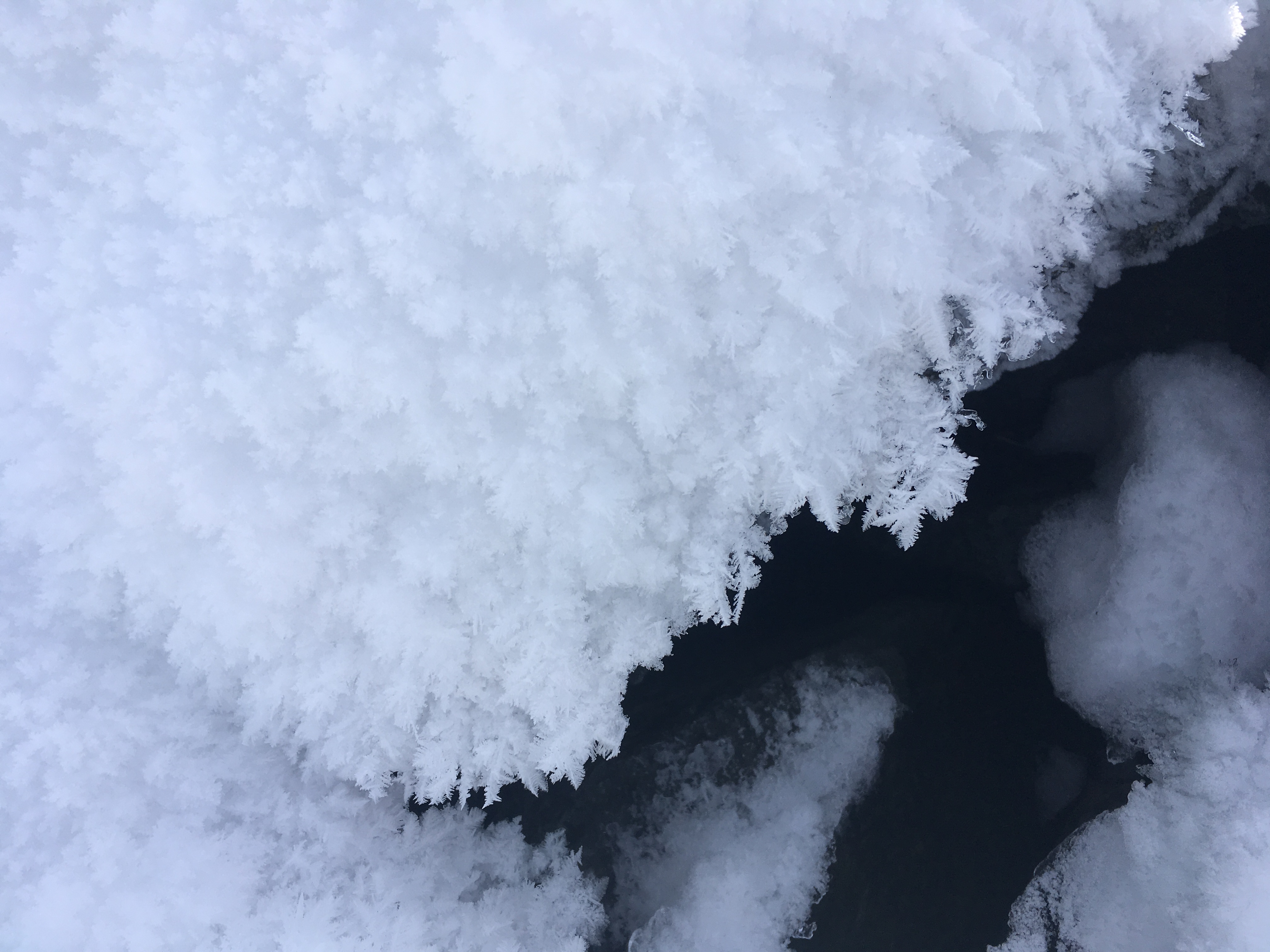
When it comes to how snow will benefit the river, looks can be deceiving. That’s why we report snow-water equivalent (SWE), a measure of water contained within the snowpack, rather than the depth of the snowpack alone.

Does 120% of average precipitation and SWE now mean we’re set for the winter?

Unfortunately, great numbers in early winter is no guarantee.

First, in the Henry’s Fork Watershed, most snow falls between December and February. Precipitation early in the winter (Oct/Nov) doesn’t always translate to a good water year, as temperatures can be too warm to accumulate snowpack.

Second, SWE numbers can change day-to-day. For example, in December 2022, SWE went from 146% of average one week to 126% the next, and was 119% of average two weeks later.

How does that work?

SWE values will continue to change daily as each new day brings, or doesn’t bring additional snow. In early winter, daily precipitation averages around 0.2 inches and daily SWE accumulations average around 0.3-0.4 across the watershed. So, each day that doesn’t receive that amount will see a decrease in those numbers we track relative to average.

It is very easy for early winter above-average precipitation and SWE accumulations to quickly fall back to or even below average without steady precipitation nearly every day, or heavy precipitation at least several days each week. For example, SWE could drop from 126% of average one day down to average (aka 100%), in about 8 days if we don’t get any new snow.

So, what is a good predictor of how much water we’ll have for the season?

It is the amount of snow on the ground in April that determines how much water there is for the season.

The mean April-June temperature in the snow-accumulating areas of the watershed—roughly 6,000 feet in elevation and above—is a strong predictor of snowmelt timing as well.

Facebook
LinkedIn
Pinterest

Recent Posts

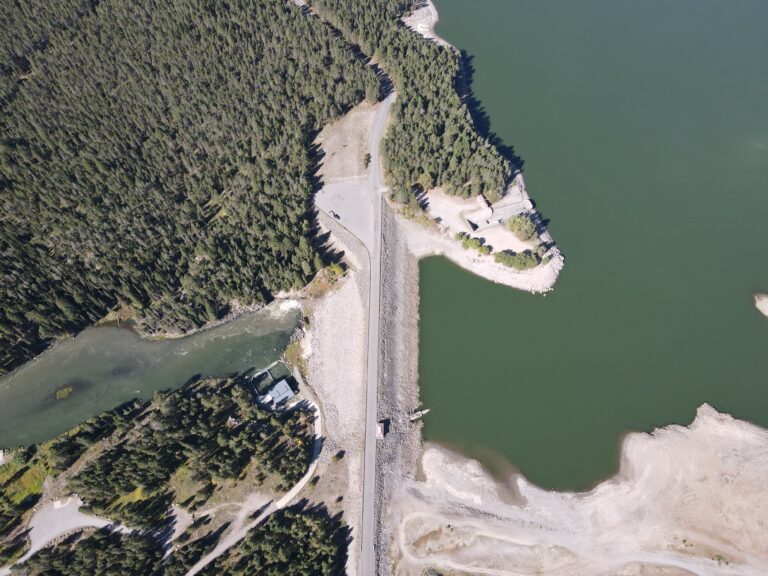
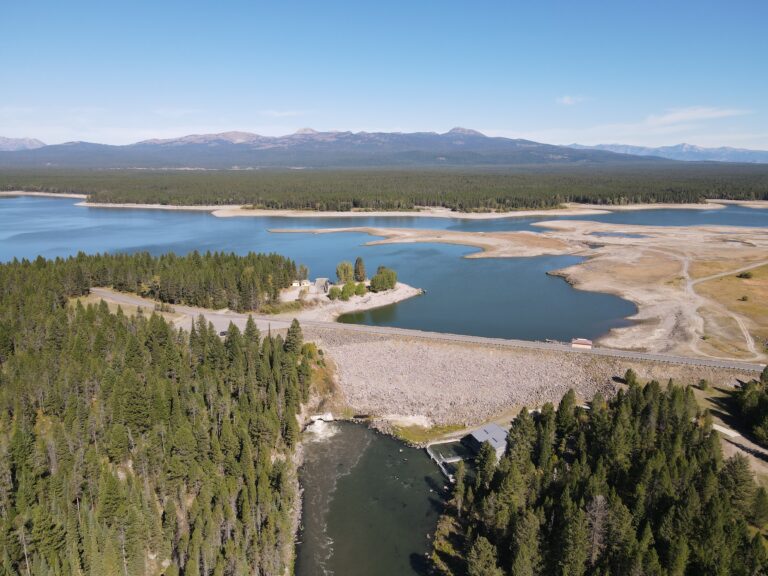
Aerial photo of Island Park Reservoir. The dam is in the bottom left corner. The Centennial Mountain Range is in the top.
Water Quality
Christina Morrisett

History of Water Quality in Island Park Reservoir

Warmer and drier conditions have slowly degraded water quality in Island Park Reservoir over the last 50 years.  In the 1970s and 1980s, federal reports and university research indicate that the reservoir had relatively good water quality. Island Park Reservoir was mesotrophic—with mostly clear water and occasionally low dissolved oxygen at the reservoir’s deepest depths during the summertime. But, as time went on, water quality began to decline. Historical satellite imagery analyzed by the U.S.

Read More »
A photo taken of Island Park Reservoir while standing on the dam and looking north. The sky is cloudy, Mt Sawtelle sits with little snow in the background, and the reservoir is open water (save for a few small sheets of ice in the distance).
Water Quality
Christina Morrisett

Reservoir Ices Off, Growing Season Turns On

Photo of an ice-free Island Park Reservoir taken on March 31, 2026 On March 31, 2026, with no accompanying commentary, HFF scientist Christina Morrisett stood on top of Island Park Dam and texted colleagues Rob Van Kirk and Jack McLaren photos of open water on Island Park Reservoir. Rob, eager to see that the reservoir reality matched what he was seeing in the real-time river data downstream, texted back, “Yep! That’s close enough to ice

Read More »
Photo of confluence of Warm River and Henry's Fork
Water Supply
Rob Van Kirk

Water Supply and Water Quality Predictions for Summer 2026

The photo above captures the unprecedented situation we face at the beginning of April. The photo, of the confluence of Warm River and the Henry’s Fork, was taken on February 7 and shows the shocking lack of snow we experienced in the watershed all winter as a result of record-breaking warm temperatures. How will the warm winter and lack of snow affect water supply, water quantity, and fisheries? The highlights are below. If you want

Read More »
Person holding a rainbow trout.
Water Quality
Rob Van Kirk

Water Year 2025: Everything you wanted to know and a lot more!

Every year since 2017, the Henry’s Fork Foundation Science and Technology Team has produced an annual technical report that documents all of our data collection and analysis activities for the year. Water and irrigation year 2025 was a very active year for the team, given one of the hottest and driest summers on record, our 11th year of aquatic invertebrate sampling, and the 20th year of monitoring the rainbow trout spawning run in the Buffalo

Read More »